







Trolley
You have no items in your shopping cart
 Budgets
 Dumbers
 Discs
Discs
 Benches
 Racks and Rigs
 Weights Holders
 Isotonic machines
 Calisthenics
 Cardio
 Kettlebells
 Flooring
 Gym Set
 Accessories
 Used Gym Equipment
 Combat
 ARTI MARZIALI
 Tug-Of-War
 CAMPI DA PADEL
 PILATES MACCHINARI
 GINNASTICA ARTISTICA
 Gift Card
 Informazioni
- Donatif
- General information
- 0 I like it
- 9 Views
- 0 comments
- stress reduction, improved self-esteem, physical and mental well-being, gym training
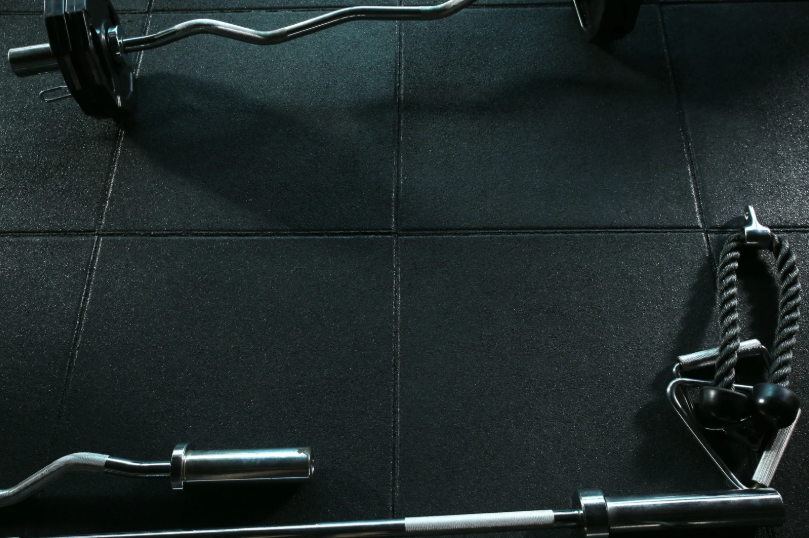
How much does it cost to floor a home gym and what does it really depend on
When evaluating the cost of flooring for a home gym, the first instinct is often to look for a simple price per square meter. It’s an understandable shortcut, but it can lead to poor decisions and a distorted perception of the real investment. The result? Either overspending unnecessarily or saving in the wrong way, compromising safety and durability.
In reality, the true cost of home gym flooring is the result of multiple variables: materials, usage context, training goals, and environmental conditions. Understanding these dynamics not only helps estimate a realistic budget, but also protects your investment over time, avoiding premature replacements or structural issues.
- Why price per square meter is not enough
- Types of flooring and their impact on budget
- Cost items to consider
- Differences between usage contexts
- Realistic budget scenarios
- How to evaluate cost correctly
Why price per square meter is not enough to understand the real cost
The price per square meter is only useful as a starting reference, but it does not represent the total cost of the flooring. Two solutions with the same price can have completely different performance in terms of impact absorption, sound insulation, and durability over time.
Focusing only on this parameter often leads to overlooking key elements such as thickness, material density, and intended use. The result is a classic evaluation mistake: what seems like a saving initially often turns into higher costs in the medium term, due to replacements and adjustments.
The main types of flooring and how they influence the budget
The choice of material is one of the factors that most affects the cost. Each type meets different needs and has a direct impact on the overall budget, not only at the time of purchase but also during its lifespan.
Understanding the differences between available options helps avoid misleading comparisons and guides you toward a solution that truly matches your training level and home environment.
Rubber flooring: investment and durability
Rubber flooring is the most solid and durable solution. It has a higher initial cost, but offers superior resistance to impacts and greater stability during heavy lifting exercises.
In the long run, this type of flooring tends to be more cost-effective because it reduces the need for replacement and protects both equipment and the underlying structure. It is the typical choice for an advanced home gym.
EVA and budget solutions: when they make sense
EVA materials are often chosen for their low cost and ease of installation. They are ideal for light training needs or temporary setups, but they have clear limitations in terms of resistance and stability.
Using them in unsuitable contexts can lead to rapid deformation and reduced training safety. In these cases, the initial saving can quickly turn into an additional expense in the short term.
Platforms and technical zones: targeted cost
Weightlifting platforms represent a targeted investment designed to protect specific areas of the gym. They do not cover the entire surface, but are essential for high-impact exercises.
Integrating a platform into a broader setup allows you to optimize the budget, focusing spending where it is truly needed without oversizing the entire space.
All cost items to consider (including hidden ones)
One of the most common mistakes is ignoring secondary cost items, which can significantly impact the total. Transport, custom cutting, installation, and structural adjustments are often underestimated.
Additional factors include subfloor preparation, potential sound insulation needs, and compatibility with the existing flooring. Considering these aspects from the beginning helps avoid surprises and keeps the budget under control.
Cost differences between an advanced home gym and a condo setup
The context in which the flooring is installed has a direct impact on cost. In an independent space, such as a garage or dedicated room, you can opt for higher-performance solutions without major constraints.
In a condominium, however, additional needs arise, such as noise and vibration reduction. This often increases costs, but it is essential to avoid issues with neighbors and ensure long-term usability.
Three realistic budget scenarios for flooring a home gym
An effective approach is to think in terms of scenarios. A basic setup, focused on saving money, may involve EVA flooring and limited coverage, resulting in lower investment but also reduced performance.
A mid-range solution combines rubber flooring with technical areas, offering a good balance between cost and performance. Finally, an advanced configuration includes full high-density rubber flooring, integrated platforms, and proper insulation, making it the most reliable choice for consistent and heavy training.
How to evaluate cost intelligently and avoid mistakes
To make an effective decision, it is essential to move from a price-based mindset to one focused on overall value. This means considering durability, safety, comfort, and alignment with your training goals.
A well-evaluated investment is not necessarily the cheapest, but the one that provides the best balance between initial cost and long-term benefits. This approach helps avoid wasting budget and allows you to build a truly functional and sustainable home gym.
Comments (0)