
Trolley
You have no items in your shopping cart

 Budgets
 Dumbers
 Discs
Discs
 Benches
 Racks and Rigs
 Weights Holders
 Isotonic machines
 Calisthenics
 Cardio
 Kettlebells
 Flooring
 Gym Set
 Accessories
 Combat
 ARTI MARZIALI
 CONTAINER GYM
 Tug-Of-War
 Used Gym Equipment
 PILATES MACCHINARI
 GINNASTICA ARTISTICA
 CAMPI DA PADEL
 Prodotti in Pronta Consegna
 Informazioni
 IRONMAN
 Gift Card
- Donatif
- General information
- 0 I like it
- 3156 Views
- 0 comments
READING TIME: 4 MINUTES ➤➤
Posture and Diaphragmatic Breathing: Why Your Spine Also Depends on How You Breathe
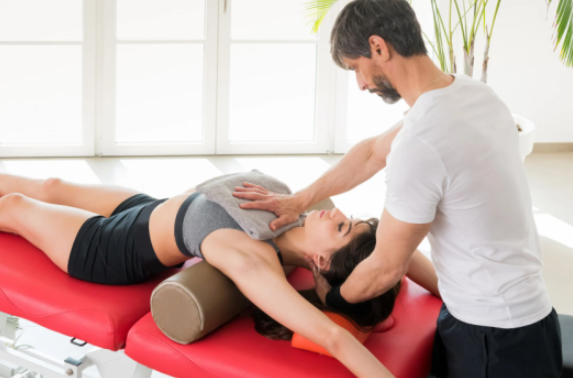
Many people associate posture exclusively with the position of the back, keeping the shoulders straight, or having strong muscles. In reality, one of the most underestimated yet profoundly influential factors in spinal alignment is the way we breathe. Diaphragmatic breathing is not just a relaxation technique—it is a true postural regulator that works deep within the body.
When breathing becomes shallow, elevated, and confined to the shoulder area, the spine suffers. On the other hand, deep and expansive breathing creates space, mobility, and internal support. Understanding this relationship often leads to an unexpected discovery: changing the way you breathe can become a powerful tool for improving posture and reducing chronic tension.
- Stiff Back and Shallow Breathing
- The Role of the Diaphragm
- Upper Chest Breathing and Neck Tension
- Posture and Stress
- Breathing as a Tool for Realignment
- Breathing and Body Awareness
- Exercises and Alignment
Stiff Back and Shallow Breathing: Two Sides of the Same Coin
A stiff back is rarely just a muscular issue. More often, it is the result of shallow and restricted breathing that prevents the spine from moving naturally. When the breath does not descend into the abdomen, the rib cage remains restricted and the back loses flexibility.
This breathing pattern tends to become deeply ingrained in people who spend many hours sitting, under pressure, or in a constant state of alertness. The body adapts by tightening up, and the spine ends up carrying a burden of tension that does not truly belong to it.
The Role of the Diaphragm in Spinal Balance
The diaphragm is a key muscle that separates the chest from the abdomen, but more importantly, it connects breathing, posture, and stability. Every diaphragmatic inhalation creates internal pressure that supports the spine from within, acting like a dynamic pillar.
When the diaphragm is stiff or underutilized, this supportive function diminishes. The spine loses a crucial ally, and other areas, such as the neck and lower back, compensate through excessive tension.
Upper Chest Breathing and Neck Tension: What Really Happens
Upper chest breathing, which primarily involves the shoulders and upper rib cage, continuously activates the neck muscles. This leads to cervical overload, resulting in stiffness, pain, and restricted movement.
Over time, this breathing pattern alters the body's perception in space. The head tends to drift forward, the shoulders rise, and the spine loses its natural vertical alignment.
Posture, Stress, and the Nervous System: An Ongoing Dialogue
Posture and stress are deeply interconnected. A state of chronic stress keeps the nervous system in defense mode, promoting shallow breathing and a contracted posture.
At the same time, a closed and compressed posture sends warning signals to the brain, further fueling stress. Diaphragmatic breathing interrupts this cycle, encouraging a sense of safety and relaxation.
How Breathing Can Become a Tool for Realignment
Using breathing as a realignment tool means working from the inside out. Every deep breath creates space between the vertebrae and restores mobility to the spine.
This approach is powerful because it requires not effort, but attention. Bringing awareness to your breathing allows the body to reorganize itself naturally and more efficiently.
Diaphragmatic Breathing and Body Awareness
Diaphragmatic breathing is also an act of listening. It helps reveal hidden tensions and automatic postural patterns that often go unnoticed.
Over time, this awareness translates into a posture that is more fluid, less forced, and better aligned with the body's real needs in everyday life.
Breathing Exercises in Positions That Support Alignment
Certain simple positions help the body rediscover diaphragmatic breathing effortlessly. Lying on your back with your knees bent, for example, reduces tension in the lower back and allows the diaphragm to move freely.
A seated position with the back supported and both feet firmly on the floor also encourages deeper breathing. In these conditions, inhaling slowly through the nose and allowing the abdomen to expand becomes a natural action that supports spinal alignment.
Comments (0)