
Trolley
You have no items in your shopping cart

 Budgets
 Dumbers
 Discs
Discs
 Benches
 Racks and Rigs
 Weights Holders
 Isotonic machines
 Calisthenics
 Cardio
 Kettlebells
 Flooring
 Gym Set
 Accessories
 Combat
 ARTI MARZIALI
 CONTAINER GYM
 Tug-Of-War
 Used Gym Equipment
 PILATES MACCHINARI
 GINNASTICA ARTISTICA
 CAMPI DA PADEL
 Prodotti in Pronta Consegna
 Informazioni
 IRONMAN
 Gift Card
- Donatif
- General information
- 0 I like it
- 1074 Views
- 0 comments
- gym flooring, safety flooring, gym safety, shock-absorbing materials
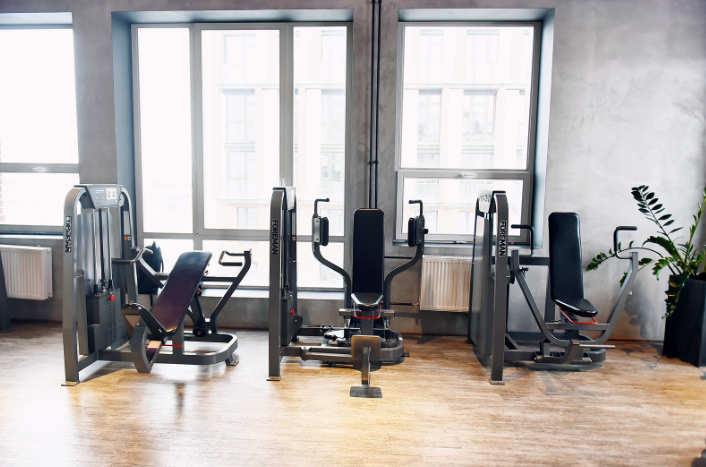
READING TIME: 5 MINUTES ➤➤
New vs Refurbished in a Condo Gym: What Really Happens Over Time
When evaluating the setup of a condominium gym, one of the most common questions concerns the real difference between new machines and refurbished equipment. The doubt is not so much about the beginning, but about the long term: will a refurbished machine withstand shared use, or will it create more issues, more maintenance, and less trust among users?
In practice, the answer is less intuitive than it seems. In a shared space, the performance of equipment depends far more on category, usage patterns, and operational management than on whether it is new or refurbished. Understanding this allows for a more informed and sustainable decision over time.
- Shared use and real lifespan
- Refurbished and reliability
- Differences by equipment category
- Maintenance and management
- Perception and user trust
- Practical checklist
Shared use and real lifespan of fitness equipment
In a condominium gym, the lifespan of equipment is mainly influenced by the distribution of usage frequency and the variety of users. Unlike a home setting, where usage is predictable, here different people rotate with varying levels of experience, attention, and care.
This means that even a new machine can deteriorate quickly if used improperly, while a high-quality refurbished machine can remain stable over time when placed in a more controlled usage environment. The real differentiating factor is therefore how shared usage is managed, rather than the machine’s initial condition.
Usage frequency and impact on wear
Usage frequency in a condominium tends to be intermittent but spread throughout the day. This type of use is not necessarily more stressful, but it can become so if concentrated on a few machines or if there is no natural user rotation.
A well-selected refurbished machine can handle this rhythm without issues, especially if originally designed for professional use. In contrast, a low-end new machine may show signs of wear more quickly.
Differences between home and condo use
The transition from private to shared use introduces variables such as unpredictability and lack of direct responsibility. This completely changes how durability should be evaluated over time.
In this context, it becomes essential to choose equipment with a robust structure and tolerance for imperfect use, regardless of whether it is new or refurbished.
Refurbished does not mean fragile: what really changes
One of the most common misconceptions is that refurbished equipment is inherently more fragile. In reality, properly refurbished machines often come from professional-grade equipment designed for heavy loads and long-term use.
When done correctly, the refurbishment process restores critical components and ensures a stable second lifecycle. This makes many refurbished machines more durable than some entry-level new alternatives.
How a reliable refurbished machine is created
The quality of refurbished equipment depends on initial selection and technical processing. Not all used machines are suitable for refurbishment—only those with a solid structural base can deliver lasting results.
When the process is done properly, the result is equipment that maintains reliability and consistency, key factors in a shared environment.
Where issues may arise over time
Potential issues can arise if the refurbished equipment was not carefully selected or if it is used improperly. Some components subject to wear may require more frequent intervention.
However, these situations are not exclusive to refurbished equipment. Even new machines can generate problems if they are not suited to the actual usage context.
Differences between equipment categories
Not all machines behave the same over time. The difference between new and refurbished equipment is much more evident in certain categories than others.
For this reason, an effective evaluation must always consider the type of equipment, not just its initial condition.
Cardio: continuity and predictability
Cardio machines, such as treadmills and exercise bikes, tend to have more predictable performance. If properly refurbished, they can offer good continuity even in shared environments.
Their structure and usage type make them suitable for inclusion even as refurbished units without significant issues.
Multi-gyms and lightweight machines
Multi-gyms and lighter machines often represent a balanced choice. Even when refurbished, they can provide a solid compromise between versatility and durability.
In a condominium, where space is limited, these solutions are particularly effective and sustainable over time.
Equipment more sensitive to improper use
Some machines, especially more technical or complex ones, may be more affected by incorrect usage. In these cases, the difference between new and refurbished equipment can become more relevant.
Here it is essential to evaluate the average user level and the ability to maintain controlled use.
Maintenance and management: where the real difference lies
Over time, the real difference is not between new and refurbished equipment, but between well-managed and poorly managed equipment. Minimal but consistent maintenance can significantly impact durability and reliability.
In a condominium gym, this becomes even more important because there is often no dedicated technical staff.
Control routines in shared spaces
Introducing simple control routines helps prevent issues and keeps machines in optimal condition. Even small actions can significantly reduce wear.
This approach makes refurbished equipment fully sustainable, avoiding the perception that it is more problematic.
Ease of intervention and fault management
Another key factor is ease of intervention. Some machines, even new ones, can be more complex to manage than simpler but more robust models.
The choice should therefore favor solutions that ensure operational continuity and ease of maintenance.
Perception, trust, and user friction
Beyond technical aspects, there is a frequently underestimated dimension: perception. In a shared environment, user trust is essential to avoid friction.
Refurbished equipment may initially raise some doubts, but this perception quickly changes if the user experience is consistently positive.
The weight of perception vs technical reality
Many concerns about refurbished equipment stem from intuitive judgments rather than actual data. This can lead to overestimating potential issues.
Clear communication and consistent choices help reduce this perception gap.
How to avoid trust issues among users
Transparency in decisions and organized space management help maintain a positive environment. When machines work well, the distinction between new and refurbished becomes less relevant.
What truly matters is continuous use without interruptions.
New vs refurbished: practical checklist for the medium term
When refurbished is a solid choice
Refurbished equipment is an effective choice when professional-grade machines are selected, minimal management is maintained, and actual usage levels are considered. In these cases, it offers a very attractive balance between cost and durability.
It is particularly suitable for cardio, multi-gyms, and equipment with predictable performance.
When new is more suitable
New equipment may be preferable in contexts with more intense or less controllable usage, or when you want to minimize initial variables as much as possible.
In any case, the best choice comes from a concrete evaluation of the context: real usage, user profile, and management capability, rather than a general judgment about refurbished equipment.
Comments (0)