
Trolley
You have no items in your shopping cart

 Budgets
 Dumbers
 Discs
Discs
 Benches
 Racks and Rigs
 Weights Holders
 Isotonic machines
 Calisthenics
 Cardio
 Kettlebells
 Flooring
 Gym Set
 Accessories
 Combat
 ARTI MARZIALI
 CONTAINER GYM
 Tug-Of-War
 Used Gym Equipment
 PILATES MACCHINARI
 GINNASTICA ARTISTICA
 CAMPI DA PADEL
 Prodotti in Pronta Consegna
 Informazioni
 IRONMAN
 Gift Card
- Donatif
- General information
- 0 I like it
- 3837 Views
- 0 comments
READING TIME: 6 MINUTES ➤➤
Tatami and Futon: Sleeping the Japanese Way to Improve Posture and Relaxation
Sleeping on a tatami is not just an aesthetic or design choice, but a true return to the natural balance between body and mind. In Eastern philosophy, sleep is considered a sacred moment of deep regeneration, and the Japanese bedding system made up of tatami and futon represents an authentic and functional way to honor it. This approach not only promotes better posture but also transforms rest into a ritual of awareness and well-being. More and more people seeking a minimalist, harmonious, and health-conscious lifestyle are rediscovering this ancient tradition and bringing it into their modern homes.
In this article, we will explore in depth how tatami and futon can improve sleep quality, support posture, and reflect a new concept of home wellness. From the structure of the Japanese bed to its cultural and philosophical implications, and practical tips for adopting it in everyday life, each section is designed to guide you on a journey between tradition and innovation, with the goal of helping you rediscover balance, health, and relaxation.
- The Japanese bed system: essence and functionality
- Ergonomic benefits of sleeping on tatami and futon
- The cultural and philosophical meaning of sleeping on the floor
- Adapting tatami and futon to modern living
- How to choose a good tatami and futon to get started
The Japanese bed system: essence and functionality
What are tatami and futon
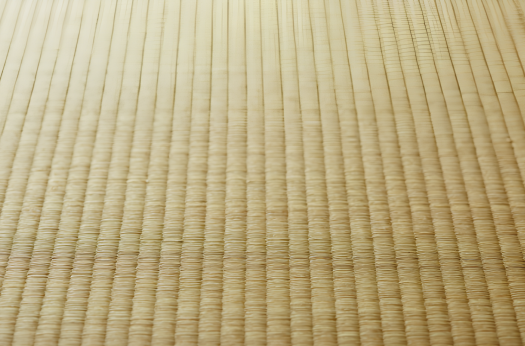
The tatami is a firm mat traditionally made from compressed rice straw and covered with woven rush grass, used for centuries in Japanese homes as flooring. In Western contexts, tatami is often used as a bed base, providing a stable and breathable surface that allows the body to maintain natural alignment during sleep. The futon, on the other hand, is a thin padded mattress made of cotton or natural materials, placed directly on the tatami and folded away every morning according to Japanese tradition.
Together, tatami and futon form a minimalist and functional sleeping system that reduces space usage, simplifies cleaning, and encourages a more mindful interaction with one’s sleeping environment. This setup offers an interesting alternative to bulky and less versatile Western beds, introducing a lifestyle based on simplicity and harmony with the surrounding space.
How a traditional Japanese bed is structured
A traditional Japanese bed consists of three main elements: the tatami, the futon, and a thin cover or sheet that wraps the futon. The tatami is placed directly on the floor, ideally on a flat and clean surface, ensuring stability and insulation. On top lies the futon, which can vary in thickness and materials depending on personal comfort and support needs. In colder climates, an additional duvet or futon layer, known as “shikibuton,” may be added for extra warmth.
This system not only adapts easily to small spaces but also embodies a philosophy of living based on flexibility and efficiency. Each morning, the futon is rolled or folded and stored in a closet called “oshiire,” freeing up the room for other uses during the day. This practice combines order, discipline, and care for one’s environment, offering a unique perspective on the relationship between individual, space, and time.
Ergonomic benefits of sleeping on tatami and futon
Posture, spinal alignment, and natural support
One of the main reasons why more and more people choose to sleep on tatami and futon is the ergonomic support this system provides. Unlike many modern mattresses, which are often too soft or overly structured, a futon placed on tatami offers a firm surface that promotes natural spinal alignment. This is particularly beneficial for those who suffer from poor posture during the day or spend long hours sitting. Lying on a relatively firm yet comfortable surface helps the body regain muscular balance and encourages better posture even after waking.
The even support provided by the tatami prevents the body from sinking into specific areas, as often happens with traditional beds. This balanced support allows muscles to fully relax and reduces tension in critical areas such as the lower back and shoulders, leading to deeper and more restorative sleep. The result is a natural sense of relaxation that supports the body throughout rest, without forcing or constraining it.
Reduction of back and muscle pain
Many people who switch to a futon on tatami report a significant reduction in lower back, neck, and joint pain after just a few weeks. This benefit comes from the natural supine position the body adopts on a firm surface, avoiding misalignment or sinking that can compromise sleep quality. The result is a more energetic awakening, free from the stiffness often associated with overly soft or unsuitable beds.
Additionally, the Japanese bedding system promotes slight activation of the musculoskeletal system even during sleep, helping maintain tone in deeper muscles. Sleeping close to the ground, with proper insulation from the tatami, enhances the body’s natural interaction with gravity, improving body awareness and contributing to a more authentic state of relaxation.
The cultural and philosophical meaning of sleeping on the floor
Japanese minimalism and harmony with the environment
The Japanese bedding system, made up of tatami and futon, is much more than a functional sleeping solution: it represents a philosophy of life rooted in minimalism, simplicity, and harmony. In Japanese culture, every object must have a clear purpose and contribute to the overall well-being of the home. Eliminating excess, avoiding clutter, and living with essentials are key principles that guide the use of a bed that disappears each morning, leaving room for flexibility and fluidity in living spaces.
The tatami itself is a symbol of respect and sacredness: traditionally, it is stepped on barefoot as a sign of cleanliness and connection with nature. This daily gesture becomes a ritual, a way to remember that the home is also an inner space. Sleeping on the floor thus becomes a return to essentials, an invitation to reconsider habits with greater awareness.
Tatami as a daily wellness ritual
The act of preparing the bed—laying out the futon, arranging the cover, folding it in the morning—is not seen as a chore but as a ritual that marks the rhythm of the day. This simple action encourages mindfulness, appreciation of small gestures, and care for both body and living space. It is a daily practice of discipline and gratitude that fosters a sense of order and inner balance.
From this perspective, tatami is not only a physical support but also a symbolic one: it is the foundation of balance between body, mind, and environment. Choosing to sleep this way means embracing a deeper concept of well-being, where design, culture, and health are interconnected parts of a conscious living ecosystem.
Adapting tatami and futon to modern living
Solutions for Western homes and contemporary spaces
Integrating tatami and futon into Western homes may seem challenging at first, but it is actually simple and highly beneficial. Modern tatami are available in sizes compatible with European spaces, including double or modular options that adapt to rooms of any size. Many brands also offer foldable or modular versions, making them practical even in small apartments or studios.
For those seeking a compromise between tradition and Western comfort, minimalist raised wooden platforms can be used to support tatami, ensuring ventilation and a more contemporary aesthetic. This solution allows you to retain the ergonomic benefits of the Japanese system while improving practicality in environments less accustomed to floor living.
Tips for integrating a Japanese bed into a modern bedroom
Adopting a Japanese bed does not mean sacrificing style or personalization. On the contrary, it can become a distinctive element in a thoughtfully designed room. It is recommended to choose neutral colors, natural fabrics, and essential furnishings, in harmony with the zen philosophy behind this lifestyle. Warm lighting, plants, and materials such as light wood or bamboo help create a cozy and relaxing atmosphere.
Functionality should also be considered: for those who prefer not to fold the futon daily, thicker futons or tatami on platforms allow the bed to remain ready at all times without compromising aesthetics. This lifestyle can be an opportunity to simplify and rethink the entire bedroom, turning it into a space for authentic and mindful regeneration.
How to choose a good tatami and futon to get started
Materials, thickness, and build quality
When purchasing tatami and futon, it is essential to pay attention to material quality and suitability for your physical and environmental needs. Authentic tatami is made from pressed rice straw and covered with rush grass, but modern alternatives in wood fiber or natural polymers are also available, offering greater durability and easier maintenance. The choice depends on intended use, frequency of movement, and room style.
As for the futon, the ideal thickness ranges from 6 to 12 cm, depending on desired comfort. It should be filled with natural materials such as cotton, kapok, or latex, ensuring breathability and longevity. A futon that is too thin may become uncomfortable over time, while one that is too thick may reduce the postural benefits of the system. Investing in handcrafted or certified products is a choice that pays off in both comfort and health.
Maintenance, airing, and long-term durability
One of the most important aspects to consider is futon maintenance. Being a natural product, it requires specific care to maintain its properties. It is recommended to air it out at least once a week, exposing it to sunlight to remove accumulated moisture and prevent mold or odors. The tatami should also be kept clean by vacuuming regularly and avoiding excessive humidity in the room.
With proper maintenance, a good futon can last 8–10 years while maintaining its qualities. Some models allow for replacing individual layers or renewing the padding, further extending their lifespan. Choosing tatami and futon is not just a matter of style, but a commitment to conscious, long-lasting, and sustainable rest, in harmony with your body and the environment.
Comments (0)