
Trolley
You have no items in your shopping cart

 Budgets
 Dumbers
 Discs
Discs
 Benches
 Racks and Rigs
 Weights Holders
 Isotonic machines
 Calisthenics
 Cardio
 Kettlebells
 Flooring
 Gym Set
 Accessories
 Combat
 ARTI MARZIALI
 CONTAINER GYM
 Tug-Of-War
 Used Gym Equipment
 PILATES MACCHINARI
 GINNASTICA ARTISTICA
 CAMPI DA PADEL
 Prodotti in Pronta Consegna
 Informazioni
 IRONMAN
 Gift Card
- Donatif
- General information
- 0 I like it
- 2585 Views
- 0 comments
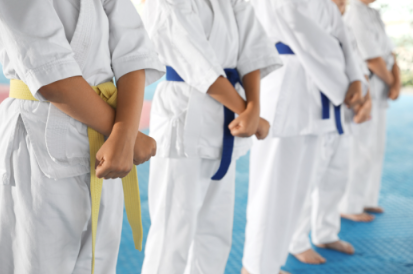
READING TIME: 5 MINUTES ➤➤
From the dojo to the Olympic arena, choosing the right tatami is a key element for athlete safety and performance. The judo tatami is not simply a padded surface: it is a technical device designed according to precise standards, intended to absorb impacts, ensure stability, and comply with international regulations such as those established by the IJF (International Judo Federation). Understanding the technical characteristics of these tatami mats is essential for judo instructors and dojo managers who want to provide compliant, safe, and professional environments for their students.
In this guide, we will explore in depth the factors that distinguish a high-quality judo tatami: from thickness and density to surface covering and certifications, as well as the differences compared to other sports tatami. The goal is to provide practical and authoritative guidance for those choosing the right tatami, whether for daily training or official competitions.
- Technical characteristics of judo tatami
- Thickness and density: which parameters matter
- Surface covering and grip
- IJF regulations and compliance
- Differences compared to other sports tatami
- How to choose the right tatami for your dojo
Technical characteristics of judo tatami
The judo tatami is designed to absorb impacts and ensure athlete safety during throws. Its core components include a high-density internal layer, a non-slip outer surface, and a structure that prevents movement during use. Each element contributes to providing optimal training conditions, both at amateur and professional levels.
Another essential factor is the controlled rigidity of the surface. Unlike mats used in acrobatic disciplines, judo tatami must be firm enough to allow dynamic movements and grips, while still capable of cushioning even heavy falls. This balance between shock absorption and stability makes the tatami a true technical tool, not just an accessory.
Thickness and density: which parameters matter
One of the first questions for instructors and dojo managers concerns ideal thickness. The 4 cm judo tatami is currently the most common standard, also approved by the IJF, as it offers the best balance between impact absorption and stable support. Thinner mats are not recommended for judo practice, while thicker ones are rarely necessary unless specific safety needs arise for children or individuals with special requirements.
Density, typically expressed in kg/m³, is another critical factor: a medium-to-high value ensures that the tatami does not deform under intensive use and maintains its performance over time. Low-density tatami tend to lose compactness, becoming unsafe during the explosive movements typical of judo.
Surface covering and grip
The outer covering of a judo tatami serves both aesthetic and functional purposes. The most common materials are embossed vinyl or PVC, chosen for their durability and ability to provide good grip even in the presence of sweat. A good professional judo tatami must allow safe movement without the risk of slipping, while also preventing abrasions or friction burns.
Base grip is equally important: the best tatami include a non-slip underside, often made of natural rubber or textured surfaces, to prevent movement on the floor during training. This detail, often overlooked, is crucial especially in dojos with smooth flooring or slight vibrations.
IJF regulations and compliance
For dojos involved in competitions, complying with IJF regulations is essential. The IJF sets strict standards regarding dimensions, thickness (4 cm), density, materials, and approved colors. Only IJF-certified tatami can be used in official tournaments and represent a high-quality benchmark even for facilities that do not host international competitions.
Investing in an IJF-certified judo tatami ensures that athletes train on surfaces that meet the same safety and performance standards used at the Olympic level. This also positively impacts the reputation of the facility and the trust of students and families.
Differences compared to other sports tatami
It is important not to confuse judo tatami with those used in other martial arts or sports. Karate tatami, for example, are thinner and more rigid, while aikido mats prioritize cushioning but require less impact resistance. In MMA or fitness contexts, tatami are often made of EVA foam modules, which are not suitable for judo throws.
Visual aspects also differ: professional judo tatami often use approved colors (green and red) to define competition areas, whereas other sports allow more variety. Choosing second-hand mats from other disciplines may pose risks, so it is essential to verify technical specifications and intended use.
How to choose the right tatami for your dojo
Selecting the most suitable tatami depends on several factors: the type of practitioners (children, adults, competitive athletes), frequency of use, presence of competitions, and available budget. A used judo tatami can be a cost-effective solution, but it must be carefully evaluated to avoid degraded or non-compliant materials.
For a professional dojo focused on quality and safety, investing in a professional IJF-certified judo tatami is the most reliable choice. Not only for technical reasons, but also to provide a training experience aligned with international standards. Ultimately, the quality of the tatami reflects the quality of the training offered.
Comments (0)