
Trolley
You have no items in your shopping cart

 Budgets
 Dumbers
 Discs
Discs
 Benches
 Racks and Rigs
 Weights Holders
 Isotonic machines
 Calisthenics
 Cardio
 Kettlebells
 Flooring
 Gym Set
 Accessories
 Combat
 ARTI MARZIALI
 CONTAINER GYM
 Tug-Of-War
 Used Gym Equipment
 PILATES MACCHINARI
 GINNASTICA ARTISTICA
 CAMPI DA PADEL
 Prodotti in Pronta Consegna
 Informazioni
 IRONMAN
 Gift Card
- Donatif
- General information
- 0 I like it
- 3243 Views
- 0 comments
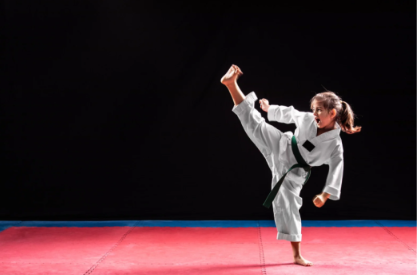
READING TIME: 12 MINUTES ➤➤
The tatami is much more than a simple surface: it is the technical, symbolic, and functional foundation on which all traditional and modern martial arts are built. From historic Japanese dojos to the most advanced training facilities, tatami represents an essential element to ensure safety, respect for discipline, and training effectiveness. With materials, thicknesses, and certifications that vary depending on the practice – judo, karate, taekwondo, BJJ – having a deep understanding of tatami characteristics is essential for anyone who manages or trains in a dojo.
In this comprehensive guide, we will explore everything you need to know in detail: from technical composition to official regulations, including the key criteria to consider when choosing the most suitable tatami for your discipline. This content is designed for those seeking reliable, up-to-date, and highly professional information.
- What tatami is and why it is essential in martial arts
- Technical characteristics of professional tatami
- Tatami for judo: requirements and standards
- Tatami for karate: specific features
- Tatami for taekwondo and related disciplines
- Tatami for BJJ and grappling: what changes
- How to choose the right tatami for your dojo or gym
What tatami is and why it is essential in martial arts
The role of tatami in daily practice and competition
In martial arts, the tatami is much more than flooring: it is both a functional and symbolic tool. Traditionally linked to Japan, the term originally referred to rice straw mats used in homes, but today it identifies a technical module made of synthetic materials designed to ensure shock absorption, stability, and safety. Each martial art uses tatami as its training and competition surface, adapting its structure and features to specific needs.
In competition, the tatami defines the regulated space where matches take place. Its design not only contributes to injury prevention, but also affects movement fluidity, grip, and technique effectiveness. In training, it acts as a daily support, promoting balance, spatial awareness, and body control. For this reason, it is considered an integral part of the martial learning method.
Technical functions and safety benefits for athletes
One of the key features of tatami is its ability to cushion falls, throws, and impacts without compromising athlete stability. This is especially important in disciplines like judo or BJJ, where ground contact is constant and intense. Tatami absorbs part of the kinetic energy, reducing joint stress and minimizing injury risks.
Beyond safety, a quality tatami also improves technical execution. A surface that is too hard or too soft can negatively affect balance, grip, and posture. That is why choosing the right certified tatami, suited to the discipline practiced, is a primary responsibility for instructors and gym managers.
Technical characteristics of professional tatami
Materials used: foams, coatings, and grip
Modern tatami are made from high-density synthetic materials that combine durability, elasticity, and comfort. The inner core is typically composed of EVA foam or expanded polyurethane, both offering excellent shock absorption. The outer layer is often made of embossed PVC or anti-slip material, designed to provide secure grip even in the presence of sweat or moisture.
Surface grip quality is a key factor: it must ensure proper traction for bare feet without causing abrasions during dragging movements. In disciplines involving throws or sliding, such as judo or BJJ, surface quality can make the difference between effective control and risky falls. Additionally, materials must be non-toxic, fire-resistant, and easy to clean to comply with hygiene standards.
Thickness and density: how to choose based on discipline
Each martial art has different requirements in terms of tatami thickness and density. For judo, thicknesses between 4 and 5 cm are recommended, with density capable of absorbing strong impacts. For karate or taekwondo, where techniques are mainly performed standing, thinner tatami (around 2–2.5 cm) are more suitable, as they enhance stability and speed.
A tatami that is too thin may fail to protect joints adequately, while one that is too thick may hinder balance and slow movements. Therefore, it is essential to consider the discipline, athlete level, frequency of use, and purpose (training or competition). Density, usually expressed in kg/m³, must strike the right balance between cushioning and firmness.
Certifications and official approvals
In professional sports, the use of tatami approved by national and international organizations is essential. Federations such as FIJLKAM, IJF, WKF, and IBJJF establish precise standards regarding size, materials, and physical characteristics. These standards ensure maximum safety and uniformity in official competitions.
A certified tatami also guarantees quality for gyms: it represents reliability, durability, and regulatory compliance. Certification ensures that the product has passed rigorous tests and meets discipline-specific technical criteria.
Tatami for judo: requirements and standards
Recommended thickness and shock absorption
Judo is one of the most demanding disciplines in terms of flooring protection due to frequent throws and impacts. Tatami must have a minimum thickness of 4 cm and high density to absorb impacts effectively, reducing injury risks.
FIJLKAM and IJF regulations
Competition tatami must comply with FIJLKAM and IJF standards, including dimensions (typically 1x1 m modules), materials, and anti-slip properties. Compliance ensures professionalism and adherence to international standards.
Tatami for karate: specific features
Surface finish and rigidity
In karate, tatami must balance grip and smoothness. Greater rigidity (around 2 cm thickness) supports stability and precision, especially for kata and kumite.
Adaptability for kata and kumite
The tatami must offer versatility, ensuring stable footing for kata and quick movements for kumite.
Tatami for taekwondo and related disciplines
Anti-slip surfaces and elasticity
In taekwondo, tatami must ensure grip, responsiveness, and safety, with slight elasticity to absorb landing impacts.
WT and ITF competition requirements
Standards include anti-slip modular mats, defined competition areas (e.g., 8x8 m), and certified materials.
Tatami for BJJ and grappling: what changes
Durability and grip
BJJ requires highly durable surfaces resistant to friction and abrasion, with balanced grip for fluid ground movement.
IBJJF standards
The IBJJF requires at least 4 cm thickness and durable vinyl surfaces for competitions.
How to choose the right tatami for your dojo or gym
Evaluate practice type and number of athletes
Choosing the right tatami depends on discipline, intensity, and number of users.
Installation, maintenance, and durability tips
Proper installation and regular cleaning ensure long-term performance. A high-quality tatami can last over 10 years, maintaining safety and comfort.
Comments (0)