
Trolley
You have no items in your shopping cart

 Budgets
 Dumbers
 Discs
Discs
 Benches
 Racks and Rigs
 Weights Holders
 Isotonic machines
 Calisthenics
 Cardio
 Kettlebells
 Flooring
 Gym Set
 Accessories
 Combat
 ARTI MARZIALI
 CONTAINER GYM
 Tug-Of-War
 Used Gym Equipment
 PILATES MACCHINARI
 GINNASTICA ARTISTICA
 CAMPI DA PADEL
 Prodotti in Pronta Consegna
 Informazioni
 IRONMAN
 Gift Card
- Donatif
- Sports products
- 0 I like it
- 1497 Views
- 0 comments
- gym flooring, safety flooring, gym safety, shock-absorbing materials
READING TIME: 5 MINUTES ➤➤
Elliptical Trainer for Beginners: Settings and the First 30 Days
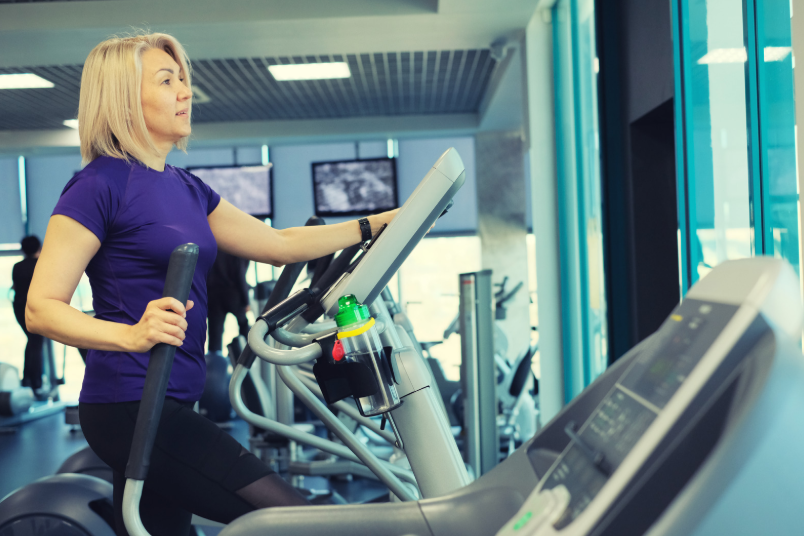
Starting to train with an elliptical trainer may seem simple: step on, move your arms and legs, choose a program, and begin. In practice, however, many beginners give up after only a few sessions because they choose a resistance level that is too high, workouts that are too long, or a pace that does not match their starting fitness level. For this reason, a good approach should focus not on performance, but on building a sustainable routine that is easy to repeat even on busy days.
A beginner’s elliptical trainer should be seen as a supportive tool, not as a challenge to overcome. During the first 30 days, the most useful goal is to learn how to use the machine correctly, recognize your own pace, and reduce the fear of injury or boredom. Progression should remain gradual, especially for people who exercise at home, work long hours, or are returning to physical activity after a long period of inactivity.
The elliptical settings to check before you start
Before thinking about workout duration, it is worth spending a few minutes on the elliptical settings. The initial resistance should be low enough to allow smooth, continuous movement without causing tension in the shoulders, knees, or lower back. Foot placement also matters: your feet should remain stable on the pedals, avoiding pushing only with the toes. Your hands can alternate between fixed and moving handles, but during the first sessions it is better to focus on controlling the movement rather than increasing intensity.
Those using an entry-level elliptical trainer may find simple preset programs, often labeled manual, beginner, or light cardio. These programs can be useful as guidance, but they should not force you into an overly demanding pace. If your breathing becomes heavily labored or your posture starts to break down, it is better to lower the resistance and shorten the session. The correct setting is the one that allows you to finish the workout feeling that you have exercised, but without being completely exhausted.
Days 1–7: getting comfortable with rhythm, posture, and breathing
The first week is about making the elliptical feel familiar. For a beginner, 10–15 minutes at an easy pace can be more beneficial than a long, exhausting workout. Your body needs to learn the coordination between arms and legs, while your mind needs to associate exercise with something manageable. During this phase, it is advisable to maintain a steady pace without focusing on calories burned, distance covered, or speed. The most important factor is movement consistency.
During the first few days, it is normal to feel uncertain, especially if you are worried about maintaining the commitment. To overcome this obstacle, try setting a fixed time of day for training and linking it to an existing habit, such as after work or before your morning shower. An effective beginner elliptical program should not require too much mental effort: it should be easy to remember, simple to start, and light enough to avoid psychological resistance.
Days 8–14: building a short but consistent routine
In the second week, you can begin making your routine more stable while still maintaining a cautious approach. If the first seven days were completed without discomfort, workout duration can gradually increase to 15–20 minutes. Resistance can remain low or increase by only one level, always ensuring that the movement remains smooth and controlled. The most common mistake is interpreting early improvement as a reason to push harder. In reality, consistency remains the priority for beginners.
A good rule is to finish each session feeling as though you could still do a few more minutes. This reserve helps maintain motivation and reduces the risk of associating the elliptical with excessive fatigue. For busy professionals or adults over 50, sustainability matters more than intensity. At this stage, the machine’s guided programs can be used as a gentle reference, adapting them to your level rather than treating them as strict requirements.
Days 15–21: increasing gradually without pushing too hard
By the third week, workouts can become slightly more structured. You can alternate a comfortable pace with brief periods of slightly higher intensity, without turning the session into a demanding challenge. For example, after a few minutes of warm-up, you can increase your pace for one or two minutes and then return to your normal rhythm. This variation helps make training less monotonous and supports the feeling of progress.
The key phrase remains gradual progression. Increasing duration, resistance, and frequency all at once can create excessive fatigue and make it harder to stay consistent. Instead, modify only one variable at a time: a few extra minutes, a slightly higher resistance level, or one additional workout during the week. This approach helps prevent frustration and allows you to understand how your body responds. The elliptical should become a daily ally, not a source of pressure.
Days 22–30: strengthening the habit and reducing the risk of quitting
During the final days of the first month, the goal is not to prove that you are already fit, but to strengthen the habit. A routine of 20–25 minutes performed consistently can be a solid achievement for many beginners. Some days you will feel more energetic, while on others you may move more slowly. This variability is normal and should not be viewed as failure. Consistency also comes from adapting your workout to real-life circumstances.
To reduce the likelihood of quitting, avoid setting overly ambitious goals and focus on simpler signs of progress: feeling more flexible, completing sessions with less effort, or getting on the elliptical without procrastinating. This perspective is particularly useful for those who begin with uncertain motivation but want to build a lasting habit. A beginner elliptical program works best when it supports, reassures, and fits naturally into everyday life.
Journal and checklist: small tools to stay consistent
Keeping a journal during the first 30 days can help make visible the progress that often goes unnoticed. There is no need to record a large amount of data: duration, resistance level, overall feeling, and a brief note about the day are enough. This simple habit creates awareness and makes it easier to identify which times of day work best, which sessions feel most enjoyable, and when it may be appropriate to reduce intensity. For many beginners, seeing a sequence of completed workouts has a reassuring effect.
The checklist can be even simpler: comfortable shoes, a water bottle nearby, low resistance at the beginning, proper posture, steady breathing, and a few slower minutes at the end. These steps reduce uncertainty and make it easier to start each workout. During the first 30 days, the real achievement is not pursuing rapid transformations, but building a positive relationship with movement. When the elliptical becomes part of your routine without creating fear, boredom, or excessive fatigue, continuing beyond the first month becomes much easier.
Comments (0)