
Trolley
You have no items in your shopping cart

 Budgets
 Dumbers
 Discs
Discs
 Benches
 Racks and Rigs
 Weights Holders
 Isotonic machines
 Calisthenics
 Cardio
 Kettlebells
 Flooring
 Gym Set
 Accessories
 Combat
 ARTI MARZIALI
 CONTAINER GYM
 Tug-Of-War
 Used Gym Equipment
 PILATES MACCHINARI
 GINNASTICA ARTISTICA
 CAMPI DA PADEL
 Prodotti in Pronta Consegna
 Informazioni
 IRONMAN
 Gift Card
- Donatif
- Sports products
- 0 I like it
- 3040 Views
- 0 comments
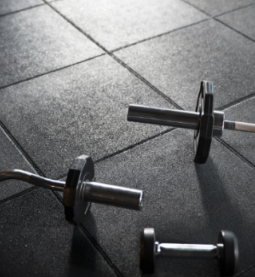
READING TIME: 9 MINUTES ➤➤
Rubber Flooring or Sports Parquet? Technical Comparison for Multi-Sport Gyms
Choosing the right flooring material for a multi-sport gym is a strategic decision that significantly impacts performance, safety, aesthetics, and maintenance. Among the most common solutions, sports parquet and rubber flooring represent two opposite ends of the spectrum in terms of technical features, applications, and perception. In this article, we provide an in-depth comparison of these two materials, with a technical and informative approach designed for sports facility managers who need to identify the most suitable solution based on operational needs and the types of activities practiced.
We will analyze structural properties, functional advantages, application logic, and economic variables associated with each material. We will also consider hybrid alternatives such as resin flooring, offering a comprehensive overview to support informed and confident decision-making.
- Why flooring is crucial in sports environments
- Sports parquet: aesthetics and tradition in gyms
- Rubber flooring: versatility and durability
- Alternative flooring: focus on resin and hybrid solutions
- Technical comparison of the solutions
- How to choose flooring based on the sport
Why flooring is crucial in sports environments
Impact on performance, safety, and comfort
Flooring is one of the most underestimated yet decisive components in the design of a sports space. It is not just a surface for activities, but an element that directly influences athletic performance, injury prevention, and user well-being. Each sport has specific requirements in terms of shock absorption, grip, and rebound, all of which must be met to ensure optimal training and competition conditions. An unsuitable surface can lead to early fatigue, slipping, joint injuries, and an overall negative perception of the space.
Beyond biomechanics, flooring also affects the acoustic environment and cleanliness. Sound-absorbing materials and easy-to-clean surfaces make the gym more comfortable and safer, especially in high-traffic settings. For facility managers, this translates into reduced legal risks, higher customer retention, and a stronger reputation over time.
The importance of choosing based on usage
A multi-sport gym, by definition, hosts activities with varying intensity, impact, and movement patterns. This makes flooring selection more complex, as it requires finding a functional balance between often conflicting needs. For example, sports parquet may be ideal for basketball and dance but unsuitable for weightlifting areas. Conversely, high-density rubber absorbs impacts well but may compromise precision in ball sports.
Defining the primary usage profile and operational priorities from the outset is essential. There is no universally perfect material, only the one best suited to the functional purpose of the space. This is why a structured comparison is necessary, as provided in the following sections.
Sports parquet: aesthetics and tradition in gyms
Technical characteristics of sports parquet
Sports parquet has long been associated with professional environments and disciplines requiring technical precision, consistent ball rebound, and movement control. It is a multilayer wooden surface, often equipped with integrated shock-absorption systems, designed to absorb impacts without compromising stability. Commonly used woods include maple, beech, and oak, selected for their mechanical strength and ability to maintain surface uniformity over time.
From a construction standpoint, sports parquet can be installed as a floating or glued system on elastic substructures, ensuring the right balance between elasticity and solidity. The surface finish, treated with anti-slip and abrasion-resistant coatings, supports intensive use while preserving both aesthetic and functional quality.
Advantages and disadvantages compared to other materials
The main advantage of parquet is its elegant and professional appearance, which enhances the perception of the space and creates a welcoming environment for users and athletes. It also provides excellent elastic response, making it suitable for basketball, dance, gymnastics, and martial arts. However, it has notable limitations: it is sensitive to moisture, involves high installation and maintenance costs, and may be unsuitable for sports involving heavy equipment or high localized impact.
In multi-sport settings, parquet can become restrictive: excellent for technique and style, but less versatile than other materials when it comes to functional training or high-intensity workouts.
Ideal applications: dance, basketball, and technical disciplines
Sports parquet performs best in environments dedicated to low-impact, high-precision activities. It is the preferred choice for dance studios, indoor basketball courts, yoga rooms, and martial arts spaces, where surface consistency and aesthetics are critical. In these contexts, parquet delivers high performance and long lifespan, provided that a strict maintenance plan is followed.
Additionally, sports parquet conveys a premium image that can enhance brand perception for gyms targeting high-end clientele. However, it must be chosen with full awareness of its limitations, particularly in terms of cost and compatibility with more demanding activities.
Rubber flooring: versatility and durability
Functional and mechanical properties of rubber
Rubber flooring is increasingly popular in modern gyms due to its exceptional durability, versatility, and shock-absorbing capacity. Made from natural or recycled rubber, it is available in tiles or rolls with varying thicknesses depending on usage intensity. Its non-slip surface, even in the presence of sweat or moisture, ensures high levels of safety.
Technically, rubber provides excellent acoustic insulation, cushioning properties, and strong resistance to abrasion and chemicals. It is designed for high-impact environments where dropped weights, running, and repetitive movements would quickly damage other materials. It is also easy to install and replace modularly, which simplifies maintenance.
Recommended uses: fitness, weight training, hybrid environments
Rubber flooring is ideal for weight rooms, cardio areas, functional training zones, and high-traffic environments. It effectively manages the impact of equipment and free weights, protecting both the underlying structure and athletes’ joints. In multi-sport gyms, it often represents the most practical compromise, especially when durability and safety take precedence over aesthetics.
Rubber is also suitable for humid environments or areas requiring frequent cleaning, such as locker rooms and entrances, thanks to its water resistance and ease of sanitation. However, performance varies depending on material quality, density, and thickness.
Durability, maintenance, and costs
One of the key strengths of rubber flooring is its long-term durability, even under continuous stress. It resists deformation, cuts, and wear from heavy foot traffic. Maintenance is minimal: regular cleaning with neutral products is sufficient to maintain hygiene and appearance. Damaged sections can be replaced easily thanks to its modular design.
From a financial perspective, rubber flooring offers an excellent cost-performance ratio. Initial costs vary depending on thickness and quality but are generally lower than sports parquet. Additionally, low maintenance costs make it a sustainable long-term choice, especially for high-traffic facilities.
Alternative flooring: focus on resin and hybrid solutions
Technical characteristics and applications
Beyond parquet and rubber, alternative solutions can provide an interesting technical and functional compromise. Among these, resin flooring is increasingly appreciated for its seamless appearance, customizable design, and durability. Made from synthetic polymers, it is applied continuously across the surface, eliminating joints and making cleaning easier.
Resin can be formulated with varying elasticity levels and finishes, making it suitable for lighter sports areas such as wellness zones or cardio spaces. However, it is less suitable for heavy-impact environments like weightlifting, where it may develop micro-cracks or premature wear.
Comparison with parquet and rubber
Compared to parquet, resin offers a more modern and uniform surface but lacks the same level of biomechanical comfort and elastic response. Compared to rubber, it provides less shock absorption and localized resistance, although it excels in visual versatility.
Resin’s limitations include sensitivity to scratches and chemicals and the need for professional installation. Costs vary based on thickness and finishing treatments, making it essential to evaluate carefully, especially in multi-use environments.
Technical comparison of the solutions
Sports performance: grip, rebound, and comfort
Each material behaves differently depending on the sport. Sports parquet offers consistent rebound and natural grip, ideal for ball sports. Rubber provides excellent traction and shock absorption, making it perfect for explosive training and weightlifting. Resin sits in between, offering smoothness but requiring treatments for optimal grip.
In terms of comfort, parquet delivers balanced elasticity, rubber adapts well to functional training biomechanics, and resin may feel harder and less forgiving if not properly designed.
Aesthetics and spatial perception
Aesthetics play a key role in how a gym is perceived. Parquet conveys prestige and tradition, rubber has a more technical look, while resin offers high visual customization, adapting well to modern designs.
The aesthetic choice must align with functionality. A visually appealing but unsuitable floor can become problematic over time.
Maintenance and lifespan
Parquet requires regular maintenance, including cleaning, humidity control, and refinishing. Rubber stands out for its durability and low maintenance, while resin, although easy to clean, can be more complex to repair.
In terms of longevity, rubber is often the most efficient solution, followed by well-maintained parquet. Resin typically has a shorter lifespan in high-stress environments.
Initial and long-term costs
Initial costs vary: parquet is the most expensive, followed by resin, and then rubber, which offers excellent value for money. However, total cost of ownership must be considered, including installation, maintenance, and replacement.
For gym managers, evaluating long-term costs ensures a sustainable and effective investment.
How to choose flooring based on the sport
Multi-sport scenarios: compromises and priorities
In multi-sport environments, flooring selection requires a strategic and flexible approach. There is no perfect solution for all activities; instead, the goal is to find the material that best meets the majority of functional requirements. In many cases, combining materials or using hybrid solutions provides the best results.
Spaces are often divided into zones, with parquet for technical disciplines and rubber for high-impact activities. Hybrid systems or resin surfaces with rubber inserts are also common.
Tips for gym and sports facility managers
To make an informed decision, managers should analyze activities, usage frequency, and user profiles. Consulting experts, testing materials, and reviewing maintenance requirements are essential steps.
Ultimately, flooring should be seen as a strategic investment in efficiency, attractiveness, and customer retention. Choosing between parquet, rubber, or resin is not just a technical decision, but also a branding and positioning strategy for the facility.
Comments (0)