
Trolley
You have no items in your shopping cart

 Budgets
 Dumbers
 Discs
Discs
 Benches
 Racks and Rigs
 Weights Holders
 Isotonic machines
 Calisthenics
 Cardio
 Kettlebells
 Flooring
 Gym Set
 Accessories
 Combat
 ARTI MARZIALI
 CONTAINER GYM
 Tug-Of-War
 Used Gym Equipment
 PILATES MACCHINARI
 GINNASTICA ARTISTICA
 CAMPI DA PADEL
 Prodotti in Pronta Consegna
 Informazioni
 IRONMAN
 Gift Card
- Donatif
- Sports products
- 0 I like it
- 1762 Views
- 0 comments
- stress reduction, improved self-esteem, physical and mental well-being, gym training
READING TIME: 5 MINUTES ➤➤
When a standard project can evolve: improving it with custom elements without starting from scratch
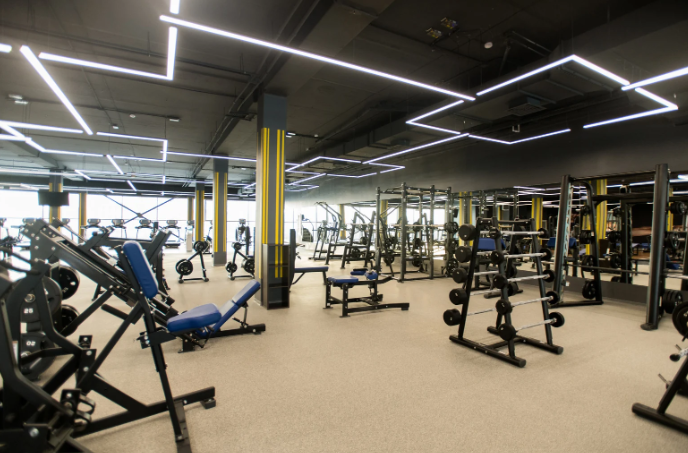
A standard project is often created with the goal of getting started quickly, keeping costs under control, and having a functional base to build on over time. However, in day-to-day operations, small limitations almost always emerge: inefficient flows, equipment not fully suited to real use, and spaces that work on paper but less so in practice.
The critical point is this: not every limitation requires a complete redesign. In many cases, it is possible to intervene selectively by introducing custom elements that improve functionality without compromising the existing structure. Understanding when to do this is what distinguishes reactive management from a strategic approach to your fitness space.
Clear signs that a standard project has real limitations
When the problem is functional, not just perceived
Not every dissatisfaction indicates a design flaw. A standard project may function correctly and simply require an adjustment period. However, when recurring patterns emerge—such as waiting times at stations, user overlap, or limited use of certain areas—you enter a different scenario. Here, the issue is no longer subjective but functional and observable.
A clear sign is the presence of operational bottlenecks. If certain areas are consistently congested while others remain underused, it means the layout or equipment is not supporting real user behavior. In these cases, targeted interventions can deliver immediate improvements without altering the entire project.
Difference between structural issues and correctable inefficiencies
A structural issue implies that the project is inadequate in its overall design. This rarely happens in well-built standard projects. More often, these are localized inefficiencies, meaning areas where the standard solution does not fully account for all usage variables.
Distinguishing between these two levels is essential. If the overall infrastructure works—space distribution, usage logic, equipment compatibility—then it makes sense to intervene with custom elements. Otherwise, a broader redesign may be required. However, this is the exception, not the rule.
Where to intervene: high-impact areas in the shift from standard to custom
Equipment and modules adaptable without full replacement
One of the main advantages of custom solutions is the ability to integrate rather than replace. There is no need to swap entire systems; often, it is enough to work on specific components. Racks, custom storage systems, or modular accessories can radically change how a space is used without affecting the main structure.
This approach allows you to retain what works while improving only what creates friction. It is an incremental strategy that reduces risk and costs, while also allowing you to test the effectiveness of interventions before extending them to other areas.
Layout and flow: small changes that transform space usage
Layout is not static. Even in a standard configuration, small adjustments can produce significant results. Repositioning equipment, creating smoother pathways, or redefining work zones are low-impact changes with high operational returns.
These adjustments are particularly effective when issues stem from real user behavior. Initial designs are based on assumptions, but daily use reveals dynamics that only direct experience can highlight. In this sense, custom solutions become a tool for adaptation.
Standard vs custom: how to evaluate without reopening the project
Technical criteria to decide whether to adjust or redesign
The decision should not be based on general perceptions but on clear criteria. If the issue is localized, repeatable, and measurable, then it is suitable for targeted correction. If it affects multiple areas and compromises the entire operational flow, the evaluation changes.
Another key factor is compatibility. If modifications can be integrated without disrupting existing structural or logistical connections, then custom solutions are the most efficient choice. Otherwise, a broader analysis is required.
Custom as evolution, not error correction
Viewing custom solutions as a “fix for a mistake” often leads to excessive decisions. In reality, in most cases, it represents a natural evolution of the project. The transition from standard to custom is a process, not a disruption.
This perspective changes how interventions are approached. It is not about starting over, but refining what already exists. This approach protects the initial investment and allows you to build a space that better reflects real needs over time.
Examples of targeted corrections with high impact
Interventions on racks, storage, and multi-use stations
A typical example involves standard racks that prove to be inflexible during real use. Adding custom components—such as specific supports or modular extensions—can transform a basic structure into a multifunctional station without replacing it.
The same applies to storage. Standard systems can become inefficient as equipment increases. Introducing tailored solutions improves organization, accessibility, and safety, enhancing the overall experience without invasive changes.
Flooring and targeted structural adjustments
Flooring is often underestimated in the initial phase. However, over time, specific needs emerge related to impact, noise, or stability. Integrating targeted solutions can improve comfort and functionality without redoing the entire surface.
Even small structural adjustments, such as localized reinforcements or precise modifications, can have a significant impact. The key is to intervene where the benefit is concrete and measurable, avoiding extensive work without real necessity.
How to protect investment and operational continuity
Reducing costs and time by avoiding full redesign
One of the main concerns is having to interrupt operations or face high costs. Selective correction addresses this directly. By intervening only where needed, it is possible to keep the facility operational and spread the investment over time.
This approach also reduces decision-making risk. Instead of a radical change, you proceed step by step, verifying the effectiveness of each intervention. It is a more controlled strategy, aligned with the real management of a gym or fitness center.
Decision checklist for targeted interventions
Before intervening, it is useful to verify key aspects: is the problem localized? Is it repeatable? Does it directly impact user experience or efficiency? If the answer is yes, then custom solutions are a concrete option.
This logic allows you to shift from a perception of total failure to a more precise view: not everything needs to be redone, but some parts can be improved. This is where effective project evolution takes shape, without waste or unnecessary disruptions.
A project is never static. Understanding where to intervene without disrupting everything is what allows it to remain efficient over time. Exploring these dynamics helps transform every limitation into a concrete opportunity for improvement.
Comments (0)