
Trolley
You have no items in your shopping cart
 Budgets
 Dumbers
 Discs
Discs
 Benches
 Racks and Rigs
 Weights Holders
 Isotonic machines
 Calisthenics
 Cardio
 Kettlebells
 Flooring
 Gym Set
 Accessories
 Used Gym Equipment
 Combat
 ARTI MARZIALI
 Tug-Of-War
 CAMPI DA PADEL
 PILATES MACCHINARI
 GINNASTICA ARTISTICA
 CONTAINER GYM
 Gift Card
 Informazioni
 Prodotti in Pronta Consegna
- Donatif
- Sports products
- 0 I like it
- 3 Views
- 0 comments
- gym flooring, safety flooring, gym safety, shock-absorbing materials
READING TIME: 5 MINUTES ➤➤
Integrating refurbished machines into an existing project: which compatibilities to really check
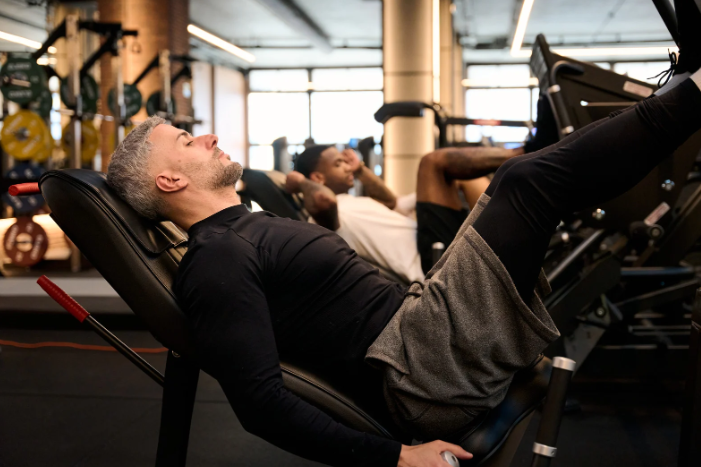
Integrating a refurbished machine into an already operational gym is not a neutral operation. Even when the equipment is technically sound, the risk of creating discontinuity within the project is real. The critical point is not the standalone quality of the machine, but its ability to function coherently with what is already in place.
This is where the concept of real compatibility comes into play. It’s not enough to assess wear conditions or price: you need to understand whether that machine can be integrated without creating friction, both technically and operationally. This step is often underestimated, yet it determines the success or failure of the integration.
Structural compatibility: when space drives the decision
Actual footprint and operational tolerances
Structural compatibility refers to the machine’s ability to physically fit within the available space without compromising usability. It’s not just about declared dimensions, but the real footprint during use. Moving parts, adjustments, and motion paths must be considered with precision.
A common mistake is evaluating the machine in isolation, without considering the context. Even a few centimeters can create interference with other equipment or circulation paths. This is why it’s essential to work with realistic operational tolerances, not theoretical ones.
Safety distances and layout continuity
Distances between machines are not only a regulatory matter but also a functional one. A refurbished machine inserted without respecting these distances can compromise the flow of the entire area. The result is a less efficient and harder-to-manage environment.
Maintaining layout continuity means preserving the logic with which the space was originally designed. Every addition must respect this logic, avoiding forced solutions that work on paper but fail in daily operations.
Systems compatibility: power supply and existing infrastructure
Electrical requirements and machine adaptability
Systems compatibility concerns the machine’s ability to operate correctly within the existing infrastructure. This is especially relevant for cardio equipment, which requires stable power and precise specifications.
Checking voltage, power consumption, and connection type is essential. A refurbished machine may be fully functional but incompatible with the available system. This leads to additional costs and operational delays.
Integration with existing systems
Beyond electrical aspects, it’s important to evaluate how the machine integrates with existing systems. Cabling, outlets, and energy distribution must align with the current layout.
Proper integration avoids invasive interventions and preserves operational continuity. In a B2B context, this directly impacts the sustainability of the project.
Functional compatibility: user flow, usage, and training logic
Consistency with user pathways
Functional compatibility means inserting the machine into existing flows without disrupting their balance. Every gym has implicit pathways that guide users between different areas.
A machine placed out of context can interrupt these pathways, creating congestion or inefficient use. Evaluation must therefore consider not only the machine, but real user behavior.
Integration into existing circuits and programs
Machines are not standalone elements but parts of a system. They must integrate into existing training programs without requiring complex adaptations.
A proper insertion strengthens the coherence of the training system, while a forced one creates discontinuity and reduces overall effectiveness.
Aesthetic compatibility: perception and visual consistency
Uniformity of the equipment fleet
Aesthetic compatibility relates to how the environment is perceived. While secondary to technical aspects, it has a direct impact on user experience and gym positioning.
A refurbished machine must be consistent with the rest of the equipment. Significant differences can create a sense of disorder or inconsistency.
Impact on perceived quality
Visual perception contributes to the overall evaluation of the facility. Even a perfectly functioning machine may be perceived negatively if it does not integrate visually.
For this reason, it is useful to assess finishes, colors, and aesthetic condition, maintaining a controlled visual consistency with the existing context.
Maintenance compatibility: long-term management
Spare parts, service, and technical standards
Maintenance compatibility refers to the machine’s ability to be managed within existing processes. Spare parts availability and ease of servicing are key elements.
Introducing a machine with different standards can complicate maintenance and increase downtime. This directly affects service continuity.
Alignment with existing maintenance processes
Every facility has established procedures. The refurbished machine should adapt to these procedures, not the other way around. This reduces complexity and operational costs.
Good alignment ensures long-term reliability and reduces the risk of unexpected issues.
Regulatory compatibility: safety and compliance
Certifications and technical requirements
Regulatory compatibility means verifying that the machine meets required standards. Certifications and documentation must align with the environment in which it is installed.
This is particularly important in professional settings, where compliance is not optional but mandatory.
Responsibility and operational continuity
Integrating a machine that is not compliant exposes the operator to operational and legal risks. Preventive checks help avoid issues that may arise over time.
An informed decision ensures operational continuity and safety, which are essential elements for any B2B project.
When integration is truly sustainable
Integrating a refurbished machine is not a simple replacement, but a balancing act. Each verified compatibility reduces the risk of errors and improves the quality of the final outcome.
When all variables are aligned, refurbished equipment becomes an efficient and coherent choice. In these cases, it makes sense to proceed with a targeted technical assessment or request a consultation to verify real integration within your specific context.
Comments (0)