
Trolley
You have no items in your shopping cart
 Budgets
 Dumbers
 Discs
Discs
 Benches
 Racks and Rigs
 Weights Holders
 Isotonic machines
 Calisthenics
 Cardio
 Kettlebells
 Flooring
 Gym Set
 Accessories
 Used Gym Equipment
 Combat
 ARTI MARZIALI
 Tug-Of-War
 CAMPI DA PADEL
 PILATES MACCHINARI
 GINNASTICA ARTISTICA
 CONTAINER GYM
 Gift Card
 Informazioni
 Prodotti in Pronta Consegna
- Donatif
- Sports products
- 0 I like it
- 3 Views
- 0 comments
- stress reduction, improved self-esteem, physical and mental well-being, gym training
READING TIME: 5 MINUTES ➤➤
Micro Gym: Where Custom Really Improves Layout and Flow—and Where It Doesn’t
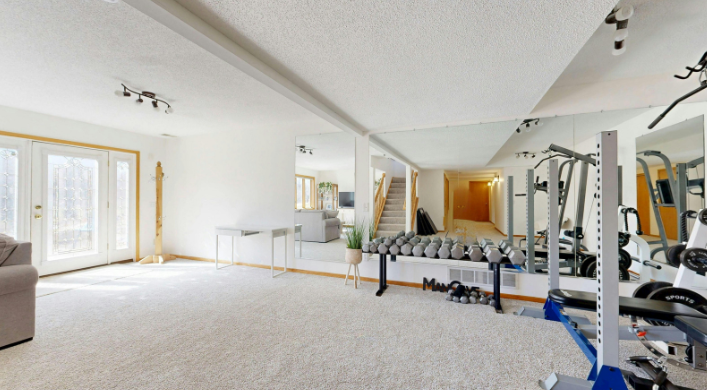
Designing a micro gym means making quick decisions about space, budget, and equipment—but above all, it means avoiding mistakes that become immediately amplified in a limited area. The most common temptation is to believe that custom solutions are always the best option, especially when every inch feels critical. In reality, this mindset often leads to unbalanced investments and inefficient configurations.
The goal is not to choose between standard and custom ideologically, but to understand where custom truly impacts flow, organization, and usability and where standard solutions are already optimized. This article offers a practical perspective: not general theory, but concrete criteria to allocate resources intelligently.
Why custom is not always the answer in small spaces
The myth: “the smaller the space, the more customization you need”
Custom does not automatically mean optimization. In many cases, customization is an emotional response to limited space rather than a technical solution. This leads to designing bespoke elements even where unnecessary, increasing costs and complexity without actually improving usability.
In a micro gym, every decision must be justified by a real impact on flow or function. If a standard element already performs well without creating interference, introducing custom solutions becomes a risk. The typical result is a setup that is harder to manage, less flexible, and often more difficult to update over time.
Smart standard: when it works better than custom
Standard does not mean generic or inefficient. Many pieces of equipment are already designed to be modular and compatible with compact spaces, especially in home gyms and PT studios. Using these solutions allows you to maintain a strong balance between cost, functionality, and ease of integration.
The real advantage of standard equipment is predictability: you know how it performs, how it integrates, and how it can be replaced. In a micro gym, this reduces structural risk and allows you to focus your budget where it truly matters.
Where custom really makes a difference
Racks and main stations: managing volumes and distances
Racks and main structures are the operational core of a micro gym. This is where custom solutions can make a tangible difference, directly affecting depth, width, and distance from walls. Even a few centimeters gained or better distributed can completely change how the space functions.
A custom rack allows you to adapt the structure to real constraints such as columns, walls, or required passageways. This prevents interference during training and improves safety. In these areas, custom is not a luxury—it is a tool to avoid structural mistakes that are difficult to fix later.
Storage and organization: eliminating clutter and friction
Storage is often underestimated, but in a micro gym it becomes critical. Plates, dumbbells, and accessories without a clear system quickly create clutter and obstruct movement. Custom solutions allow you to use residual spaces like walls or corners, turning them into functional zones.
A tailored storage setup reduces unnecessary movement and keeps the training area clear. This improves not only aesthetics but, more importantly, training flow. It is one of the areas where investment delivers immediate and noticeable value.
Where standard solutions are often sufficient
Benches and accessories: already optimized modularity
Benches and small accessories are designed to be versatile and easy to move. Their modular nature already makes them suitable for small spaces without the need for customization. Investing in custom solutions in these categories rarely delivers meaningful benefits.
On the contrary, keeping these components standard allows you to adapt your setup over time. In a micro gym, this flexibility is a strategic advantage, enabling changes without rigid constraints.
Flooring and base components: reliable standard solutions
Flooring and base elements follow well-established technical standards. Available solutions already meet most needs in terms of shock absorption, stability, and durability. Customizing these elements rarely provides benefits proportional to the cost.
In this case, the best choice is to rely on tested and compatible products. The focus should be on proper installation rather than extreme customization.
Flow, bottlenecks, and dead zones: the real decision criteria
How to identify bottlenecks and interference
Flow refers to how people move and use the space. In a micro gym, even small mistakes create bottlenecks, narrow passages, or overlaps between exercises. Analyzing these dynamics is essential to understand where intervention is needed.
Observing real or simulated movement patterns helps identify critical points. If two functions overlap or a passage is constantly occupied, it is a clear signal that the configuration needs adjustment.
Where custom corrects layout issues
Custom becomes valuable when it solves specific spatial and flow problems. For example, adapting a structure to avoid a narrow passage or integrating storage to free up an operational area.
In these cases, the value is functional rather than aesthetic. Custom solutions eliminate friction and improve training continuity, making the space more fluid and usable.
From theory to selective configuration
Practical framework: area, function, and level of customization
A selective configuration starts with a clear distinction between critical and non-critical areas. Main structures and storage require more attention and often benefit from custom solutions. In contrast, accessories and base components can remain standard without compromising results.
This approach reduces the risk of waste and allows for more effective budget allocation. It is not about choosing one approach over the other, but about combining both strategically.
Building a balanced and sustainable micro gym
A well-designed micro gym is the result of clear, targeted decisions. Allocating custom solutions only where they truly matter allows you to create an organized, functional, and credible space without unnecessary complexity.
If you are designing your space, the most useful step is to analyze your real needs and translate them into a concrete setup. Exploring available solutions and evaluating where to intervene precisely helps protect your investment and build a space that works over time.
Comments (0)