
Trolley
You have no items in your shopping cart

 Budgets
 Dumbers
 Discs
Discs
 Benches
 Racks and Rigs
 Weights Holders
 Isotonic machines
 Calisthenics
 Cardio
 Kettlebells
 Flooring
 Gym Set
 Accessories
 Combat
 ARTI MARZIALI
 CONTAINER GYM
 Tug-Of-War
 Used Gym Equipment
 PILATES MACCHINARI
 GINNASTICA ARTISTICA
 CAMPI DA PADEL
 Prodotti in Pronta Consegna
 Informazioni
 IRONMAN
 Gift Card
- Donatif
- Sports products
- 0 I like it
- 2188 Views
- 0 comments
- stress reduction, improved self-esteem, physical and mental well-being, gym training
READING TIME: 5 MINUTES ➤➤
Prevention and Rehabilitation: The Role of the Leg Curl
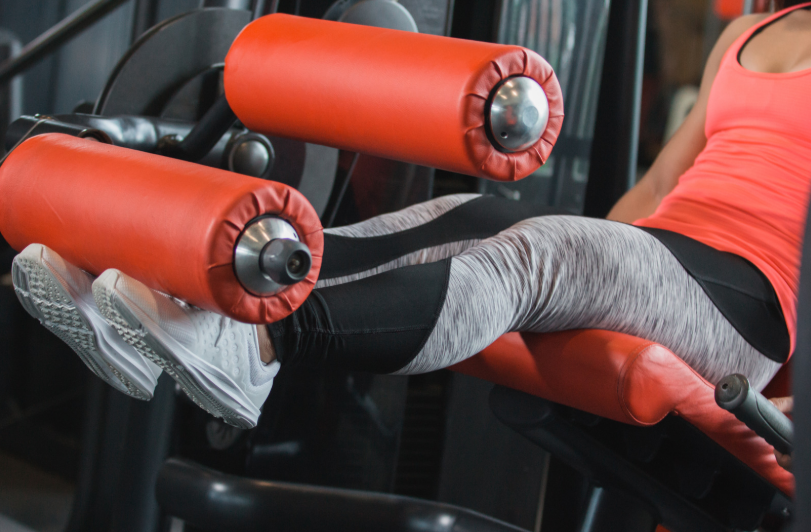
When it comes to knee health, one of the most common mistakes is focusing only on the quadriceps while neglecting the work of the posterior chain. In reality, strengthening the hamstrings is a crucial step in both injury prevention and anterior cruciate ligament rehabilitation. The knee flexors help improve movement control, better manage the forces acting on the joint, and enhance overall stability during athletic performance. In this context, the leg curl is not just a complementary exercise, but a precise technical tool to train a function that is often underestimated yet essential.
For an advanced athlete or anyone aiming to build a truly effective home gym, including a machine designed to specifically target the hamstrings means investing in movement quality, training consistency, and reduced joint stress. However, the difference is not made by the exercise alone. It also depends on how the machine is designed, how it guides the movement, and how well it provides a smooth and controllable trajectory. This is why focusing on the biomechanics of the Donatif Leg Curl becomes essential: a well-designed piece of equipment allows for safer, more repeatable, and more goal-oriented execution in both prevention and recovery contexts.
- Why knee flexors are essential for ACL stability
- Posterior chain and joint control
- Biomechanics of the Donatif Leg Curl
- How to perform the leg curl correctly
- Who it is for
- Why choosing a reliable machine matters
Why knee flexors are essential for ACL stability
The hamstrings play a key role in controlling the forces acting on the knee, especially during dynamic movements and deceleration phases. When this muscle group is weak or undertrained, the knee tends to lose part of its ability to properly manage stress. In practical terms, this can lead to reduced movement quality, excessive compensation from other muscle groups, and increased load on passive joint structures. This is why post-ACL hamstring strengthening is considered fundamental both in athletic preparation and in the gradual return to activity.
Targeted training of the knee flexors improves their active contribution to joint stability. This does not replace overall lower-body training, but complements it with a specific, controlled, and easily monitored stimulus. Leg curl rehabilitation is particularly effective because it allows isolation of the movement in a more stable environment, reducing unnecessary variables and enabling greater focus on execution quality. This approach is widely appreciated in both sports and rehabilitation settings, as it allows strength to be built progressively without immediately resorting to more complex or demanding exercises.
Posterior chain and joint control: how the leg curl supports prevention and recovery
Knee health never depends on a single factor, but on the balance between joints, muscles, and movement technique. Within this framework, the posterior chain plays a decisive role by stabilizing the pelvis, controlling the tibia, and distributing forces more effectively along the entire lower limb. When the hamstrings function properly, movement becomes more coordinated and the knee operates under more favorable mechanical conditions. This principle applies both to prevention and rehabilitation, where the priority is restoring function without introducing poorly managed loads.
The leg curl is an effective solution because it allows training of knee flexion with a high degree of control. Unlike more free-form exercises, it enables precise management of range of motion, execution speed, and load intensity. For those looking for dedicated leg machines, this represents a real advantage: the work becomes more repeatable, measurable, and adaptable to different phases of training, from preventive strengthening to post-injury recovery. This adaptability makes the leg curl a strategic component in a well-structured program.
Biomechanics of the Donatif Leg Curl: why proper movement reduces knee stress
An effective machine does not simply allow you to perform an exercise, but guides the body along a trajectory consistent with joint mechanics. In the case of the Donatif Leg Curl, its added value lies in enabling more precise execution, reducing compensations and unnecessary tension. When machine biomechanics are well designed, the knee moves more naturally, the muscle receives a cleaner stimulus, and the user can better perceive contraction. This is especially important in a prevention context, where the goal is not just to train, but to train correctly and consistently.
The most significant benefit of a well-designed structure is the reduction of unnecessary joint stress. Stable support, well-positioned levers, and a smooth trajectory help avoid small errors that, if repeated over time, can compromise training quality. For advanced athletes, this translates into greater ability to challenge the muscle without sacrificing technique. For those in recovery, it means being able to perform a useful exercise without excessive instability or poorly distributed load. The difference between a generic machine and one designed to guide movement properly becomes clear here.
Alignment between rotation axis and joint
One of the most important aspects of the leg curl is the alignment between the machine’s pivot point and the knee’s center of rotation. When this relationship is correct, movement becomes smoother and the load is transferred more effectively to the target muscles. When alignment is off, the body compensates, joint comfort decreases, and the work becomes less efficient. A machine that facilitates proper alignment makes the movement more reliable and more respectful of individual biomechanics.
From a practical standpoint, this also means being able to fine-tune positioning based on the user’s structure. In prevention and rehabilitation, customization is not a detail but a necessity. Every body has different leverages, ranges, and load perceptions. A well-designed machine must therefore support the user in finding the correct setup, because that is where effective hamstring training truly begins.
Pelvic stability and contraction quality
To effectively train the knee flexors, simply moving the pad is not enough. It is essential to prevent pelvic movement and avoid compensatory patterns. A stable structure helps maintain optimal trunk and pelvic positioning, improving contraction quality. This is crucial because when pelvic control is lost, movement precision decreases and load distribution becomes suboptimal. In other words, good support stability allows the muscle to work properly.
In post-injury contexts, this aspect becomes even more important, as the individual needs to feel safe during execution. Stability promotes cleaner movement, better rhythm control, and more gradual load progression. Even in a home gym, this feature is valuable because it makes training more technical and less dependent on constant corrections.
Smooth resistance and manageable load
Another key factor is resistance quality. A well-designed machine should provide a load that is noticeable yet manageable, without jerks or sudden accelerations. Smoothness makes the movement easier to interpret, helps control the eccentric phase, and allows for more conscious work on timing and range. For those looking for an effective exercise in ACL rehabilitation in the gym, this characteristic is essential, as it enables precise progression.
Load management is not only about total weight, but also about how that weight is perceived throughout the entire movement. A machine that delivers consistent resistance helps maintain focus on the hamstrings and reduces the tendency to compensate with other body segments. This improves both joint comfort and training quality, making the leg curl far more strategic than it is often considered.
How to perform the leg curl correctly during prevention and rehabilitation
To achieve real benefits, execution must always be guided by control. The first step is proper machine setup: seat or support correctly positioned, pad aligned, and the knee joint in line with the pivot point. Once the position is set, the goal is not simply to complete the movement, but to maintain a clean trajectory without momentum or loss of control. The concentric phase should be deliberate, while the eccentric phase deserves even more attention, as it plays a key role in developing neuromuscular control.
The most common mistakes include using excessive load, moving too quickly, and compensating with the pelvis or lower back. In a prevention or rehabilitation context, these behaviors are counterproductive because they shift the focus from movement quality to perceived effort. It is better to work with a sustainable intensity, maintaining full control of the range of motion and increasing load only when execution remains stable. This principle applies to everyone, but especially to those returning from ACL rehabilitation who need to rebuild confidence, control, and consistency.
Who it is for: advanced athletes, home gym users, and rehabilitation contexts
The leg curl is useful for a broader audience than commonly assumed. For the advanced athlete, it serves as a key technical tool to complement posterior chain training and maintain high-quality physical preparation. In sports involving sprinting, direction changes, and deceleration, strong hamstrings contribute to better movement control and reduced exposure to poorly managed loads. In this sense, the machine does not replace global training but enhances it strategically.
In a well-designed home gym, a leg curl machine also has a clear purpose, especially for those who do not want to settle for generic training. Having dedicated equipment allows for more consistent and specific work, without relying on improvised alternatives. In rehabilitation contexts, the ability to precisely manage load and repeat a standardized movement helps track progress more effectively. This combination of precision, safety, and reliability is what makes the leg curl a smart and valuable piece of equipment.
Why choosing a reliable machine matters for hamstring training
When the goal is to protect the knee and improve posterior chain function, machine quality truly matters. A solid structure, intuitive adjustments, and well-designed biomechanics allow for better training, not just more training. This is crucial because hamstring work requires precision, consistency, and a clean movement feel. A poorly designed or unstable machine can compromise these elements, reducing the effectiveness of an exercise that should instead provide control and confidence.
The Donatif Leg Curl, in this perspective, stands out as an excellent solution for those seeking build quality, attention to biomechanics, and a strong focus on joint health. Whether the goal is preventing knee issues, enhancing athletic preparation, or supporting recovery, the principle remains the same: a well-designed machine helps the muscle work better while respecting the joint. This is where the leg curl evolves from a simple hamstring exercise into a concrete tool for prevention, control, and long-term performance.
Comments (0)