
Trolley
You have no items in your shopping cart

 Budgets
 Dumbers
 Discs
Discs
 Benches
 Racks and Rigs
 Weights Holders
 Isotonic machines
 Calisthenics
 Cardio
 Kettlebells
 Flooring
 Gym Set
 Accessories
 Combat
 ARTI MARZIALI
 CONTAINER GYM
 Tug-Of-War
 Used Gym Equipment
 PILATES MACCHINARI
 GINNASTICA ARTISTICA
 CAMPI DA PADEL
 Prodotti in Pronta Consegna
 Informazioni
 IRONMAN
 Gift Card
- Donatif
- Sports products
- 0 I like it
- 1809 Views
- 0 comments
- gym flooring, safety flooring, gym safety, shock-absorbing materials
READING TIME: 5 MINUTES ➤➤
How to Use a Heart Rate Watch as a Beginner
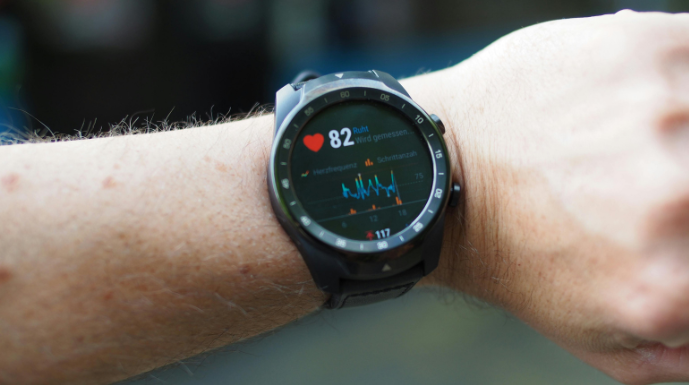
Using a heart rate watch for beginners does not mean turning every walk, run, or workout into a constant stream of numbers to obsessively monitor. For those just getting started, the main value of a heart rate monitor is much simpler: it helps you understand whether your effort is light, sustainable, or too intense for your current level. This allows you to train with greater awareness, especially when physical sensations are still difficult to interpret.
Many beginners buy a sports watch and end up staring at too many screens, metrics, and graphs. The result is often confusion rather than control. A basic guide helps reduce this overload: a few well-understood data points are more useful than a large amount of poorly interpreted information. Heart rate, recovery time, and perceived effort are more than enough to start training in a safe and structured way.
Understanding what a heart rate watch is really for
The heart rate monitor as a guide, not a judge
The first mistake to avoid is thinking that a heart rate watch should decide whether a workout was successful or not. For a beginner, the device should work as a subtle guide, giving useful feedback when the body is not yet fully accustomed to exercise. If your heart rate rises quickly during a light run, the watch is not signaling failure: it is simply showing that the intensity is higher than it may feel.
This approach reduces pressure and makes technology more useful. Data should not replace physical sensations but support them. Breathing, perceived fatigue, the ability to talk, and heart rate should all be read together. At this stage, the goal is not to improve every single week in a perfectly linear way, but to learn how to recognize when the body is working sustainably and when it needs a more cautious pace.
Why heart rate helps measure effort
Heart rate indicates how many times the heart beats per minute and naturally increases as exercise intensity rises. For people returning to running, brisk walking, or light circuit workouts, this number helps distinguish truly moderate effort from effort that only feels easy during the first few minutes. It is a simple but highly practical piece of information because it helps manage both energy and recovery more effectively.
A heart rate watch becomes especially useful when it shows trends over time. If your heart rate climbs too quickly, it may be a sign to slow down. If it stays stable during an easy session, the pace is probably appropriate. If your heart rate takes a long time to decrease after training, your body may need more recovery. These insights do not require advanced knowledge, only consistency and a bit of practice.
The metrics to focus on when starting out
Heart rate, pace, and recovery time
When you are just starting, only a few metrics truly matter. The first is your heart rate during exercise, because it shows how hard your body is working. The second is pace, particularly useful for running, although it should not be interpreted too rigidly. The third is recovery, meaning how quickly you feel back in control after effort. Together, these three indicators provide enough information to train more confidently.
Pace alone can be misleading because a speed that seems low may still feel demanding for a beginner. Estimated calories should also not become the main focus, since they depend on algorithms and personal settings. It is more useful to observe whether your heart rate becomes more stable over time during the same route and duration. This is often a more valuable signal than a single isolated number at the end of a workout.
Which data to ignore during the first weeks
Many devices display VO2 max, training load, readiness, stress, sleep quality, calorie estimates, and other advanced indicators. While interesting, these metrics can create more doubts than benefits during the first weeks of training. Beginners should avoid basing every decision on complex metrics because they often lack enough personal history to interpret them correctly. Simplicity, at this stage, is a form of control.
A useful rule is to ask whether a metric helps make an immediate and understandable decision. If the answer is no, it can stay in the background. Knowing that your heart rate is higher than usual during a walk may suggest slowing down. Reading an advanced metric without understanding how to use it, on the other hand, often increases anxiety. A heart rate watch should simplify training, not make it harder to manage.
Basic cardio zones explained simply
Light, moderate, and intense training
Basic cardio zones are used to divide exercise intensity into different levels. In simple terms, you can think of three categories: light, moderate, and intense. During light intensity, you can speak comfortably and sustain the activity for a long time. At moderate intensity, breathing becomes more noticeable but still manageable. During intense exercise, talking becomes difficult and the effort cannot be maintained for very long.
For beginners, light and moderate zones are usually the most useful. They help build consistency, improve endurance, and support better recovery between sessions. It is not necessary to constantly chase the highest intensity zone to feel like you are training effectively. In fact, learning to stay within a sustainable effort level is one of the most important skills for anyone restarting a fitness routine.
How to use zones without complicated formulas
Many watches automatically calculate cardio zones based on age, personal data, and previous measurements. These estimates are not perfect, but they are often good enough to begin with. The most practical way to use them is to observe which zone you are in during different parts of a workout. If your goal is an easy run and the watch frequently signals high intensity, your pace is probably not as easy as it seems.
Technology becomes more reliable when compared with physical sensations. If the watch indicates a moderate zone but breathing feels strained, it is better to listen to your body. If the watch shows light intensity and you feel comfortable, the session is probably on the right track. This method prevents cardio zones from becoming rigid rules and turns them into practical tools for understanding your effort.
How to use the watch during a practical session
Before, during, and after training
Before starting, it is important to make sure the watch fits properly on the wrist, neither too loose nor too tight. The correct activity mode should also be selected, such as walking, running, or cardio training, so the device records data more accurately. During the first few minutes, it is normal to see heart rate gradually rise, especially without a warm-up. Starting progressively helps interpret effort more effectively.
During the workout, attention should focus on only a few signals: heart rate, breathing, and overall sensation. There is no need to look at the screen every few seconds. It is more useful to check briefly every five or ten minutes to understand whether the intensity still feels sustainable. After the session, you can observe how quickly your heart rate decreases and how your body feels overall. Recovery is a simple but highly meaningful metric.
A simple example for running or brisk walking
A beginner can start with a thirty-minute session alternating brisk walking and short periods of light jogging. During the first five minutes, the goal is simply to warm up while keeping heart rate in a comfortable range. During the next twenty minutes, intensity can increase slightly while remaining at a manageable effort level. The final five minutes should be used to slow down gradually and help the body return toward lower heart rate values.
In this example, the heart rate watch is not meant to measure performance but to avoid two common mistakes: starting too fast and failing to recover properly. If heart rate rises rapidly during the central part of the session, returning to walking is a good option. If it remains stable, the chosen pace is probably appropriate. This makes the device a practical support tool, even for people who feel skeptical about technology or worry about misinterpreting data.
Useful tools for beginners
Generic heart rate watch and basic chest strap
Getting started does not necessarily require an advanced device. A basic heart rate watch with heart rate tracking, essential sport profiles, and simple workout summaries is often more than enough. The important thing is that it is easy to read during activity and comfortable to wear. A clear screen showing heart rate, duration, and pace can be more valuable than a feature-rich interface that is difficult to navigate while moving.
A basic chest strap can be a useful accessory for those who want more stable heart rate measurements, especially during activities involving wrist movement or rapid intensity changes. It is not essential for beginners, but it can become interesting for anyone seeking greater accuracy over time. In a gradual training journey, both the watch and chest strap should be viewed as supportive tools rather than equipment reserved for experienced athletes.
How to choose without focusing only on numbers
Choosing the right device should start with real-world use. People who walk, jog slowly, or return to exercise after a long break need clear functions rather than dozens of advanced screens. Display readability, strap comfort, ease of starting activities, and the clarity of workout summaries matter more than complex technical features. A simple product used consistently is far more valuable than an advanced device left unused in a drawer.
The best way to use a beginner heart rate watch is to think of it as a guidance tool. It helps you understand when to slow down, when to maintain your pace, and when to allow yourself more recovery. Over time, the numbers become less intimidating and more familiar. At that point, technology stops feeling like an obstacle and becomes a way to train with greater calm, consistency, and confidence in your body’s signals.
Comments (0)