
Trolley
You have no items in your shopping cart

 Budgets
 Dumbers
 Discs
Discs
 Benches
 Racks and Rigs
 Weights Holders
 Isotonic machines
 Calisthenics
 Cardio
 Kettlebells
 Flooring
 Gym Set
 Accessories
 Combat
 ARTI MARZIALI
 CONTAINER GYM
 Tug-Of-War
 Used Gym Equipment
 PILATES MACCHINARI
 GINNASTICA ARTISTICA
 CAMPI DA PADEL
 Prodotti in Pronta Consegna
 Informazioni
 IRONMAN
 Gift Card
- Donatif
- Sports products
- 0 I like it
- 3198 Views
- 0 comments
READING TIME: 5 MINUTES ➤➤
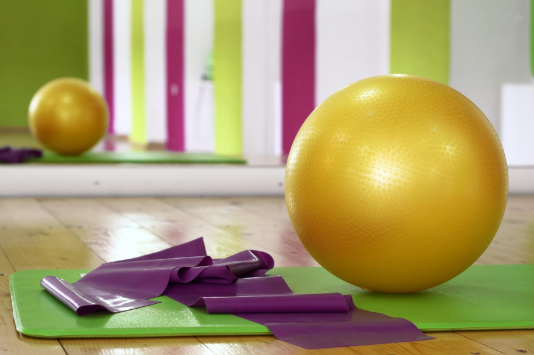
Pilates is a discipline known for its effectiveness in improving strength, control, and body awareness. However, the impact that adding small pieces of equipment can have on the quality of a workout is often underestimated. Simple and targeted tools are enough to intensify every movement, activate new muscle groups, and make the practice even more engaging. In this article, you will discover how to incorporate these accessories into your routine, improving performance while keeping motivation high.
- Why add small equipment to your Pilates practice
- Essential tools to enrich your workout
- Integrating equipment into your daily routine
- Levels and adaptability: tools for every practitioner
Why add small equipment to your Pilates practice
Multiplying benefits through targeted activation
When small tools such as soft balls, rings, resistance bands, or foam rollers are introduced, they stimulate greater neuromuscular activation. Every exercise, even the simplest one, requires a new level of control and stabilization. This means improving the effectiveness of the session by increasing work on balance, proprioception, and functional strength. Equipment also allows you to vary intensity, making Pilates more dynamic and adaptable to different goals.
The gradual introduction of these tools represents a real qualitative leap. The body is forced to react more precisely, encouraging positive and progressive adaptations. And it is not just about physical effort: the mindful use of small equipment strengthens the mind-body connection, one of the fundamental principles of Pilates.
The progress effect: how to stimulate body and mind
One of the most common obstacles in regular practice is the loss of motivation. Integrating small tools into the routine helps keep the challenge alive, allowing practitioners to experiment with new movement patterns and rediscover familiar exercises from a different perspective. The “progress effect”—the tangible feeling of improvement—is a powerful ally for consistency.
This variety becomes especially important for intermediate users who risk falling into monotony. Each accessory introduces an element of novelty that stimulates attention and renews enthusiasm. The result is a richer, more intense, and more rewarding practice that delivers tangible benefits over time.
Essential tools to enrich your workout
Overview of the main small Pilates tools
In the world of Pilates, there are many small tools designed to support or intensify exercise execution. The most common include the magic circle (or Pilates ring), the soft ball, resistance bands, the foam roller, and small hand weights from 0.5 to 1 kg. Each has specific characteristics and can be used for different purposes, from muscle strengthening to joint mobility.
The magic circle, for example, is ideal for working on inner thighs, shoulders, and arms thanks to the elastic resistance it offers when compressed. Resistance bands provide exceptional versatility, suitable for both toning and muscle stretching. The roller is excellent for spinal work, stabilization, and self-massage, while the soft ball enables deep work on the core and pelvic control.
How to choose the right accessory for each goal
The choice of equipment depends on what you want to achieve. If the focus is core strengthening, the soft ball or roller are excellent tools. For those who want to increase muscular intensity, the magic circle and resistance bands are great options. Small weights, on the other hand, are perfect for adding load to exercises targeting arms or legs.
It is also important to consider your starting level. An intermediate practitioner will benefit from exploring tools that provide progressive challenge while maintaining control. The goal is not fatigue for its own sake but the mindful use of load to achieve greater precision, stability, and endurance in movement.
Integrating equipment into your daily routine
Strategies for a consistent and evolving practice
One of the keys to success in Pilates is consistency. Strategically introducing small equipment makes it possible to structure a balanced weekly routine that alternates phases of strengthening, stretching, and release. It is not necessary to use them in every session: even incorporating them once a week can make a difference over time.
The variety of tools offers endless possibilities for combination. For example, one session could focus on resistance bands for the lower body, another on the magic circle for the torso, and a third on myofascial release with the foam roller. This alternation stimulates the body to respond adaptively, reducing boredom and maximizing results.
Examples of weekly routines with equipment
A typical week could start with a dynamic session using resistance bands, focused on legs and glutes. Midweek, a lesson with the soft ball can target the core and postural control. The weekend may be dedicated to relaxation with the foam roller, ideal for muscle recovery and joint mobility.
This modular approach allows workouts to be customized according to physical needs, available time, and energy levels. It also makes every week different and stimulating, maintaining interest and encouraging long-term adherence to practice.
Levels and adaptability: tools for every practitioner
A progressive approach for beginners and intermediates
One of the advantages of Pilates with equipment is its extreme adaptability for all levels. For beginners, tools can be used to facilitate movement, offering support and improving postural awareness. The soft ball, for instance, can support the lower back during floor exercises, making basic positions more accessible.
For intermediate practitioners, the same tools become an opportunity to gradually increase difficulty in a controlled way. Adding resistance with bands or working on balance with the roller allows practitioners to explore new training stimuli without sacrificing the precision required by the method.
How to safely increase intensity
The fundamental principle of Pilates is control. Increasing intensity does not mean performing faster or more exhausting movements, but making every gesture deeper, more conscious, and more functional. The introduction of equipment should therefore always be calibrated according to personal physical condition and goals.
A good approach is to introduce equipment in short phases within the session, observing how the body responds and gradually adjusting intensity. In this way, a harmonious growth path is created, enhancing individual potential and leading to lasting results.
Comments (0)