
Trolley
You have no items in your shopping cart

 Budgets
 Dumbers
 Discs
Discs
 Benches
 Racks and Rigs
 Weights Holders
 Isotonic machines
 Calisthenics
 Cardio
 Kettlebells
 Flooring
 Gym Set
 Accessories
 Combat
 ARTI MARZIALI
 CONTAINER GYM
 Tug-Of-War
 Used Gym Equipment
 PILATES MACCHINARI
 GINNASTICA ARTISTICA
 CAMPI DA PADEL
 Prodotti in Pronta Consegna
 Informazioni
 IRONMAN
 Gift Card
- Donatif
- Sports products
- 0 I like it
- 3699 Views
- 0 comments
READING TIME: 5 MINUTES ➤➤
Flooring for CrossFit and Functional Training: Key Features and Ideal Thickness
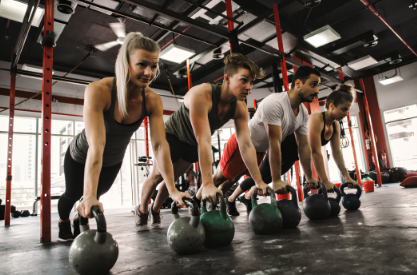
In the world of CrossFit and functional training, every detail matters. While barbells, kettlebells, and racks are the most visible elements of a high-performance gym, flooring is often overlooked—despite playing a crucial role. Choosing the right flooring for a CrossFit box is not an aesthetic decision, but a direct investment in performance, safety, and equipment longevity. In this in-depth guide, we will explore the key characteristics of professional flooring: from materials and ideal thickness to density and grip required to support high-intensity workouts.
- The role of technical flooring in CrossFit performance
- Materials and density: what makes flooring suitable for CrossFit
- Ideal thickness for each training area
- Grip, resistance, and long-term durability
- Choosing the right flooring for your box
The role of technical flooring in CrossFit performance
Why flooring is an integral part of equipment
In a functional gym or CrossFit box, the flooring is not just a surface, but a true technical tool. It must withstand multiple stresses: plyometric jumps, dropping loaded barbells, sprints, and rapid direction changes. Unlike traditional flooring, CrossFit flooring must combine resilience, shock absorption, and grip. High-quality flooring enhances movement efficiency, reduces injury risk, and protects both equipment and underlying structures over time.
Impact on safety, stability, and athletic performance
The surface an athlete trains on directly affects stability and performance. A floor that is too rigid can cause joint stress, while one that is too soft compromises stability during lifts. The right balance provides a stable base for complex, multi-joint movements, helping prevent slips and injuries. Additionally, impact absorption reduces cumulative stress on knees, ankles, and the back, especially during intense and repetitive workouts.
Materials and density: what makes flooring suitable for CrossFit
Material characteristics: rubber, EPDM, polyurethane
Material selection is a key aspect in designing a CrossFit area. The most common and high-performing floors are made of vulcanized rubber, offering an excellent balance between elasticity and strength. EPDM, a type of synthetic rubber, is often used for its durability and ability to maintain color over time. In certain applications—such as high-impact areas or where extra comfort is required—polyurethane is also used. The choice depends on usage level, training frequency, and the type of exercises performed daily.
Density and shock absorption capacity
Another crucial factor is material density, which determines its ability to withstand impacts without deforming. In CrossFit environments, where dropping barbells is common, it is essential to choose flooring that ensures proper kinetic energy absorption. A surface that is too soft can hinder heavy lifting performance, while one that is too rigid fails to adequately protect both athletes and structures. The ideal balance is achieved with high-density materials that absorb impact while maintaining lateral stability.
Ideal thickness for each training area
Free weights and weightlifting area
In areas dedicated to free weights and Olympic lifting, flooring thickness is critical. It is recommended to use panels or tiles of at least 30 mm thickness, with the possibility of reaching 40–50 mm for heavy loads or to protect sensitive surfaces. These thicknesses help absorb barbell bounce, reducing impact transmission to the underlying structure while protecting athletes’ joints.
Cardio, mobility, and functional training zones
Areas dedicated to bodyweight exercises, functional circuits, or mobility work require different specifications. In these cases, flooring with a thickness of 10 to 20 mm is suitable, prioritizing comfort and cushioning. Thinner flooring improves movement perception and allows greater responsiveness during dynamic exercises such as jumps, lunges, and lateral movements. The surface should also be seamless and even to ensure maximum safety during transitions and quick direction changes.
Grip, resistance, and long-term durability
Resistance to abrasion and deformation
Professional CrossFit flooring must withstand continuous and repeated stress over time. This includes sled dragging, intensive use of heavy equipment, and the dropping of free weights. The surface must not deform, crack, or show premature wear, even after years of use. Abrasion resistance is therefore a key requirement, especially in high-traffic facilities. High-quality materials ensure consistency, structural integrity, and long-term performance.
Optimal grip for dynamic exercises and stability
Grip is one of the most important qualities in CrossFit training. Flooring that is too slippery compromises safety, while excessively rough surfaces can cause abrasions or restrict movement. The ideal balance is achieved with finishes that provide stable yet smooth traction, supporting exercises such as box jumps, kettlebell swings, snatches, and cleans. Proper grip improves force transfer to the ground and enhances postural stability during critical phases of training.
Choosing the right flooring for your box
Analyzing specific needs: traffic, loads, activities
Every gym has unique requirements that demand a tailored approach. The number of daily users, the predominant type of training (weightlifting, functional, HIIT), the presence of mixed activities, and the layout all directly influence flooring selection. High-traffic areas require durability and easy maintenance, while recovery or mobility zones may benefit from softer, more comfortable surfaces. Carefully assessing operational needs ensures a long-term and effective investment.
Practical tips for gym and box owners
For CrossFit box and functional gym owners, choosing the right flooring means ensuring safety, efficiency, and brand reputation. It is advisable to rely on specialized suppliers who offer certified, tested, and customizable solutions. Evaluating installation systems (interlocking, floating, glued) and layout flexibility is essential for easy maintenance and future reconfiguration. Finally, considering anti-slip and fire safety regulations helps avoid legal issues and enhances the overall user experience.
Comments (0)