
Trolley
You have no items in your shopping cart

 Budgets
 Dumbers
 Discs
Discs
 Benches
 Racks and Rigs
 Weights Holders
 Isotonic machines
 Calisthenics
 Cardio
 Kettlebells
 Flooring
 Gym Set
 Accessories
 Combat
 ARTI MARZIALI
 CONTAINER GYM
 Tug-Of-War
 Used Gym Equipment
 PILATES MACCHINARI
 GINNASTICA ARTISTICA
 CAMPI DA PADEL
 Prodotti in Pronta Consegna
 Informazioni
 IRONMAN
 Gift Card
- Donatif
- Sports products
- 0 I like it
- 1946 Views
- 0 comments
- stress reduction, improved self-esteem, physical and mental well-being, gym training
READING TIME: 5 MINUTES ➤➤
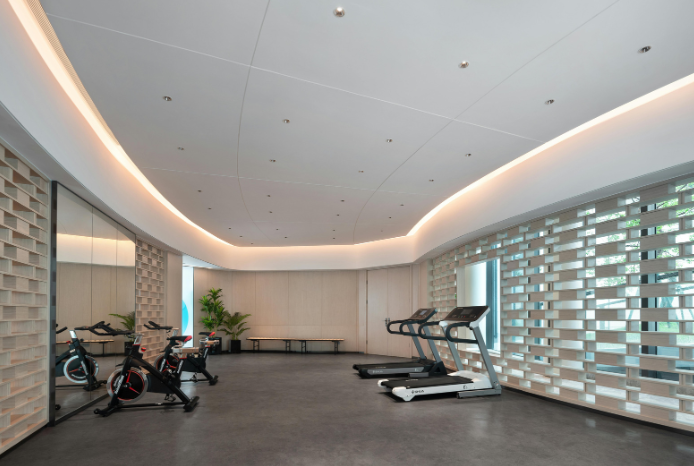
Condominium gym: entry-level or premium equipment for shared use?
When setting up a condominium gym, choosing between entry-level equipment and premium solutions is never straightforward. A shared environment introduces specific variables that make an approach based solely on immediate savings ineffective. Those managing these spaces often have to balance limited budgets, user expectations, and long-term durability, with the real concern of disputes or unsustainable investments.
The common belief that “it’s enough to buy the cheapest option available” risks creating more problems than benefits. In a shared setting, factors such as usage intensity, variability of users, and the need to reduce maintenance interventions become critical. Understanding where it makes sense to invest more and where costs can be optimized is the real point of balance.
- Real difference between entry-level and premium
- Shared use and its impact on choice
- Budget and cost management
- Where to upgrade the quality level
- Building a sustainable equipment setup
Real difference between entry-level and premium equipment
The distinction between basic and high-end equipment is not just about price, but involves key structural aspects. Premium equipment stands out for more durable materials, tighter manufacturing tolerances, and refined finishes, all of which directly affect stability and safety during use. In contrast, entry-level products tend to prioritize cost reduction, often at the expense of robustness and precision.
Another relevant factor is user perception. In a shared space, perceived quality influences trust and overall satisfaction. Equipment that feels unstable or noisy, even if functional, can create a negative impression and reduce the use of the shared facility.
Shared use: why it completely changes the decision
A condominium gym cannot be compared to individual home use. Equipment is used by different people, with varying levels of experience and care. This results in a more irregular but often more stressful usage intensity for machines, which must handle loads and usage patterns that are not always controlled.
This variability increases the risk of premature wear. Less robust components tend to deteriorate quickly, leading to additional costs and replacements. In this context, choosing the right quality level becomes a strategic decision tied to durability and reduced management issues.
Condominium budget: spend less or spend better
One of the most common mistakes is evaluating expenses only in terms of initial cost. In reality, the most relevant parameter is the total cost over time, which includes maintenance, replacements, and issue management. Cheaper equipment can end up costing more in the medium term if it requires frequent repairs or replacements.
Additionally, the condominium context introduces a delicate aspect: perception of spending. Investments that are too low may be seen as poor quality, while overly premium choices can lead to disputes. The key is finding alignment between investment and expected usage, clearly communicating the criteria behind decisions.
Where it makes sense to upgrade quality (and where it doesn’t)
Not all equipment categories require the same quality level. It makes sense to invest in higher-end options for items exposed to greater stress, such as exercise bikes, multifunction benches, and flooring, which must ensure stability and long-term durability. These elements form the operational core of the gym and have the greatest impact on safety.
On the other hand, accessories like light dumbbells or storage solutions can also be chosen in a basic range, as long as they meet a minimum level of reliability. In these cases, wear impact is lower and the cost-benefit ratio favors more economical solutions.
Building a balanced and sustainable setup
An effective condominium gym comes from thoughtful selection, not a uniform approach. The most solid strategy is to allocate the budget based on usage intensity, wear risk, and equipment importance. This helps avoid waste while ensuring a good user experience.
The ideal outcome is a setup that conveys reliability without excess, capable of lasting over time and minimizing management issues. In a shared environment, true value lies not in the lowest price, but in a conscious and balanced choice that combines robustness, simplicity, and economic sustainability.
Comments (0)