
Trolley
You have no items in your shopping cart

 Budgets
 Dumbers
 Discs
Discs
 Benches
 Racks and Rigs
 Weights Holders
 Isotonic machines
 Calisthenics
 Cardio
 Kettlebells
 Flooring
 Gym Set
 Accessories
 Combat
 ARTI MARZIALI
 CONTAINER GYM
 Tug-Of-War
 Used Gym Equipment
 PILATES MACCHINARI
 GINNASTICA ARTISTICA
 CAMPI DA PADEL
 Prodotti in Pronta Consegna
 Informazioni
 IRONMAN
 Gift Card
- Donatif
- Sports products
- 0 I like it
- 1680 Views
- 0 comments
- gym flooring, safety flooring, gym safety, shock-absorbing materials
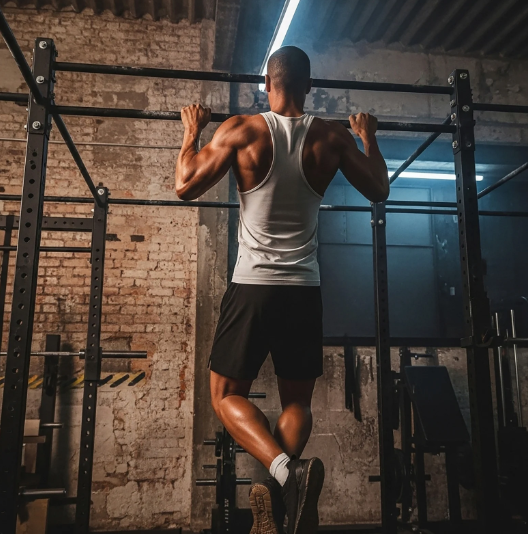
READING TIME: 5 MINUTES ➤➤
Installing a Wall-Mounted Pull-Up Bar Without Mistakes: A Step-by-Step Guide
Installing a wall-mounted pull-up bar may seem like a simple task, but it is perfectly normal to have concerns when it comes to fixings, anchors, and safety. The most common fear is not just using the equipment itself, but also the risk of drilling incorrectly, choosing unsuitable screws, or damaging a wall at home. For this reason, a clear and organized guide can help turn what feels like a risky installation into a more controlled, reasoned, and verifiable process.
This guide is designed for anyone who wants to install a pull-up bar in a home or professional environment with greater confidence. The instructions are practical, but they do not replace the advice of a technician when the wall is questionable, when the wall material is unknown, or when the installation takes place in a space used by multiple people. In such cases, the safest option remains to rely on a qualified installer and always follow the manufacturer’s official instructions.
Before Installation: Wall Type, Space, and Safety Conditions
Checking the Type of Wall
The first thing to assess is the wall on which the pull-up bar will be mounted. A pull-up bar mounted on a wall is subjected to dynamic loads, not just static ones. During a pull-up, a grip change, or even a slight swing, the fixing points experience stresses greater than simple body weight. For this reason, it is important to determine whether the wall is solid, load-bearing, and suitable for anchoring. Fragile walls, lightweight partitions, drywall, or deteriorated surfaces should not be considered suitable supports without a specific technical assessment.
Before proceeding, inspect the wall carefully to ensure there are no cracks, loose plaster, or damp areas, and verify that there are no electrical cables or plumbing pipes running through the drilling area. A wall detector can help, but it does not eliminate all uncertainty. When the wall structure is unknown, consulting a professional is a prudent choice, especially if the pull-up bar will be used frequently or by multiple users.
Checking Clearance and Movement Area
Once a potentially suitable wall has been identified, the surrounding space must be evaluated. The height should allow for a comfortable grip and natural movement while preventing collisions with ceilings, furniture, doors, or shelves. It is important to consider not only the stationary position but also movement during exercise. The body may swing, the knees may move forward, and the shoulders require sufficient freedom of movement. A cramped area makes training less comfortable and increases the risk of accidental impacts.
In a home gym environment, it is useful to visualize how the equipment will actually be used before drilling any holes. Many people train in limited spaces, so the mounting location must balance practicality and safety. A properly positioned pull-up bar should be stable, accessible, and free from obstacles. This preliminary step helps prevent mistakes that are difficult to correct after installation.
Tools, Screws, and Mounting Kits
What to Prepare Before Starting
Before installation, it is advisable to have everything ready: a drill suitable for the wall material, the correct drill bit, a spirit level, measuring tape, pencil, tightening tools, and personal protective equipment. Having a second person available can also be helpful to hold the pull-up bar in place during marking and reduce the likelihood of measurement errors. An organized installation always begins with thorough preparation, not improvisation.
The choice of screws, wall plugs, and anchors must be consistent with the wall type and the manufacturer’s specifications. Not all anchors are the same, and not all walls respond to drilling in the same way. Using generic hardware simply because it is available at home may compromise the stability of the installation. When the product includes a mounting kit, it should be evaluated together with the official instructions and verified for compatibility with the wall structure.
Why Following Official Instructions Matters
The manufacturer’s instructions are not a minor detail. They specify distances, fixing points, assembly order, and equipment usage limits. For Donatif products, it is advisable to refer to the official Donatif instructions and the components intended for that specific model. Even pull-up bars that appear similar may have different hole patterns, geometries, and installation requirements, so copying a setup seen elsewhere is not a guarantee of correctness.
Following the manual reduces the risk of installing the bar unevenly or with inconsistent tightening. It also helps distinguish between what is covered by the product specifications and what requires an external assessment, such as wall quality. Safety depends on the combination of three factors: the correct product, a suitable wall structure, and proper installation. If any of these elements is missing, the installation should not be considered ready for use.
Step-by-Step Installation of a Wall-Mounted Pull-Up Bar
Marking, Drilling, and Fixing
Installation begins by positioning the pull-up bar against the wall and accurately marking the drilling points. A spirit level is essential to avoid misalignment, as even a slight tilt can make the grip uncomfortable and distribute forces unevenly. After marking, the points should be checked again before drilling. Spending a few extra minutes at this stage is preferable to correcting mistakes after holes have already been drilled.
During drilling, the drill bit must be suitable for the wall material and the diameter required by the anchors. The hole should be clean, deep enough, and free from debris that could interfere with anchor insertion. Once the anchors are installed, the pull-up bar can be positioned against the wall and secured gradually rather than fully tightening one screw immediately. This approach helps maintain alignment and distribute pressure more evenly across the fixing points.
Tightening and Alignment Checks
After the initial fixing, tightening should be completed carefully, alternating between anchoring points and ensuring that the structure remains flush with the wall. A pull-up bar that moves at this stage should not be used. Tightening should not be treated as a test of strength: over-tightening on an unsuitable wall can damage the structure or deform components, while insufficient tightening may leave dangerous play in the system.
The final alignment check is an integral part of the installation. The pull-up bar should be straight, stable, and free from abnormal movement. It is also useful to inspect the wall around the fixing points. Hairline cracks, emerging dust, or plaster detachment are warning signs that should be evaluated carefully. If any anomalies are observed, use should be suspended until further inspection.
Load Testing and Pre-Use Checks
Progressive Testing Without Unnecessary Risks
A pull-up bar load test should not involve immediate and intense use. The safest approach is progressive verification: first check manually for any movement, then apply a controlled and moderate load while observing for noises, looseness, or displacement. Only after repeated positive checks should testing progress toward loads closer to actual use, and even then without swinging or sudden movements during the initial trials.
This step is particularly important for users who feel uncertain about the installation. A gradual approach provides tangible confirmation of the equipment’s stability and reduces anxiety. In any case, the test should never exceed the manufacturer’s stated limits or become an extreme stress test. The goal is to verify installation quality, not to place unnecessary strain on the wall and fixing system.
Warning Signs Not to Ignore
After installation, several warning signs require immediate attention: creaking noises, vibrations, movement of the brackets, loose screws, cracks, or plaster detachment around the anchors. Even if the pull-up bar still appears usable, these signs indicate that something needs to be checked. Continuing to train despite these issues may increase the risk of failure.
A good habit is to perform regular visual inspections, especially during the first weeks of use and after intense training sessions. Home gym equipment, like professional equipment, benefits from simple but consistent maintenance. Checking fasteners, stability, and wall condition helps maintain a level of safety appropriate to the intended use.
Common Mistakes to Avoid
Rushed Installations and Unsuitable Supports
One of the most common mistakes is beginning installation without properly assessing the wall. Rushing often leads to choosing the first available space, using unsuitable anchors, or skipping alignment checks. In the case of a wall-mounted pull-up bar, these details are not minor. The fixing system supports body weight during dynamic exercise and should be treated as a structural component of the training setup.
Another frequent mistake is underestimating user weight, frequency of use, and the type of exercises planned. A slow, controlled pull-up does not create the same stresses as explosive movements or repeated swinging. For this reason, it is important to respect product limits, avoid homemade modifications, and refrain from adding unapproved components. Safety also depends on how the equipment is used after installation.
When to Call a Professional
Professional assistance is recommended when the wall type cannot be clearly identified, when hidden utilities may be present, when the wall is old, or when installation takes place in a gym, personal training studio, or shared space. In these situations, the level of responsibility is higher, making professional verification a sensible choice. A practical guide can provide direction, but it cannot replace an on-site assessment.
Correctly installing a wall-mounted pull-up bar means following a methodical process: choosing a suitable wall, using compatible anchors, following official instructions, tightening carefully, and testing the load progressively. When each step is carried out with attention and control, the user moves from uncertainty to a much greater sense of confidence. This is what makes both the purchase and installation process less intimidating: knowing what to check, when to stop, and when to seek qualified support.
Comments (0)