
Trolley
You have no items in your shopping cart

 Budgets
 Dumbers
 Discs
Discs
 Benches
 Racks and Rigs
 Weights Holders
 Isotonic machines
 Calisthenics
 Cardio
 Kettlebells
 Flooring
 Gym Set
 Accessories
 Combat
 ARTI MARZIALI
 CONTAINER GYM
 Tug-Of-War
 Used Gym Equipment
 PILATES MACCHINARI
 GINNASTICA ARTISTICA
 CAMPI DA PADEL
 Prodotti in Pronta Consegna
 Informazioni
 IRONMAN
 Gift Card
- Donatif
- Sports products
- 0 I like it
- 3843 Views
- 0 comments
READING TIME: 5 MINUTES ➤➤
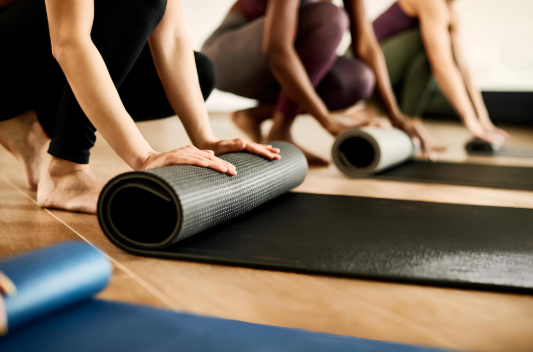
When talking about Pilates, the first tool that comes into contact with the body is also the most underestimated: the mat. Yet choosing the right Pilates mat is an essential step to ensure stability, comfort, and safety during every session, whether in the gym or at home. In this guide, you will discover why not all mats are the same and which features to consider before purchasing one, so that every exercise becomes a high-quality experience.
- Why choosing the right Pilates mat matters
- Materials, comfort, and grip: what really matters
- Thickness and support: how important cushioning is
- High quality, long-term durability, and premium feel
- Common mistakes when choosing a Pilates mat
- How to choose based on your real needs
Why choosing the right Pilates mat matters
A good Pilates mat is not just an accessory: it is the foundation on which every movement is performed, the element that guarantees support, stability, and hygiene. An unsuitable mat can compromise balance, cause back discomfort, or reduce the overall quality of performance. For this reason, the choice should never be left to chance or guided solely by price.
In particular, those who practice Pilates consistently need a product that lasts over time, offers a non-slip surface, and provides proper cushioning to protect joints and the spine. It is no coincidence that professionals in the field consider the mat a true extension of the body during practice.
Materials, comfort, and grip: what really matters
The most commonly used materials and their differences
Pilates mats are available in different materials, each with specific properties. The most common are PVC, TPE, natural rubber, and EVA. PVC models offer good durability but do not always guarantee optimal grip, while TPE mats represent a good compromise between comfort and sustainability. Natural rubber, on the other hand, is ideal for those looking for a professional, durable, and environmentally friendly mat.
Each material directly affects grip, shock absorption, and ease of cleaning. Choosing the right material also means considering the intended use: intensive or occasional, domestic or professional, static or dynamic.
Stability and grip: safety first
Pilates requires controlled and precise movements. An unstable or overly slippery mat can cause imbalance, injuries, or discomfort in the knees and elbows. High-quality models feature non-slip surfaces on both sides and adhere perfectly to the floor.
Good grip improves body control during core and stretching exercises, enhancing the overall quality of the workout. When choosing a mat, it is important to evaluate not only the surface texture but also the mat’s ability to stay firmly in place on the ground.
Thickness and support: how important cushioning is
Mats for beginners vs advanced practitioners
The thickness of the mat directly affects comfort and joint protection. Models with a thickness of 10–15 mm are ideal for beginners, offering excellent cushioning. More advanced users may prefer thinner mats (5–8 mm) for greater stability and a stronger connection with the floor.
In professional environments or gyms, it is recommended to choose mats that combine medium thickness with high-density materials capable of maintaining their shape over time without deforming.
Comfort vs control: finding the right balance
Excessive softness may feel comfortable but can reduce control over movements. On the other hand, mats that are too rigid can strain the joints. The secret lies in finding the right balance: structured support and calibrated density are the true indicators of quality.
Especially for those practicing dynamic Pilates, the mat must follow the body’s movements without deforming or creating instability. For this reason, the quality of the internal foam makes a significant difference.
High quality, long-term durability, and premium feel
Why not all mats are the same
A Pilates mat may seem like a simple product, but the differences between a cheap model and a professional one become evident after only a few uses. Low-quality mats tend to crumble, lose grip, or absorb sweat and odors.
Premium models, on the other hand, maintain their properties over time, resist moisture, are easy to clean, and preserve a consistent and comfortable texture. Investing in quality means avoiding frequent replacements and training safely.
Trust in the brand and safety certifications
In addition to technical characteristics, it is essential to evaluate the reliability of the brand. Manufacturers specialized in Pilates equipment offer tested products with non-slip and non-toxic certifications, which are often missing from generic low-cost products.
Choosing a recognized and respected brand in the industry builds trust and reassures users about the actual safety of the mat. For those who sell equipment or manage a gym, customer perception also depends on the quality of the tools provided.
Common mistakes when choosing a Pilates mat
Comparison with yoga mats
A common mistake is using a yoga mat for Pilates. Although similar, the two products serve different purposes: yoga mats are generally thinner and designed for static positions, while Pilates requires more cushioning and grip to support dynamic movements and floor exercises.
Using an unsuitable mat can compromise the effectiveness of the workout and increase the risk of slipping or joint discomfort.
The risks of “low cost”: when saving becomes expensive
A cheap mat may initially seem like a bargain, but it often leads to a poor experience: it deforms, absorbs sweat, emits unpleasant odors, or even breaks after a few sessions. In many cases, it also lacks basic hygiene and safety guarantees.
Purchasing a professional mat, even with a slightly higher initial investment, means choosing quality as a guarantee of safety, comfort, and durability.
How to choose based on your real needs
Every body is different, just as every training style is unique. Choosing the ideal mat requires evaluating your personal level, training frequency, and the type of surface where you practice. Those who train at home may prefer thicker mats with greater grip, while those attending professional studios may focus on certified products compatible with studio equipment.
Ultimately, the Pilates mat is an investment in your practice. It is not just a surface on which you move, but a silent ally that supports every exercise. Choosing it carefully means respecting your body and making every session more effective, safe, and rewarding.
Comments (0)