
Trolley
You have no items in your shopping cart

 Budgets
 Dumbers
 Discs
Discs
 Benches
 Racks and Rigs
 Weights Holders
 Isotonic machines
 Calisthenics
 Cardio
 Kettlebells
 Flooring
 Gym Set
 Accessories
 Combat
 ARTI MARZIALI
 CONTAINER GYM
 Tug-Of-War
 Used Gym Equipment
 PILATES MACCHINARI
 GINNASTICA ARTISTICA
 CAMPI DA PADEL
 Prodotti in Pronta Consegna
 Informazioni
 IRONMAN
 Gift Card
- Donatif
- Sports products
- 0 I like it
- 2914 Views
- 0 comments
READING TIME: 7 MINUTES ➤➤
Tatami for Functional Training and Calisthenics: Guide to Choosing the Ideal Surface
When it comes to functional training and calisthenics, the quality of the training surface can make the difference between a safe, effective workout and a potentially harmful one. A tatami is not just a mat—it is the foundation on which every movement, jump, and technical gesture is built. Choosing the wrong surface means compromising stability, increasing injury risk, and limiting performance.
This guide is designed for coaches, personal trainers, and fitness center owners who want to invest in a technical tatami capable of supporting intense workouts while ensuring comfort, safety, and grip even in the most dynamic conditions. We’ll explore key features, materials, common mistakes, and criteria for making a truly functional choice.
Why tatami is essential for high-intensity training
Stability, grip, and shock absorption: what to look for
The first factor to consider when choosing a tatami for calisthenics or functional training is its ability to provide grip and stability. A surface that is too slippery or unstable can compromise proper execution, especially in explosive movements or rapid direction changes. At the same time, it must absorb impact to protect joints and reduce injury risk, particularly during repetitive bodyweight exercises.
Another often overlooked aspect is the material’s elastic response: the ideal tatami should provide a slight rebound, supporting the energy of athletic movements. This is especially beneficial in cross-training and plyometric phases.
Injury prevention and performance enhancement
An unsuitable surface can lead to micro-slips, poor grip, or excessive stress on ankles, knees, and the spine. Using a technical tatami significantly reduces the risk of overuse injuries or impact-related trauma, creating a safer environment for athletes and clients. Additionally, a continuous, even surface improves movement fluidity, which is essential for technical progressions and circuit training.
From a performance perspective, training on a high-quality tatami allows athletes to push to their limits without postural compensation or fear of slipping, resulting in greater effectiveness and consistency.
Materials and technical features of tatami
Common materials: EVA, PVC, and hybrid solutions
Sports tatami are typically made from EVA (ethylene-vinyl acetate), expanded PVC, or composite foam blends. EVA is valued for its lightness, water resistance, and ease of installation, while PVC offers greater abrasion resistance and rigidity. Hybrid solutions provide a balanced option for multi-discipline use.
Material choice directly affects durability and tactile feedback. Too soft, and stability is compromised; too hard, and comfort is reduced. Testing the tatami under real conditions is essential before purchase.
Hardness, density, and thickness: key parameters
Each tatami has a specific hardness (Shore) and density (kg/m³). For calisthenics, a density above 90 kg/m³ is recommended to support suspended movements, while functional training benefits from slightly more elasticity. Ideal thickness ranges from 2 to 4 cm, depending on the activity.
The tatami must maintain its shape over time without deformation. Precision interlocking systems ensure a uniform surface across large areas.
The right tatami for each discipline
Tatami for calisthenics: control and grip under load
Calisthenics requires precision and full body control, often under suspension. The tatami must ensure a non-slip surface even with sweat, while remaining firm enough to avoid instability.
It should also withstand concentrated pressure from hands and feet during exercises like planche or front lever. High-density, textured surfaces are ideal.
Functional training: stable support for explosive movements
Functional training involves fast, multidirectional, high-intensity movements. The tatami must absorb impact without dissipating energy, providing a dynamic response.
Modularity is also important: in functional gyms, the ability to reconfigure spaces quickly is a key advantage.
Cross training: durability and grip in dynamic circuits
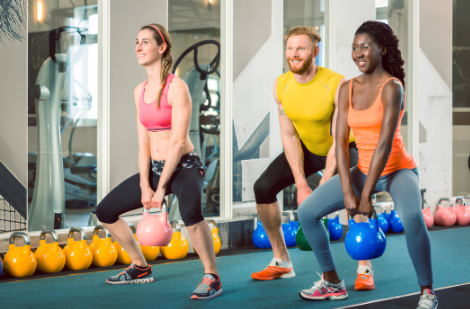
Cross training combines strength, cardio, and agility. The tatami must withstand not only bodyweight but also equipment friction and repeated impacts. A high-grip tatami ensures safety during intense circuits.
Durability is essential, as equipment like kettlebells and barbells can cause wear. A textured, easy-to-clean surface is recommended.
How to evaluate tatami for professional use
Maintenance, durability, and cleaning
In professional settings, tatami must be easy to clean, sweat-resistant, and durable. Antimicrobial and waterproof surfaces are ideal for high-traffic environments.
Investing in quality reduces long-term maintenance and replacement costs.
Modularity and space adaptability
Modern fitness centers require flexibility. Modular tatami allows spaces to be reconfigured easily for different activities.
Finishing edges and solid interlocking systems ensure safety and aesthetics.
Common mistakes when choosing tatami
Focusing only on price or appearance
Choosing based solely on price or aesthetics is a common mistake. A cheaper product may not withstand heavy use and daily wear, leading to higher long-term costs.
Always consider real usage needs and certified performance.
Ignoring thickness and training type
Each discipline requires specific thickness and cushioning. Too thin may cause joint stress; too thick may reduce stability.
There is no universal tatami—only the one best suited to your activities.
Final tips to improve safety and performance
Regular inspection and maintenance
Even high-quality tatami requires routine checks. A weekly or monthly inspection ensures stability and safety.
This reduces risks and extends product lifespan.
Useful accessories to complement tatami
Accessories like protective mats, area dividers, or temporary covers can enhance durability and functionality.
Custom branding and design elements can also improve aesthetics and reinforce identity.
Comments (0)