
Trolley
You have no items in your shopping cart

 Budgets
 Dumbers
 Discs
Discs
 Benches
 Racks and Rigs
 Weights Holders
 Isotonic machines
 Calisthenics
 Cardio
 Kettlebells
 Flooring
 Gym Set
 Accessories
 Combat
 ARTI MARZIALI
 CONTAINER GYM
 Tug-Of-War
 Used Gym Equipment
 PILATES MACCHINARI
 GINNASTICA ARTISTICA
 CAMPI DA PADEL
 Prodotti in Pronta Consegna
 Informazioni
 IRONMAN
 Gift Card
- Donatif
- Training and exercises
- 0 I like it
- 2574 Views
- 0 comments
READING TIME: 8 MINUTES ➤➤
How to Improve Squat Technique for Safe and Effective Development
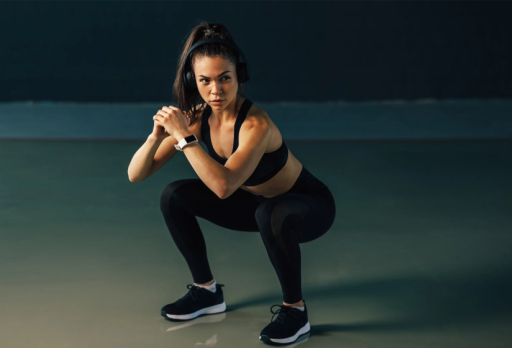
The squat is one of the fundamental exercises in functional training, powerlifting, and athletic preparation in general. However, despite appearing simple, proper execution requires attention, control, and a deep understanding of movement biomechanics. Improving your squat technique is not only about performance: it means training safely, preventing injuries, and effectively strengthening the involved muscle groups, especially the glutes, hamstrings, and quadriceps. In this guide, we will explore all the essential elements that contribute to a stable, powerful, and biomechanically correct squat, addressing the most common mistakes, the best correction strategies, and the technical details necessary for anyone who wants to refine their movement pattern.
- Why it is important to perform squats correctly
- The basic principles of correct squat technique
- How to improve core stability and control
- Training the glutes for a more powerful squat
- Knee alignment: common mistakes and corrections
- Practical tips to perfect your technique
Why it is important to perform squats correctly
The squat as a fundamental exercise
The squat is much more than a simple leg bend: it is a multi-joint movement that simultaneously involves the hips, knees, and ankles. This characteristic makes it particularly effective for developing strength, power, and motor coordination. In addition, thanks to its versatility, it can be adapted to different fitness levels and goals, from postural rehabilitation to advanced performance training. Developing proper technique from the very beginning allows you to build a solid foundation while reducing the risk of incorrect adaptations that may lead to imbalances or non-physiological overloads over time.
Benefits and risks associated with poor technique
An incorrect squat technique can lead to numerous problems, often underestimated by those who train without supervision. The most common mistakes include initiating the movement excessively with the knees, leaning the torso too far forward, or lacking proper core control. These factors can create abnormal tension on the lumbar spine, knee joints, or insufficiently stabilized muscles. On the other hand, a properly executed squat promotes optimal and synergistic muscle activation, improves posture, and develops functional strength. Investing in technical improvement is therefore a strategic choice for anyone aiming for long-term and safe results.
The basic principles of correct squat technique
Foot positioning and weight distribution
One of the key elements for a stable and safe squat is proper foot positioning. The ideal stance varies slightly from person to person, but generally the feet should be placed shoulder-width apart, with the toes slightly turned outward. This position allows greater hip opening and facilitates the descent while maintaining a neutral spine. Weight distribution should remain balanced across the entire foot: heels firmly planted on the floor, never lifting, and pressure evenly distributed between the first metatarsal, fifth metatarsal, and heel to ensure a stable center of gravity.
Hip movement and controlled depth
During the squat descent, it is essential to initiate the movement by pushing the hips backward, as if sitting onto an invisible chair. This prevents the knees from excessively moving past the toes, reducing joint stress. The depth of the movement depends on individual mobility, but the goal is generally to reach at least a 90-degree angle between the thighs and calves, or deeper if technique remains solid. The descent should be controlled, while the ascent should be driven through an even push from the feet, activating the glutes and core to maintain alignment.
Torso control and back position
Maintaining a neutral spine is essential for squat safety. This means preserving the natural curve of the spine throughout the movement while avoiding both excessive lumbar extension and thoracic rounding. The chest should remain lifted, and the gaze directed forward or slightly downward to facilitate cervical alignment. Torso control is closely connected to core activation, which plays a central role in supporting the spine and preventing trunk collapse during both descent and ascent.
How to improve core stability and control
The importance of core activation
The core represents the center of body stability and plays a crucial role in proper squat execution. When the core is effectively activated, it acts like a natural belt that protects the spine, improves balance, and enables better force transfer between the upper and lower body. Conversely, an unstable core compromises the entire movement structure, increases the risk of lower back injuries, and reduces the efficiency of muscle activation. For this reason, it is essential to train awareness and control of the deep abdominal muscles during warm-ups or through functional preparation exercises.
Breathing and bracing during the squat
Another often overlooked aspect is breathing during the squat. The “bracing” technique, which involves voluntary core contraction through controlled abdominal pressure, helps stabilize the torso. This mechanism is achieved by taking a deep breath before the descent and holding the air with the diaphragm during the most demanding phase of the movement, then gradually exhaling during the ascent. Proper breathing increases intra-abdominal pressure, improving trunk rigidity and full-body control, especially under heavier loads. It is an advanced but essential technical skill for progressing in the squat.
Training the glutes for a more powerful squat
Proper muscle activation
The glutes are among the primary drivers of the squat, yet they do not always activate optimally. Poor activation can result from several factors, including muscular compensation, incorrect posture, or inefficient movement mechanics. To improve power and stability during the squat, it is necessary to focus on conscious glute activation, particularly during the concentric phase of the movement (the ascent). Pre-activation exercises such as bridges or banded squats can help “wake up” the muscles, making them more responsive and functional during the complete movement pattern.
Complementary exercises for the glutes
Pairing the squat with other specific exercises is an effective strategy for developing strength and neuromuscular connection in the glutes. Movements such as hip thrusts, reverse lunges, or Romanian deadlifts help isolate and strengthen the area in a targeted way. When integrated into a weekly training routine, these exercises improve the ability to generate force from the hips, a crucial element for a powerful and controlled ascent during the squat. Working on these aspects allows for a more efficient, powerful squat with improved joint protection.
Knee alignment: common mistakes and corrections
How to avoid knee valgus collapse
One of the most common squat mistakes, especially among beginners, is knee valgus collapse, meaning the tendency of the knees to cave inward during the descent or ascent. This issue can result from weak glute medius muscles, insufficient core activation, or incorrect foot positioning. Knee valgus exposes the joints to abnormal stress and increases the risk of injury. To counteract this, it is useful to actively push the knees outward while maintaining alignment with the toes and to include exercises specifically aimed at strengthening the hip abductor muscles.
Knee control during descent and ascent
Throughout the entire movement, it is essential to maintain proper knee alignment control. The knees should follow a smooth and natural path aligned with the second and third toes, without instability or twisting. This control is achieved through adequate neuromuscular coordination, which develops through conscious repetition and corrective strategies such as using loop bands placed above the knees to enhance proprioception. Good control reduces joint fatigue and allows for more direct force transfer, improving squat effectiveness in terms of both performance and safety.
Practical tips to perfect your technique
Visual feedback and mirror use
One of the simplest yet most effective strategies for improving squat technique is the use of visual feedback. Training in front of a mirror allows you to monitor torso position, knee alignment, and overall movement balance. However, it is important to remember that visual feedback should not replace body awareness: the goal is to learn how to feel your body even without looking at it. Recording yourself on video can provide an even more objective perspective, helping identify asymmetries or compensations that may go unnoticed during real-time execution.
Progressive training and listening to your body
To continuously improve your squat technique, it is essential to adopt a progressive and mindful approach. This means increasing loads only when technical form is solid, dedicating time to mastering the fundamentals, and avoiding rushing into greater depth or intensity too quickly. Listening to your body plays a key role: pain, unusual tension, or abnormal fatigue are signals that should never be ignored. Training methodically, alternating periods of loading with active recovery and mobility work, allows you to build a squat technique that is stable, efficient, and sustainable over the long term.
Comments (0)