
Trolley
You have no items in your shopping cart

 Budgets
 Dumbers
 Discs
Discs
 Benches
 Racks and Rigs
 Weights Holders
 Isotonic machines
 Calisthenics
 Cardio
 Kettlebells
 Flooring
 Gym Set
 Accessories
 Combat
 ARTI MARZIALI
 CONTAINER GYM
 Tug-Of-War
 Used Gym Equipment
 PILATES MACCHINARI
 GINNASTICA ARTISTICA
 CAMPI DA PADEL
 Prodotti in Pronta Consegna
 Informazioni
 IRONMAN
 Gift Card
- Donatif
- Training and exercises
- 0 I like it
- 3152 Views
- 0 comments
- home gym, gym, sports, Fitness bands
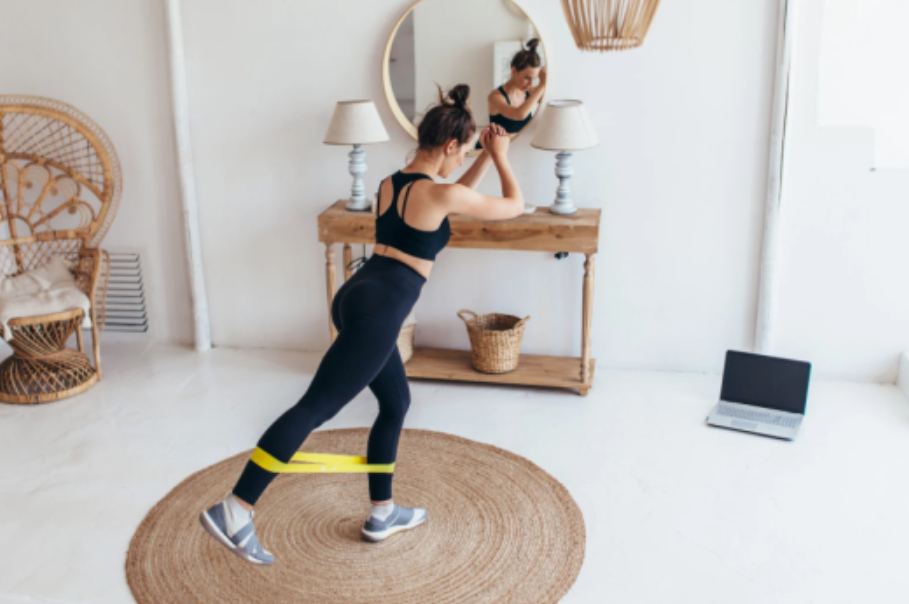
READING TIME: 4 MINUTES ➤➤
Fitness bands have become an essential tool for anyone looking to train effectively, flexibly, and practically, even in small spaces. More and more people – from beginners to experienced athletes – are discovering the potential of these simple tools, capable of replacing or complementing traditional weights with impressive results. This complete guide will walk you through the different types of resistance bands, the available resistance levels, recommended exercises, and tips to help you choose the ones that best suit your fitness goals.
Whether you're looking for a solution to work out at home, while traveling, or simply to diversify your routine, fitness bands might be the smartest, most economical, and most functional answer.
- Types of fitness bands: loop bands, tubes and more
- Resistance and intensity levels
- Exercises and workout programs with bands
- Why bands are perfect for small spaces
- How to choose the right fitness bands for you
Types of fitness bands: loop bands, tubes and more
Differences between the main types
In the fitness world, there are several types of resistance bands, each designed for specific needs. Loop bands are closed loops, often small in size, ideal for targeted exercises for legs and glutes. Tube bands, on the other hand, come with handles and allow for a more comprehensive workout, similar to using dumbbells or machines. Open-ended flat bands are often used in physical therapy or Pilates, while variable resistance bands are suited for more advanced workouts.
Understanding these differences is crucial for building an effective program. Each type of band has its strengths and limitations, and your choice should depend on your fitness goals, exercise types, and experience level.
When to use each type: goals and applications
Loop bands are perfect for muscle activation and toning of the glutes and thighs, commonly used in HIIT programs or functional warm-ups. Tube bands are ideal for simulating traditional weightlifting movements, allowing you to train chest, back, arms, and shoulders. Flat bands are particularly suitable for motor recovery and for those who are older or have limited mobility.
Choosing the right band also helps optimize your workout time, avoiding bulky or unnecessary equipment.
Resistance and intensity levels
Color coding and standard levels
Fitness bands are often color-coded, with each color representing a resistance level. Generally, light colors (yellow, red) indicate low resistance, while darker colors (blue, black) offer higher resistance. Although this classification may slightly vary between manufacturers, it provides a useful reference for making your selection.
Knowing the resistance scale helps you plan your progression over time, gradually increasing intensity to achieve better results without injury risk.
How to choose resistance based on your fitness level
Beginners should start with light or medium resistance to ensure proper control during movements. As strength builds, more challenging bands can be used. Even experienced users should switch resistance levels based on the muscle group and type of exercise.
A careful selection of resistance ensures every workout is effective and tailored to your actual capacity, reducing the risk of incorrect form or joint strain.
Exercises and workout programs with bands
Fundamental exercises for the whole body
Fitness bands allow you to train all parts of the body effectively. For the upper body, you can perform bicep curls, tricep extensions, chest presses, and rows. For the core, try dynamic planks with resistance or twists with loop bands. For the lower body, popular exercises include squats, hip thrusts, and side walks – especially using loop bands.
The versatility of these tools makes it easy to replicate traditional movements and add variations that increase instability and intensity.
Complete workouts and recommended circuits
You can create full-body circuits using only bands, alternating exercises for all muscle groups in 20–30 minute sessions. A typical full-body circuit might include 5 exercises performed for 40 seconds with 20 seconds rest, repeated for 3 rounds. Bands are also perfect for cardio-toning routines thanks to the fast transitions and continuous effort.
This approach delivers visible results even with limited time, making resistance bands the perfect tool for training at home or on the go.
Why bands are perfect for small spaces
Practical advantages over other equipment
One of the most appreciated benefits of fitness bands is their incredible compactness: they roll up easily, weigh very little, and can be carried anywhere. Unlike dumbbells, kettlebells, or multifunction benches, they don’t require dedicated space or bulky setups.
For those living in small apartments or who travel often, bands are an ideal solution for maintaining a consistent workout routine without compromising space or convenience.
How to set up a mini home gym with bands
You only need a few items to create an effective training space: a set of loop bands, a tube band with handles, a door anchor, and a mat. With this basic setup, you can train your entire body efficiently and with variety.
Creating even a small dedicated workout space at home helps eliminate psychological barriers and encourages consistency – a key factor in achieving results.
How to choose the right fitness bands for you
Personal goals and training types
The best resistance band for you depends on your intended workout. For toning and lower body training, loop bands are ideal. For a full-body or functional approach, tube bands with handles are more suitable. Those who practice yoga or Pilates might benefit from a long, open-ended flat band.
Evaluating your goals carefully will help you invest in tools that are genuinely useful, avoiding waste or unnecessary purchases.
Common mistakes to avoid when choosing
One of the most common mistakes is choosing a band with too much resistance, which can prevent proper movement execution. On the other hand, a band with too little resistance may be ineffective. Another error is neglecting the ergonomics and quality of the materials: it’s worth investing in safe, durable equipment, even if it costs a bit more.
Finally, it's important not to think of bands as a "lesser" option compared to weights. When used correctly, they can provide intense stimuli and significant improvements.
Comments (0)