
Trolley
You have no items in your shopping cart

 Budgets
 Dumbers
 Discs
Discs
 Benches
 Racks and Rigs
 Weights Holders
 Isotonic machines
 Calisthenics
 Cardio
 Kettlebells
 Flooring
 Gym Set
 Accessories
 Combat
 ARTI MARZIALI
 CONTAINER GYM
 Tug-Of-War
 Used Gym Equipment
 PILATES MACCHINARI
 GINNASTICA ARTISTICA
 CAMPI DA PADEL
 Prodotti in Pronta Consegna
 Informazioni
 IRONMAN
 Gift Card
- Donatif
- Training and exercises
- 0 I like it
- 2722 Views
- 0 comments
READING TIME: 9 MINUTES ➤➤
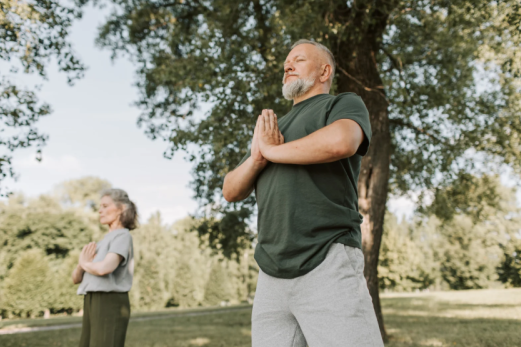
As we age, maintaining spinal mobility becomes an increasingly important challenge for many people. A stiff back can negatively affect quality of life, limiting essential daily movements and increasing the risk of pain or injury. Fortunately, there are effective and safe ways to counteract this process. Through targeted exercises and a consistent routine, it is possible to significantly improve freedom of movement and reduce feelings of stiffness. In this article, you will discover a protected exercise sequence specifically designed for adults over 60, with a gradual and reassuring approach suitable even for those starting from less-than-ideal physical conditions.
The goal is to provide practical tools for anyone who wants to move well even after the age of 60, promoting a concept of well-being based on consistency, awareness, and confidence in movement. Each section explores a key aspect, from understanding why the spine becomes stiff to learning how to create an effective routine even when mobility limitations are present.
- Why Spinal Mobility Matters After 60
- Moving Well Even with a Stiff Back
- A Safe Exercise Routine for Adults Over 60
- How to Perform Exercises Safely
- Benefits and Results: What to Expect from the Routine
Why Spinal Mobility Matters After 60
The Effects of Aging on the Spine
As we get older, the spine naturally loses elasticity due to a reduction in synovial fluid production and decreased hydration of the intervertebral discs. This process often leads to an increasing sensation of stiffness, especially upon waking or after long periods of inactivity. In addition, posture tends to deteriorate progressively, negatively affecting balance and increasing the risk of falls.
However, these physiological changes should not be viewed as unavoidable. With a regular and targeted exercise routine, it is possible to maintain better spinal mobility, improve posture, and encourage deeper, more natural breathing—an often overlooked but essential component of overall well-being.
How Movement Changes with Age
For adults over 60, movement often becomes more restricted and less fluid, not only because of joint-related changes but also due to a gradual loss of confidence in physical abilities. Fear of pain or injury can become a greater obstacle than stiffness itself. This is why it is crucial to introduce exercises that feel safe and accessible, allowing them to be performed comfortably and consistently.
Moving well after 60 means regaining awareness of the body, learning to recognize its signals, and managing movements in a slower but more effective way. Quality becomes more important than quantity, while breathing serves as a constant companion throughout the mobility process.
Moving Well Even with a Stiff Back
Stiffness: Common Causes and Misconceptions
Stiffness is not always a sign of a serious medical condition. In many cases, it results from a sedentary lifestyle or repetitive movement patterns that fail to fully stimulate joint mobility. In other situations, it may be linked to old injuries or long-term postural compensations. The key is distinguishing between “functional” stiffness, which can improve through movement, and more structural limitations that may require professional evaluation.
A common misconception is that aging means moving less to avoid risk. In reality, inactivity is often what makes the situation worse. The human body is designed to move, and even a stiff back can gradually regain mobility when supported by appropriate strategies.
The Importance of Consistency in Movement
The secret to improving spinal mobility lies not in the intensity of exercise but in consistency. Even a few minutes a day, when performed correctly, can produce meaningful results. Adults over 60 benefit most from routines that are simple to remember, easy to perform, and naturally integrated into everyday life.
Including mobility exercises in the morning or during active breaks throughout the day can become a beneficial habit that restores fluidity and enjoyment to movement. The objective is not athletic performance but the recovery of a freer and less painful daily life.
A Safe Exercise Routine for Adults Over 60
Preparing the Body for Movement: Gentle Warm-Up
Before starting any physical activity, even a light one, it is important to prepare the body with a gentle warm-up. This helps raise muscle temperature, improve circulation, and gradually activate the joints. For adults over 60 with a stiff back, simple joint movements, mindful breathing, and short standing or seated sequences are often enough.
For example, shoulder rolls, gentle side bends, and neck inclinations can provide an effective starting point. Even a slow two- to three-minute walk in place can be sufficient to stimulate the musculoskeletal system and prepare for a more structured routine.
Basic Sequence to Improve Spinal Mobility
An effective sequence should address the spine’s three primary movement patterns: flexion, extension, and rotation. Exercises such as the “cat-cow” movement performed on all fours—or adapted to a chair—controlled side bends, and gentle torso twists can mobilize the vertebrae without excessive strain.
Maintaining smooth breathing throughout each exercise is essential, avoiding breath-holding and unnecessary muscular tension. Gradual progression is the guiding principle: every movement should be adapted to individual mobility levels and should never cause pain. With consistency, even the stiffest backs can regain space and lightness.
Adaptable Progressions for Advanced Stiffness
Individuals with significant stiffness can begin with assisted movements, such as seated exercises using a chair back for support or a light resistance band to facilitate movement patterns. These modifications reduce spinal loading and increase confidence during exercise.
Over time, the range of motion can gradually increase, incorporating standing exercises or wall-supported movements. It may also be beneficial to alternate mobility-focused days with sessions dedicated to relaxation or diaphragmatic breathing. The body adapts over time and responds positively to consistency.
How to Perform Exercises Safely
Practical Guidelines to Reduce Risk
Safety is essential, particularly for individuals who have experienced lower back pain, sciatica, or postural issues. Every session should begin in a calm environment, wearing comfortable clothing and using a stable surface. If discomfort occurs during an exercise, it should be modified or stopped, avoiding positions that create excessive compression or imbalance.
Choose slow movements guided by breathing and maintain full control of your body throughout the session. Mirrors, instructional videos, or guidance from a qualified professional can be valuable in the beginning to prevent poor movement patterns. Every movement should feel safe, controlled, and comfortable, never forced beyond current abilities.
Signals to Listen to and When to Stop
The body provides important feedback. Mild muscular tension is normal, but sharp pain, dizziness, or sudden fatigue are warning signs. In these situations, it is advisable to stop, take a few deep breaths, and consult a physiotherapist if necessary. The goal is not to push through discomfort but to support the body’s functional recovery.
Learning to listen to your body is an integral part of training. An effective exercise session is one that leaves the body feeling more mobile and the mind more relaxed, not one that creates exhaustion or discomfort. Respecting personal limits is essential and far more beneficial than comparing yourself to unrealistic standards.
Benefits and Results: What to Expect from the Routine
Effects on Posture, Breathing, and Daily Life
With consistent practice—even just a few minutes a day—it is possible to achieve noticeable improvements in posture, mobility, and the reduction of stiffness. The spine begins to respond more fluidly to changes in position, while breathing becomes deeper and more regular, contributing to overall relaxation and well-being.
Many adults over 60 who follow mobility routines also report better sleep quality, increased daytime energy, and a renewed enjoyment of movement. The routine becomes a daily investment in independence and long-term well-being.
How Long Does It Take to Notice Improvements?
Results vary from person to person, but many individuals begin to notice benefits after just two to three weeks of consistent practice, such as greater ease of movement in the morning and reduced discomfort throughout the day. After six to eight weeks, the routine often becomes a habit, and the results tend to stabilize and deepen.
It is important to maintain realistic expectations. The objective is not to move exactly as you did at age 30, but rather to build a new level of mobility that is compatible with your age and personal history. That is a valuable achievement—one that deserves patience, commitment, and care.
Comments (0)