
Trolley
You have no items in your shopping cart

 Budgets
 Dumbers
 Discs
Discs
 Benches
 Racks and Rigs
 Weights Holders
 Isotonic machines
 Calisthenics
 Cardio
 Kettlebells
 Flooring
 Gym Set
 Accessories
 Combat
 ARTI MARZIALI
 CONTAINER GYM
 Tug-Of-War
 Used Gym Equipment
 PILATES MACCHINARI
 GINNASTICA ARTISTICA
 CAMPI DA PADEL
 Prodotti in Pronta Consegna
 Informazioni
 IRONMAN
 Gift Card
- Donatif
- Training and exercises
- 0 I like it
- 3516 Views
- 0 comments
READING TIME: 5 MINUTES ➤➤
Stiff Hips? 8 Movements That Restore Freedom to Your Walk
When the hips become stiff, every step can feel like a small obstacle. Walking, climbing stairs, or simply standing for long periods can become tiring and restrictive activities. Yet few people realize that there are simple but targeted movements that can restore hip mobility, giving the body a renewed sense of freedom and ease.
This article will guide you through 8 essential exercises designed to unlock the hips, ideal for anyone who wants to move more freely without pain or tension. If you feel stiffness around the pelvis, get tired while walking, or notice a lack of fluidity in your movements, this guide is for you.
- When the Hip Is Stiff: Signs and Consequences for Mobility
- Why Improving Hip Mobility Improves Quality of Life
- The 8 Movements to Unlock Your Hips
- Small Commitments, Big Benefits: Start Today
When the Hip Is Stiff: Signs and Consequences for Mobility
How to Recognize Reduced Hip Mobility
Hip stiffness can appear in subtle yet frustrating ways: difficulty crossing your legs, tension while walking, or fatigue when climbing stairs. Many people attribute these issues to tiredness or poor posture without realizing that the root cause lies in a joint that has lost its natural mobility. If you notice restricted movement or asymmetry in your gait, your hips may be locked and in need of attention.
The first step is becoming aware of the issue. This is not simply about flexibility—it is about restoring functional mobility, the kind that allows the body to move harmoniously without compensations. Ignoring these signs can lead to lower back pain, joint stress, and widespread muscular fatigue.
Why Stiff Hips Affect the Entire Body
The hips are a key link in the kinetic chain. When they lose mobility, the body begins compensating elsewhere. This often leads to stiffness in the back, excessive strain on the knees, and imbalances throughout overall posture. It is not uncommon for a seemingly simple hip restriction to contribute to neck tension or even foot pain.
Restoring hip mobility means giving the body back its ability to move as a coordinated system. Muscles begin working together more efficiently, the pelvis moves more freely, and everyday activities—from bending down to pick something up to taking a long walk—become smoother and more natural.
Why Improving Hip Mobility Improves Quality of Life
From Stiffness to Fluidity: What Changes in Daily Life
When the hip regains its natural mobility, even the simplest actions take on a new quality. Walking becomes more fluid and effortless, climbing hills or stairs places less strain on the knees, and the body regains a sense of lightness and freedom. Unlocking the hips is not merely a technical adjustment—it changes how movement feels, positively influencing energy levels, mood, and confidence.
People often underestimate the impact that restricted hips can have on daily life. However, when hip function is restored, a new sense of physical freedom emerges. Activities such as cooking while standing, cleaning the house, or walking long distances become natural again, without discomfort or excessive effort.
The Role of the Hips in Posture and Walking
The hips play a central role in balance and posture. When they move freely, they distribute forces correctly and allow for an efficient, symmetrical gait. Conversely, stiff hips force the body to operate inefficiently, negatively affecting overall biomechanics.
Restoring hip mobility promotes better spinal alignment, reduces lower back tension, and helps prevent chronic pain. It also improves movement efficiency: each step requires less energy, muscles work in greater coordination, and the body moves with more harmony. All of this contributes to a widespread sense of well-being that can often be felt within the first few days of practice.
The 8 Movements to Unlock Your Hips
Targeted Stretching for the Hip Joint
Static stretching is one of the most effective ways to begin restoring hip mobility. Movements such as the deep lunge, the pigeon pose (inspired by yoga), and quadriceps stretches combined with pelvic rotation work directly on the hip joint and surrounding muscles, reducing tension and increasing flexibility.
To be effective, stretching should be performed mindfully, holding each position for at least 30 seconds while breathing deeply. Relaxation is essential because tense muscles cannot lengthen effectively. Start with a small range of motion and gradually increase it over time, never forcing the movement.
Active Bodyweight Movements for Mobility
In addition to stretching, it is important to include active mobility exercises that improve neuromuscular control of the hips. Front and side leg swings, hip circles, controlled deep squats, and dynamic lunges help reactivate stabilizing muscles and improve pelvic coordination.
These movements are particularly beneficial for people who walk frequently or spend many hours sitting, as they counteract the tendency of the pelvis to stiffen and encourage better force distribution throughout the body. Just a few minutes each day can lead to noticeable improvements in movement quality and comfort.
Combined Exercises for the Pelvis and Hips
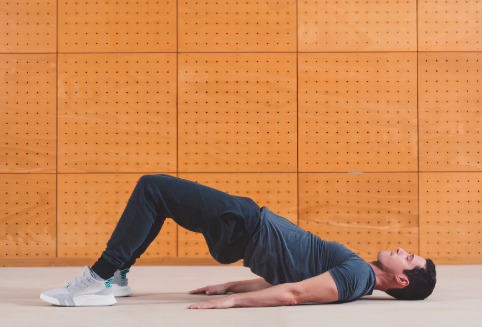
An effective hip mobility routine should also involve the pelvis and lower back. Exercises such as glute bridges, lying spinal twists, and standing pelvic tilts create a connection between the hips, spine, and deep stabilizing muscles. This integrated approach makes mobility work more functional and sustainable.
The goal is not only to stretch or strengthen but also to improve the communication between the brain and the joint, making every movement more efficient. Performing these exercises mindfully—perhaps in front of a mirror—can help identify compensations and better recognize areas of tension that need to be released.
Recommended Daily Routine for Frequent Walkers
For those who enjoy walking or spend much of the day on their feet, keeping the hips mobile is essential. A daily mobility routine can be the key to preventing pain and improving performance. Just 10–15 minutes, preferably in the morning or after a long walk, are enough to complete a full sequence of stretching and active mobility exercises.
An effective routine might include: 1) side leg swings, 2) static lunges, 3) glute bridges, 4) hip circles, 5) pigeon pose, 6) lying spinal twists, 7) deep squats, and 8) pelvic mobilization exercises. Consistency is what matters most: even a small daily commitment can lead to significant improvements in freedom of movement.
Small Commitments, Big Benefits: Start Today
How to Build a Sustainable Habit
The good news is that you do not need to completely change your routine to regain hip mobility. Just a few minutes each day dedicated to targeted and consistent movements can make a remarkable difference. The secret lies in regularity: adding the routine at the beginning of the day, after a walk, or before bedtime helps turn it into a lasting habit and an integral part of your daily well-being.
You can start with just three or four exercises, focusing on the areas where you feel the most stiffness. Gradually, your body will become more receptive to movement. There is no need to be flexible or highly trained—these exercises are designed for people coming from a sedentary or low-activity lifestyle who simply want to feel better in their bodies.
The Positive Sensations of Releasing the Hips
Even after the first few sessions, you may notice something different: more stability in your gait, less tension in your lower back, and an overall feeling of lightness. These are signs that your hips are beginning to regain their natural function. Many people also report improvements in posture and breathing—when the pelvis moves freely, the entire body finds its center.
Starting today means investing in a better quality of life. Whether your goal is to walk more, avoid chronic pain, or simply feel more mobile, these 8 movements provide an effective starting point. Remember: unlocking your hips changes the way you move every single day.
Comments (0)