
Trolley
You have no items in your shopping cart

 Budgets
 Dumbers
 Discs
Discs
 Benches
 Racks and Rigs
 Weights Holders
 Isotonic machines
 Calisthenics
 Cardio
 Kettlebells
 Flooring
 Gym Set
 Accessories
 Combat
 ARTI MARZIALI
 CONTAINER GYM
 Tug-Of-War
 Used Gym Equipment
 PILATES MACCHINARI
 GINNASTICA ARTISTICA
 CAMPI DA PADEL
 Prodotti in Pronta Consegna
 Informazioni
 IRONMAN
 Gift Card
- Donatif
- Training and exercises
- 0 I like it
- 4395 Views
- 0 comments
READING TIME: 7 MINUTES ➤➤
Pilates During Pregnancy: Safe Exercises and Surprising Benefits
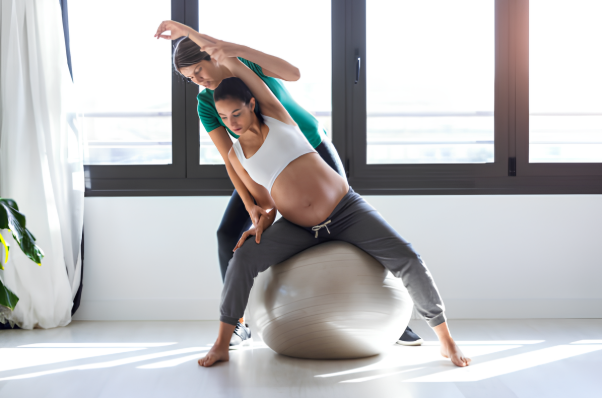
During pregnancy, every movement of the body takes on a new meaning. Physical activity, when chosen with awareness, can become a valuable ally for the well-being of both the mother-to-be and the baby. Among the most recommended disciplines, Pilates during pregnancy stands out for its ability to support the changing body gently while improving strength, posture, and breathing.
This guide is designed to accompany you in discovering Pilates as a safe and beneficial practice throughout the nine months of pregnancy. With practical guidance, proven benefits, and essential precautions, you will find an informative space created to strengthen your confidence and help you move with care toward birth.
Why Pilates Is Ideal During Pregnancy
A gentle but effective activity
Prenatal Pilates is designed to respond to the needs of a changing body. It is based on controlled movements performed slowly with careful attention to breathing, making it suitable even for those who have never practiced sports before. It does not involve strong impacts or excessive effort, which is why many professionals recommend it from the early months of pregnancy.
Each exercise works on body alignment, joint mobility, and strengthening deep muscles—essential elements for supporting the growing weight of the baby bump. All of this takes place in a calm environment where listening and awareness become tools of strength.
Adaptability to different trimesters
One of the most appreciated features of Pilates is its extreme versatility. Exercises can easily be modified or replaced to adapt to the mother's needs during every stage of pregnancy. In the first trimester, simple movements are preferred; in the second trimester, the focus shifts to deeper muscle toning; and in the third trimester, emphasis is placed on mobility and preparation for childbirth.
Thanks to this adaptability, Pilates accompanies women throughout the entire pregnancy journey, helping create a sense of continuity and connection with the transforming body.
Benefits of Pilates for Pregnant Women
Improved posture and prevention of pain
As weight increases and the center of gravity changes, many pregnant women experience back pain, neck tension, and lower back discomfort. Pilates addresses these symptoms by strengthening deep postural muscles, particularly the pelvic floor, abdomen, and back. This targeted work helps prevent muscular imbalances and improve posture, reducing the typical discomforts of pregnancy.
The goal is not only relief but also a true education in correct movement, which will be valuable during childbirth and in the postnatal period.
Support for breathing and relaxation
Breathing is central in Pilates: every movement is guided by a conscious breathing rhythm that stimulates the diaphragm, improves oxygenation, and encourages relaxation of the nervous system. During pregnancy, this practice can become a practical tool to face anxiety and tension, as well as prepare the body for mindful breathing during labor.
Deep and controlled breathing also helps regulate internal pressure, improve digestion, and reduce swelling—common issues during pregnancy.
Emotional well-being and preparation for childbirth
Beyond physical effects, Pilates during pregnancy promotes a deep bond between mother and baby. Each exercise, performed with calmness and intention, becomes a moment of listening and presence. This approach allows women to develop greater trust in their bodies and abilities, an essential aspect when facing childbirth with serenity.
Regular practice also contributes to psychological well-being by helping reduce stress and improve sleep quality. Many women describe their Pilates sessions as a safe, regenerating, and meaningful space.
Recommended Pilates Exercises Trimester by Trimester
First trimester: gently building the foundations
During the first trimester, the body begins a profound transformation process. It is the ideal moment to approach Pilates gradually, focusing on breathing exercises, core stabilization, and pelvic floor awareness. Exercises should be low-impact and centered on awakening body awareness, avoiding sudden movements or prolonged supine positions.
This phase is also useful for building a routine and becoming familiar with the principles of the method in preparation for more active practice in the following months.
Second trimester: strengthening with balance
During the second trimester, many women feel more energetic. The body has adapted to the initial changes and allows for slightly more intense activity. Muscle strengthening and pelvic mobility exercises can be introduced, often with the help of cushions, fitballs, or small equipment to facilitate correct execution.
This is the ideal time to work on stability and balance, two aspects that help support the increasing weight of the belly and improve the quality of daily movement.
Third trimester: mobility and release
In the final months of pregnancy, Pilates focuses on preparation for childbirth, with exercises that promote pelvic opening, muscle elasticity, and relaxation ability. The practice becomes even gentler but no less effective. Exercises are mostly performed in side-lying, kneeling, or seated positions to ensure maximum comfort and safety.
Emphasis is placed on movements that release tension and strengthen the connection with breathing—fundamental aspects for facing the moment of birth with awareness.
Safety Guidelines and Precautions to Follow
When it is better to avoid certain exercises
Despite its many benefits, not all Pilates exercises are suitable during pregnancy. Movements involving strong abdominal activation or deep twists should be avoided, as well as prolonged supine positions after the first trimester. It is essential to listen to your body and stop practicing in case of fatigue, dizziness, or pain.
Pilates should always be adapted to personal conditions and ideally practiced under the guidance of a professional experienced in prenatal fitness.
The importance of medical advice
Before starting any physical activity during pregnancy, it is always recommended to obtain approval from your gynecologist. Certain conditions—such as placenta previa, risk of miscarriage, or unexplained pain—may represent temporary or absolute contraindications. Medical advice is the first form of protection for the health of both mother and baby.
Body signals not to ignore
Pregnancy is a time when the body's sensitivity changes. Even if you feel well, it is important to pay attention to signals that indicate the need to stop: pelvic pain, bleeding, excessive fatigue, or early contractions are warning signs that should not be ignored.
The guiding principle of Pilates during pregnancy remains one of care: move gently to prepare with strength. A balance born from listening, breathing, and small gestures full of awareness.
Comments (0)