
Trolley
You have no items in your shopping cart

 Budgets
 Dumbers
 Discs
Discs
 Benches
 Racks and Rigs
 Weights Holders
 Isotonic machines
 Calisthenics
 Cardio
 Kettlebells
 Flooring
 Gym Set
 Accessories
 Combat
 ARTI MARZIALI
 CONTAINER GYM
 Tug-Of-War
 Used Gym Equipment
 PILATES MACCHINARI
 GINNASTICA ARTISTICA
 CAMPI DA PADEL
 Prodotti in Pronta Consegna
 Informazioni
 IRONMAN
 Gift Card
- Donatif
- Training and exercises
- 0 I like it
- 4286 Views
- 0 comments
READING TIME: 5 MINUTES ➤➤
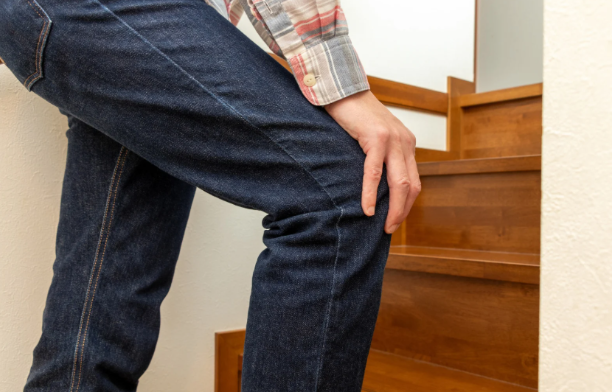
Climbing stairs is an everyday action that many of us take for granted, yet it can become a source of discomfort and pain, especially for people over the age of 40. The knees and hips are essential joints for supporting body weight during vertical movement, but they are often subjected to excessive or improper stress. Understanding the mechanisms that cause discomfort and adopting preventive strategies can make a significant difference in overall quality of life.
In this article, you will discover why joint pain occurs when climbing stairs, how to prevent overload through proper muscle activation, and which habits can help maintain safety and fluidity of movement, even as you get older.
- Why Knees and Hips Suffer When Climbing Stairs
- The Importance of Daily Prevention
- Coordinated Activation of Muscle Chains
- Climbing Stairs Safely After 40
- Building Healthy Movement Habits
Why Knees and Hips Suffer When Climbing Stairs
Biomechanical Causes and Joint Overload
Every time you climb a step, your body must lift its own weight against gravity. This creates a significant mechanical load on the knees and hips, which act as levers and propulsion points. If the movement is not performed correctly or if muscular imbalances are present, the load becomes concentrated on a limited number of structures, leading to overload. Improper use of the quadriceps, for example, can increase stress on the knee joint, while weak gluteal muscles may force the hips or lower back to compensate excessively.
When Climbing Stairs Becomes a Problem
Pain rarely appears suddenly. More often, it is the result of a movement pattern repeated over time without awareness. Stairs become a “test” of our posture and movement quality: knees collapsing inward, cracking sounds, localized fatigue, or feelings of instability are warning signs that should not be ignored. In individuals over 40, even minor postural deficiencies or reduced muscle tone can trigger discomfort or inflammatory symptoms.
The Importance of Daily Prevention
Warning Signs Not to Overlook: Pain, Stiffness, and Instability
The body communicates through specific signals: morning stiffness, discomfort during the first few steps, the need to rely on a handrail, or noticeable differences between the two sides of the body are all indicators of altered movement patterns. Recognizing these signs is the first step toward effective and personalized prevention.
Strategies to Reduce the Risk of Discomfort
It is essential to work on muscular balance, improve joint mobility, and learn how to distribute load correctly while climbing stairs. A few simple daily adjustments can make a difference: proper muscle activation before tackling long flights of stairs, maintaining an upright posture, and bringing mindful attention to movement all help reduce the risk of overload.
Coordinated Activation of Muscle Chains
How the Lower-Limb Kinetic Chain Works
Joints never work in isolation. With every step on a staircase, the muscular chain running from the foot to the pelvis works in a coordinated manner. Each muscle contributes to maintaining alignment and managing force production. When one segment functions improperly or compensates for another, the entire system is affected.
The Role of the Glutes, Quadriceps, and Core
Strong and active gluteal muscles are the real secret to climbing stairs without overloading the knees. The quadriceps should work in synergy rather than in isolation. The core, understood as the body's central stabilizing system, helps stabilize the pelvis and maintain spinal alignment during vertical movement. Ignoring these elements increases the risk of recurring pain and reduced movement efficiency.
Walking and Climbing Stairs with Motor Control
The most overlooked aspect is the neurological control of movement. Coordinating movement effectively, activating the right structures at the right time, and avoiding jerky motions or poor foot placement are all part of what is known as “movement pattern training.” Success depends not only on strength but also on movement quality, which can be improved through targeted exercises practiced consistently over time.
Climbing Stairs Safely After 40
Motor Adaptations and Postural Awareness
As we age, the body changes: muscles become less reactive, joints lose some mobility, and balance may become less stable. However, it is possible to adapt movement patterns and continue climbing stairs safely well beyond the age of 40. Paying closer attention to knee alignment over the foot, ensuring secure foot placement, and maintaining an upright posture are simple yet highly effective strategies.
Simple Exercises to Improve Stability and Coordination
No complex equipment is required. Controlled step-up exercises, single-leg raises, static balance drills, and glute activation exercises are excellent choices for anyone who wants to climb stairs with greater ease and confidence. Consistency in training, even through small daily practices, has a significant impact on joint resilience and movement safety.
Building Healthy Movement Habits
How to Recognize Faulty Movement Patterns
Most people climb stairs or walk without thinking about how they move. Yet a slouched posture, feet turning outward, or knees drifting out of alignment can all indicate a faulty movement pattern. Observing yourself in a mirror or recording your movements can help increase awareness and correct these issues before they become harmful.
From Prevention to Movement Awareness
True prevention begins with awareness. Learning to feel your body while moving, listening to warning signals, making timely corrections, and strengthening key muscle groups can provide lasting benefits. Climbing stairs can once again become a natural and pain-free activity when approached with consistency, intelligence, and attention to movement quality.
Comments (0)