
Trolley
You have no items in your shopping cart

 Budgets
 Dumbers
 Discs
Discs
 Benches
 Racks and Rigs
 Weights Holders
 Isotonic machines
 Calisthenics
 Cardio
 Kettlebells
 Flooring
 Gym Set
 Accessories
 Combat
 ARTI MARZIALI
 CONTAINER GYM
 Tug-Of-War
 Used Gym Equipment
 PILATES MACCHINARI
 GINNASTICA ARTISTICA
 CAMPI DA PADEL
 Prodotti in Pronta Consegna
 Informazioni
 IRONMAN
 Gift Card
- Donatif
- Training and exercises
- 0 I like it
- 2048 Views
- 0 comments
READING TIME: 5 MINUTES ➤➤
Abdominal Workout: 15 Exercises for Sculpted Abs
When it comes to fitness, one of the most common goals people have is developing their abs: sculpting them, defining them, and making them visible. However, achieving a truly strong core is not just about aesthetics. Behind a defined abdomen lies a complex process involving technique, consistency, and knowledge. Yet many people rely on generic exercises or follow temporary trends without achieving real results.
This guide offers a complete, scientifically grounded approach that is also accessible to beginners. You will discover the best ab exercises, a complete workout circuit to follow step by step, and most importantly you will understand why the real goal is not simply to “see” your abs, but to strengthen the entire core to improve posture, strength, and overall well-being.
Why training your abs goes beyond aesthetics
Visible benefits: sculpted abs and better posture
Many people start training their abs to achieve a flat and defined stomach, but the benefits go far beyond appearance. A well-developed core improves posture and stability while also helping prevent numerous injuries. Sculpted abs are only the visible part of a deeper muscular system that plays a crucial role in maintaining body balance.
With targeted training, you achieve a double advantage: defining the waistline while strengthening the deeper muscles responsible for protecting the spine. The aesthetic result therefore becomes a natural consequence of functional training.
Impact on well-being, performance, and injury prevention
Training your abs consistently also has a direct impact on athletic performance and everyday activities. A strong core supports every movement: from lifting weights to running, or even simply standing for long hours. It also helps reduce the risk of lower back pain and improves breathing efficiency.
The focus should never be purely aesthetic. A balanced workout routine enhances overall well-being and allows you to handle more intense training sessions thanks to improved trunk efficiency and stronger deep abdominal muscles.
How effective abdominal training works
The main muscle groups involved
The term “abs” is quite generic. In reality, it refers to several muscles with different functions. The main ones are the rectus abdominis (the classic “six-pack”), the internal and external obliques, and the transverse abdominis, which is essential for core stability. Each of these muscles requires targeted exercises to be activated properly.
An effective program must therefore involve all these areas by combining movements of flexion, rotation, and stabilization. Only in this way can you achieve a complete abdominal workout that is both functional and balanced.
Frequency, repetitions, and progression
Doing 100 crunches every day is not enough to achieve results. Abdominal training follows the same principles as strength training: stimulus, adaptation, and recovery. It is generally better to train the core 2–3 times per week, alternating exercises with different levels of intensity.
Repetitions should be adapted to your fitness level: performing 3 sets of 10–15 repetitions with perfect technique is far more effective than doing many poorly executed reps. Over time, you can increase the difficulty by introducing advanced variations or increasing the time under tension.
The 15 best exercises to sculpt your abs
Bodyweight exercises for beginners
Beginners should start with simple but effective exercises. The classic Crunch, the Front Plank, and the Dead Bug are excellent for activating the core in a controlled way. It is important to learn proper breathing and pelvic control to avoid compensation movements.
These movements safely stimulate the rectus abdominis and transverse muscles while teaching the body how to stabilize itself. Even just 10 minutes a day can produce tangible results if performed consistently.
Intermediate exercises for greater intensity
Once the basics are established, more intense exercises can be introduced, such as the Side Plank with leg lift, Russian Twists, or the Mountain Climber. These movements engage the obliques and stabilizers, increasing calorie expenditure and neuromuscular control.
The goal is not simply to feel fatigue but to recruit more muscle fibers effectively. The order of exercises can also make a difference: alternating dynamic and isometric movements helps maximize the overall result.
Advanced variations for a complete core
More experienced athletes can incorporate complex exercises such as the V-Up, the Dragon Flag, or the Plank with instability (for example using a fitball or TRX). These exercises stimulate the core deeply and require excellent body awareness.
Regularly including these variations improves functional strength and aesthetic appearance. It is recommended to perform them in a controlled environment, focusing carefully on technique to avoid unnecessary strain.
Core training: strengthening the center of the body functionally
What the core is and why it is crucial for every athlete
The term “core” does not only refer to the visible abdominal muscles. It includes all the muscles that stabilize the pelvis and spine. This area is crucial for the transmission of force between the upper and lower body. A well-trained core makes every movement more efficient and reduces the risk of injury.
Not only athletes benefit from this training. People who spend many hours at a desk or standing can also gain significant advantages from a stable core. A solid core training program improves balance, strength, and motor control and is essential in any fitness journey.
Functional exercises for stability and deep strength
Among the most effective exercises for functional core training are the Bird Dog, the Pallof Press, and the Side Plank with movement. These exercises require control, symmetry, and awareness of the body in space.
This functional approach is particularly useful for people who practice sports or dynamic activities. By improving core stability, overall performance increases while muscular imbalances are reduced. It is advisable to include these exercises in every workout session, even as a warm-up.
Ab workout circuit: complete step-by-step program
Circuit structure: warm-up, exercises, and recovery
An effective abdominal circuit should be carefully structured. Start with 3–5 minutes of dynamic warm-up (jumping jacks, dynamic plank, torso rotations), followed by 6–8 exercises performed in sequence with short rest periods. The workout should end with stretching specifically for the core.
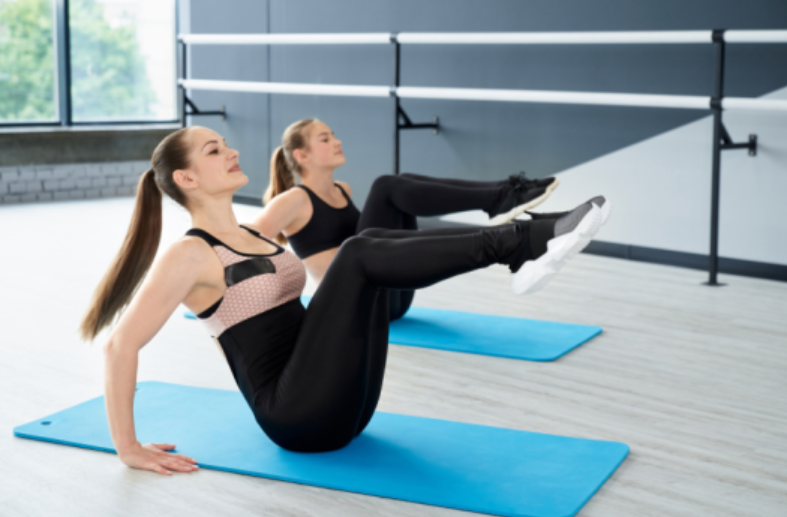
For example: Crunch + Plank + Russian Twist + Leg Raise + Side Plank, repeating the circuit two or three times. Each exercise should last 30–45 seconds with a 15-second rest. This is an effective method for training at home without equipment while achieving visible results in a short time.
Duration and tips for visible results
To start seeing aesthetic improvements, consistency is essential: at least three sessions per week combined with a balanced diet and regular cardio activity. One of the most common mistakes is expecting results within ten days. With 4–6 weeks of serious training, improvements begin to become visible.
It is important to regularly vary the circuit, alternating static and dynamic exercises. Do not underestimate recovery: an overworked core cannot regenerate properly and may lead to injuries. The goal should always be progression rather than exhaustion.
The most common mistakes that prevent sculpted abs
Training too much or in the wrong way
Doing abdominal exercises every day for 20 minutes does not guarantee a defined stomach. In fact, it can be counterproductive. The first mistake is excessive volume combined with poor technique. It is far better to perform a few exercises correctly within a balanced program that includes proper rest.
Another common mistake is focusing only on the rectus abdominis. The obliques and transverse muscles are often neglected, yet they are essential for achieving a complete core and a slimmer waist. Variety is key.
Neglecting nutrition and recovery
No matter how much you train, if your diet is unbalanced, your abs will not become visible. Reducing body fat is essential to reveal the underlying musculature. There is no need for extreme diets, but rather a sustainable nutritional plan rich in protein and low in simple sugars.
Finally, muscle recovery is an integral part of achieving results. Sleeping too little, training under constant stress, or ignoring the signals of your body can lead to stagnation or regression. Real transformation comes from the synergy between training, nutrition, and proper rest.
Comments (0)