
Trolley
You have no items in your shopping cart

 Budgets
 Dumbers
 Discs
Discs
 Benches
 Racks and Rigs
 Weights Holders
 Isotonic machines
 Calisthenics
 Cardio
 Kettlebells
 Flooring
 Gym Set
 Accessories
 Combat
 ARTI MARZIALI
 CONTAINER GYM
 Tug-Of-War
 Used Gym Equipment
 PILATES MACCHINARI
 GINNASTICA ARTISTICA
 CAMPI DA PADEL
 Prodotti in Pronta Consegna
 Informazioni
 IRONMAN
 Gift Card
- Donatif
- Training and exercises
- 0 I like it
- 3584 Views
- 0 comments
READING TIME: 5 MINUTES ➤➤
Hip Mobility and Squat Symmetry: How to Correct Imbalances
If you've ever noticed that one leg seems to "push harder" than the other during a squat, you're not alone. This feeling of asymmetry can be frustrating, especially when you're working hard to improve strength and technique. The good news is that, in most cases, it's not directly your fault: the issue may be hidden in your hip mobility, muscular dominance, or small movement habits that have developed over time.
In this article, we'll guide you through an in-depth analysis of the main technical reasons behind asymmetric squats. We'll explore how lateral hip mobility, glute activation, and compensation strategies influence your execution. Whether you're an athlete, a gym enthusiast, or a coach focused on movement quality, this content is for you.
Read also:
- Glute Activation and Neuromuscular Control in the Squat
- Hip Mobility for CrossFit: Exercises and Progressions
Why Does One Leg Push More Than the Other During a Squat?
Neuromuscular and Mechanical Causes of Asymmetries
During a squat, each side of the body should contribute equally to the upward drive. However, it is common for one leg to work harder than the other. This phenomenon is often the result of neuromotor compensations, imbalances in joint mobility, or differences in strength and motor control. In practice, the body seeks the most efficient way to complete the movement, even if that means altering movement symmetry.
Among the most common causes are hip mobility limitations on one side, posterior chain stiffness, or differences in core stability. It's not only a muscular issue: motor perception and control play a crucial role in achieving balanced activation between the two kinetic chains.
How an Asymmetrical Push Manifests: Signs and Symptoms
The signs of an asymmetrical squat are often subtle but recognizable. You may notice a deviation in the barbell path, excessive loading on one leg, or a feeling of an "uneven drive" during the concentric phase. In some cases, the imbalance presents itself through recurring pain on one side, especially after high-intensity sessions.
Recognizing these signals is the first step toward correction. Ignoring them can lead to functional overloads and increase the risk of chronic injuries, particularly if intense training continues on an altered movement pattern.
Hip Mobility as a Technical Prerequisite
When the Hip Is Restricted: Limits to Depth and Load
A "restricted" hip is not just a subjective feeling—it is often the real cause behind incomplete or dysfunctional movement. When the femoral head cannot glide properly within the acetabulum, tension and compensations develop, limiting squat depth and the ability to load efficiently.
This condition may result from capsular restrictions, muscular stiffness, or postural adaptations. The result? The squat becomes less efficient, less powerful, and, more importantly, poorly loaded. Hip mobility is therefore a fundamental requirement for performing deep, symmetrical squats.
The Role of Lateral and Rotational Hip Mobility
Hip mobility extends beyond flexion and extension. It's essential to consider the rotational and lateral components, which are often overlooked in warm-up and training protocols. Limited external rotation on one side, for example, may force the opposite leg to compensate, creating a chronic asymmetrical movement pattern.
Integrating lateral hip mobility exercises helps restore balanced range of motion, allowing for a smoother and more controlled squat descent. This improves not only symmetry but also the overall feeling of stability and control throughout the movement.
Glutes and Muscular Dominance: Is One Side Working More Than the Other?
How Glute Dominance Develops and Why It Matters in the Squat
Many athletes, even experienced ones, exhibit glute dominance on one side. This means one glute activates earlier or more intensely than the other. Such imbalances may stem from movement habits, previous injuries, or postural misalignments accumulated over time.
In the context of the squat, this asymmetry leads to uneven force production, reducing efficiency and increasing the risk of unilateral overload. Identifying this pattern is crucial for planning targeted interventions and restoring balanced muscle activation.
Recognizing Faulty Activation Patterns
A glute that contributes less may be neuromotorically "switched off" despite being structurally healthy. This type of functional inhibition can be identified through specific assessments or video analysis of movement.
Signs such as pelvic rotation during ascent, loss of knee alignment, or instability through the supporting foot indicate asymmetrical muscle activation. Addressing these patterns is essential for restoring balance, power, and injury prevention within the squat.
Restoring Symmetry and Control in the Squat
Specific Hip Mobility Exercises
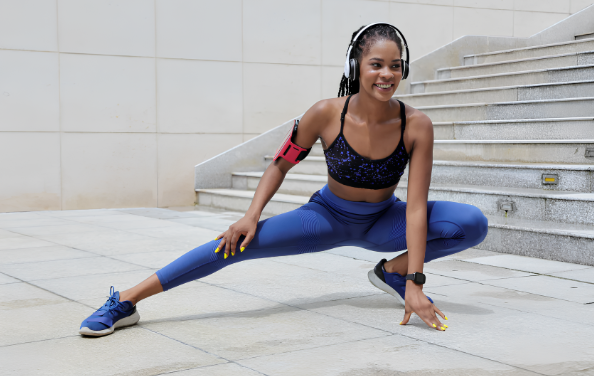
An effective program for correcting an asymmetrical squat begins with targeted hip mobility work. Exercises such as the 90/90 stretch, active rotations in a lunge position, and dynamic lateral hip openers are essential for unlocking movement ranges that directly support squat mechanics.
Consistency is key. Complex routines aren't necessary—just 10 minutes per day of focused exercises can lead to meaningful improvements in joint freedom and squat positioning.
Bilateral Glute Activation and Rebalancing Strategies
Beyond mobility, it is necessary to restore symmetrical bilateral glute activation. This involves both "waking up" the less dominant side and reducing the compensatory tendencies of the dominant side. Resistance bands, unilateral positions, and time-under-tension methods can all facilitate this process.
Working with bridges, unilateral hip thrusts, and asymmetrically loaded squat variations helps stimulate underactive muscles and retrain the movement pattern toward symmetry. All of this should be integrated into a progressive and monitored training plan.
How to Structure an Effective Correction Protocol
Recommended Frequency, Timing, and Progressions
An effective protocol should last at least 4–6 weeks, with a minimum frequency of three sessions per week. Each session may include 10–15 minutes of mobility and activation work before training and 1–2 corrective exercises within the technical portion of the workout.
Progressions should be gradual, moving from bodyweight exercises to controlled loaded variations, ensuring symmetry remains intact even under stress. It is also important to include deload and recalibration phases every 2–3 weeks.
Monitoring Changes: Feedback, Video, and Sensations
The best way to assess progress is to observe the movement. Recording your squat from different angles, collecting subjective feedback, and using mirrors or visual cues can accelerate improvement.
Additionally, the subjective perception of the movement—the feeling of a balanced drive—is just as valuable as objective data. Learning to listen to your body is an integral part of the process.
Why Starting with Mobility Changes Everything
Correcting an asymmetrical squat is not just a matter of aesthetics or performance. It is an investment in safety, movement efficiency, and long-term athletic development. Often, the first step is recognizing that the issue lies not in strength, but in joint freedom and neuromotor control. From there, a process of re-education and refinement can begin.
Would you like to explore the topic further or receive a personalized technical assessment? Contact us for a consultation or browse our section dedicated to mobility and movement technique.
Comments (0)