
Trolley
You have no items in your shopping cart

 Budgets
 Dumbers
 Discs
Discs
 Benches
 Racks and Rigs
 Weights Holders
 Isotonic machines
 Calisthenics
 Cardio
 Kettlebells
 Flooring
 Gym Set
 Accessories
 Combat
 ARTI MARZIALI
 CONTAINER GYM
 Tug-Of-War
 Used Gym Equipment
 PILATES MACCHINARI
 GINNASTICA ARTISTICA
 CAMPI DA PADEL
 Prodotti in Pronta Consegna
 Informazioni
 IRONMAN
 Gift Card
- Donatif
- Training and exercises
- 0 I like it
- 2594 Views
- 0 comments
READING TIME: 5 MINUTES ➤➤
Glute Workout: Program for Toned and Strong Glutes
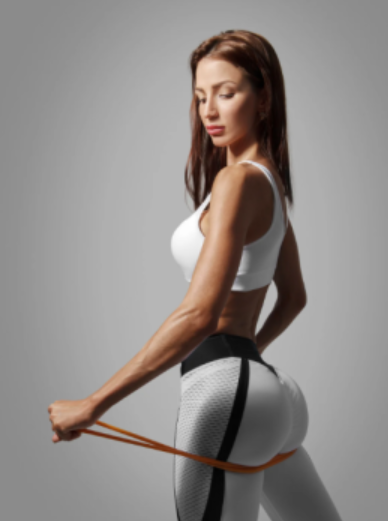
Do you want toned, firm, and well-defined glutes? In this article, you’ll find a complete program designed to transform your lower body in just 8 weeks. Thanks to a mix of targeted exercises, smart progressions, and a strong focus on core engagement, you can achieve visible results while improving posture, strength, and overall fitness.
Glute training is not just about aesthetics—it also plays a crucial role in functionality and performance. This program is designed for women aged 20 to 40 who want to sculpt their bodies effectively and safely, without getting lost among ineffective exercises or misleading promises.
- Why glute training is essential
- The 8-week program structure
- The most effective glute exercises
- Leg and core training to support glutes
- Tips and mistakes to avoid
- Tracking results and staying motivated
Why glute training is essential
The glutes are not just an aesthetic feature—they are essential muscles for posture, walking, stability, and physical performance. The gluteus maximus is one of the strongest muscles in the body and plays a crucial role in everyday movements and workouts. Training it correctly means improving balance, preventing injuries, and increasing power in every exercise.
Many women focus on glute size or shape, but few programs truly ensure proper muscle activation. Targeted glute training must respect biomechanical principles, progressive intensity, and varied stimulation. Only then is it possible to achieve strong, active, and visibly sculpted glutes.
The 8-week program structure
Weekly split and progression principles
The program is divided into 8 weeks, with 3 weekly sessions dedicated to glutes and complementary sessions for core and legs. Every two weeks the intensity increases through heavier loads, more repetitions, or more advanced exercise variations. This cyclical progression allows the muscle to adapt gradually, avoiding plateaus and premature overload.
The first two weeks focus on activation and muscle awareness. During the middle weeks, the emphasis shifts to hypertrophy and strength, while the final two weeks target definition and control. Each phase is supported by a specific exercise plan to ensure balanced development.
How to adapt the program to your level
The program is designed to be inclusive and adaptable. Beginners can start with bodyweight exercises and focus on proper execution. More experienced individuals can incorporate weights, loop bands, or barbells to increase the challenge. The goal is to progressively stimulate the glutes safely and in respect of your body.
Each weekly workout also suggests intensity options and regressions. If you feel low on energy on a given day, you can choose the “light” version. If you want to push harder, you can try the “power” option. This modular approach helps maintain consistency and motivation throughout the program.
The most effective glute exercises
Bodyweight exercises
Bodyweight exercises are ideal for activating the glutes, especially in the early stages of training. Movements such as glute bridges, donkey kicks, fire hydrants, and lateral lunge variations provide excellent activation without excessive load. Performing these exercises slowly and with control helps you “feel” the muscle and prevents other muscle groups (such as the quadriceps) from taking over.
It is also important to include these exercises in your warm-up routine to “switch on” the glutes before more demanding movements. Proper activation can increase muscular contraction capacity by up to 30% during the main workout, maximizing the benefits of the entire session.
Exercises with weights and equipment
Using progressive loads is essential for building stronger and more developed glutes. Exercises such as hip thrusts, Romanian deadlifts, Bulgarian squats, and step-ups with dumbbells are among the most effective for stimulating the deeper glute fibers. The key is to perform full movements with good eccentric control and extended time under tension.
Additionally, resistance bands and loop bands can improve lateral glute activation, particularly the gluteus medius, which is essential for pelvic stability. Combining heavy compound exercises with lighter activation movements (contrast method) can deliver visible results as early as the fourth week.
Leg and core training to support glutes
An effective glute workout cannot ignore the involvement of legs and core. Quadriceps, hamstrings, and adductors work in synergy with the glutes, especially during complex exercises such as squats, deadlifts, and lunges. Training the legs intelligently helps maintain harmonious proportions and supports balanced muscle development.
Including at least one weekly session focused on leg exercises also helps stimulate metabolism and improve overall lower-body strength. Unilateral movements, such as step-ups and split squats, are excellent for correcting asymmetries and improving muscular coordination.
Core training also plays a fundamental role: a strong abdominal area provides better postural control during demanding movements, reducing the risk of compensations and lower-back pain. Planks, dead bugs, hollow holds, and side planks should be included in your routine at least twice per week.
Moreover, an active core supports hip extension movements, improving the quality of glute activation. Integrating core workouts on active recovery days can also promote muscle regeneration and prevent overuse injuries.
Tips and mistakes to avoid
Many glute programs fail because they focus on exercises that look good on social media but are biomechanically ineffective. The first rule is simple: choose exercises you actually feel in your glutes, not just popular ones. If you only feel your thighs working during a squat, it’s time to review your technique and activation.
Another common mistake is training glutes without adequate recovery. Like any other muscle, glutes grow during recovery. Avoid training them every day—2–3 well-structured sessions per week are enough to achieve lasting results. Overtraining leads to regression.
Posture also deserves attention. For example, excessive lumbar lordosis can reduce glute activation and increase the risk of injury. Learning to control the pelvis and core is essential to protect the lower back and maximize muscular work.
Finally, avoid obsessively comparing your results with others. The body responds differently to training stimuli, and transformation happens gradually. Stay focused on the process and keep your main goal in mind: feeling strong, healthy, and confident in your body.
Tracking results and staying motivated
The best way to evaluate progress is to combine objective measurements with subjective feedback. Take a photo every two weeks, track the weights used in your exercises, and observe how your posture or energy levels change. Don’t rely solely on body weight, which can often be misleading in toning programs.
Tracking changes helps you notice even small improvements, keeping your motivation high. The classic “before and after” transformation doesn’t happen overnight, but every repetition brings you closer to the best version of yourself.
Another powerful tool is visualization: imagine how you will feel at the end of the 8 weeks—the confidence when wearing your favorite jeans and the strength you’ll bring to your workouts. Connecting training with positive emotions makes the process more rewarding and sustainable over time.
Remember: transformation is real only if it starts from within. Training your glutes is also an act of self-care. Stay consistent, trust the process, and the results will come.
Comments (0)