
Trolley
You have no items in your shopping cart

 Budgets
 Dumbers
 Discs
Discs
 Benches
 Racks and Rigs
 Weights Holders
 Isotonic machines
 Calisthenics
 Cardio
 Kettlebells
 Flooring
 Gym Set
 Accessories
 Combat
 ARTI MARZIALI
 CONTAINER GYM
 Tug-Of-War
 Used Gym Equipment
 PILATES MACCHINARI
 GINNASTICA ARTISTICA
 CAMPI DA PADEL
 Prodotti in Pronta Consegna
 Informazioni
 IRONMAN
 Gift Card
- Donatif
- Training and exercises
- 0 I like it
- 2672 Views
- 0 comments
- stress reduction, improved self-esteem, physical and mental well-being, gym training
READING TIME: 5 MINUTES ➤➤
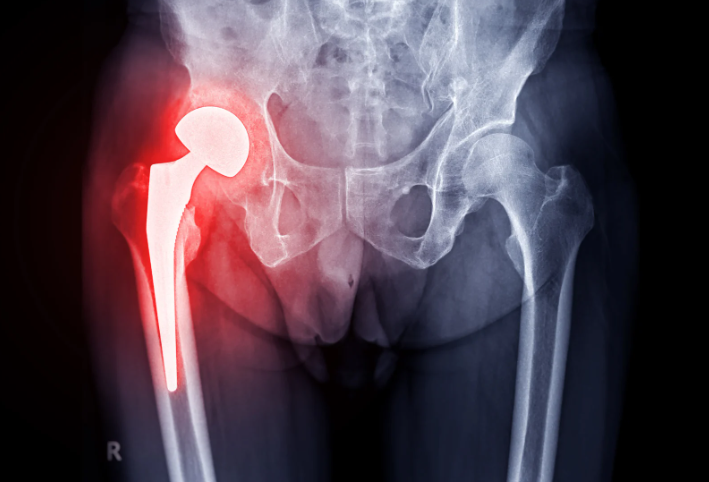
Gym exercises after hip replacement: a guide to mobility
After hip replacement surgery, the goal is not to immediately go back to doing everything. The goal is to return to doing the movements that truly matter—properly: standing up, walking, distributing weight more evenly, and feeling the hip actively involved again. At this stage, the gym is no longer about traditional performance. Instead, it becomes a space where mobility, control, and progressive loading come together to rebuild autonomy.
For those who train at home or prefer a more controlled environment, tools like racks and parallel bars can offer a real advantage. They provide stable reference points, help regulate support, and allow movements to be repeated with greater precision. Every recovery path must follow the guidance of a surgeon and physiotherapist, but understanding how to use equipment intelligently can make the difference between improvised recovery and a structured, effective one.
When gym training becomes part of recovery
The meaning of progressive loading after surgery
The term progressive loading refers to a gradual increase in mechanical demand on the body, avoiding sudden jumps and premature performance goals. After a hip replacement, this approach has a clear practical value: it helps retrain movement, rebuild confidence in the operated limb, and support the return to everyday activities that are often performed cautiously or with compensations in the early stages.
In the gym, progressive loading does not necessarily mean adding more weight. It can mean spending more time in assisted single-leg stance, performing controlled sit-to-stand movements, walking between stable supports, or increasing range of motion within well-tolerated limits. The key is not “doing more,” but doing better. Effective progression maintains movement quality, symmetry, and stability as demand increases.
Why autonomy and control matter more than quantity
In functional recovery, autonomy matters more than the number of exercises performed. A simple but well-executed movement, repeated consistently, can have more impact than a complex but poorly structured session. The realistic goal is to regain control over weight transfer, pelvic management, trunk stability, and gait. When these improve, strength becomes truly usable in everyday life.
Those with a strong athletic background often measure recovery through performance metrics. While understandable, this phase requires a different perspective: less hesitation while walking, fewer compensations, better load perception, and smoother movement continuity. A well-structured approach emphasizes safety, precision, and repeatability, as these are the signals that prepare the body for the next step.
Racks and parallel bars to support walking recovery
How a rack improves stability, support, and symmetry
A rack, when used as a support structure rather than just a loading station, can be highly effective during recovery. The vertical posts provide both visual and physical reference points, helping manage weight distribution and enabling exercises that gradually restore alignment. For advanced home gym users, this means training in a familiar, adjustable, and stable environment.
Within a rack, you can perform sit-to-stand transitions, assisted mini squats, weight shifts, standing isometrics, and supported walking drills. The structure reduces fear of losing balance and helps correct dominant-side compensation. The benefit is not only physical: the rack creates a sense of safety, which encourages more consistent and controlled recovery.
The role of parallel bars in gait recovery
Parallel bars play a key role in rebuilding walking patterns when stable dual support is needed. Their purpose is not to carry the entire body weight, but to allow a gradual reduction of assistance. As gait becomes more consistent, hand support can decrease, shifting responsibility back to the lower limbs. This is a simple yet effective way to retrain rhythm, balance, and confidence.
Using parallel bars allows for controlled forward stepping, heel strike work, weight transfer, and push-off mechanics without rushing into “normal walking.” Each repetition becomes an opportunity to feel how the pelvis moves, how the trunk supports the action, and whether the operated hip is actively contributing. In functional hip recovery, this level of awareness is just as important as distance covered.
Most effective exercises for mobility and functional strength
Transitions, support work, and basic movement patterns
Among the most effective hip exercises in the gym—after medical clearance—are those that rebuild fundamental movement patterns. Controlled sit-to-stand transitions, maintaining upright posture, shifting weight side to side, performing assisted partial squats, and refining transitions all play a crucial role. These exercises may seem simple, but they rebuild the foundation for smoother walking and usable strength.
They also reveal compensations: trunk rotation, knee drift, or excessive reliance on the non-operated side. Training near racks or parallel bars helps reduce instability and improve movement awareness. As movement quality improves, confidence increases, making progressive loading more natural and effective.
Controlled strengthening of the hip and lower body
Strength training at this stage must remain functional. The hip never works in isolation—it interacts with the glutes, adductors, trunk, and lower limbs. For this reason, strengthening should target a coordinated system rather than a single muscle group. Assisted hip extension work, knee control, mini squats, low step-ups, and isometric holds can all be useful when properly tolerated.
The key principle is dosage. A good exercise leaves you feeling engaged, not strained. If movement quality worsens the next day, progression was likely too fast. On the other hand, when strengthening improves walking stability and makes daily movements smoother, the gym is successfully translating effort into real-world function.
Movement safety and warning signs
Common mistakes when returning to training
The most common mistake is confusing motivation with actual physical readiness. Those used to training often want to speed things up, but after a hip replacement, the issue is not just how much you do—it’s how you do it. Forcing range of motion, removing support too early, or choosing complex exercises prematurely often reduces movement quality.
Another frequent issue is hidden compensation. The body can complete a task even with poor mechanics: the trunk leans, the healthy side overcompensates, or the foot adapts unnaturally. From the outside, the exercise may look successful, but its effectiveness is reduced. This is why stable structures and visual feedback are so valuable. In recovery, form is not aesthetic—it is functional.
How to recognize sustainable progress
Sustainable progress shows through simple signs: smoother walking, better load distribution, fluid transitions, manageable fatigue, and no decline in movement quality the following day. Not every session needs novelty. Often, the most solid improvements come from repeating the same pattern until the body no longer perceives it as a threat.
The psychological component also matters. Approaching equipment without hesitation, using support only when necessary, and accepting gradual increases in difficulty are all signs of real progress. Safety is not just the absence of pain—it is the presence of control. In this sense, a well-structured routine bridges rehabilitation and training without forcing the body beyond its readiness.
A home gym suited for a new phase of life
Stable and adjustable equipment for smarter training
As recovery becomes part of daily life, the environment plays a key role. A well-designed home gym is not only for performance—it can become a structured space to rebuild movement without distractions or improvisation. Stable structures, reliable supports, easy adjustments, and sufficient space all contribute to consistent, effective training.
Racks and parallel bars fit perfectly into this approach, as they adapt to each stage of recovery. Initially, they provide clear support; later, they allow gradual reduction of assistance and increased active loading. This creates a clean progression aligned with the idea of regaining autonomy through progressive loading. Equipment does not replace the process—it supports it.
The long-term value of reliable support
Recovering from a hip replacement also means entering a new phase in your relationship with movement. Many people realize that training is no longer just about performance, but about consistency, control, and confidence. For this reason, the value of equipment is not limited to the present—it lies in its ability to support sustainable routines over time.
In this context, the right promise is not rapid transformation, but a more solid framework for training well. Safety comes first is not just a slogan—it is the principle guiding equipment choice, space organization, and progression. A Donatif system focused on stability and reliability can become the foundation for a new approach to movement—more cautious when needed, and more autonomous as confidence returns.
Comments (0)