
Trolley
You have no items in your shopping cart

 Budgets
 Dumbers
 Discs
Discs
 Benches
 Racks and Rigs
 Weights Holders
 Isotonic machines
 Calisthenics
 Cardio
 Kettlebells
 Flooring
 Gym Set
 Accessories
 Combat
 ARTI MARZIALI
 CONTAINER GYM
 Tug-Of-War
 Used Gym Equipment
 PILATES MACCHINARI
 GINNASTICA ARTISTICA
 CAMPI DA PADEL
 Prodotti in Pronta Consegna
 Informazioni
 IRONMAN
 Gift Card
- Donatif
- Training and exercises
- 0 I like it
- 3800 Views
- 0 comments
READING TIME: 9 MINUTES ➤➤
Joint Mobility: Complete Routine for a More Fluid and Reactive Body
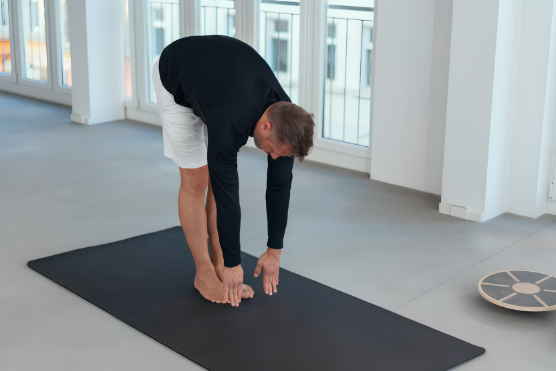
Discovering joint mobility means rediscovering the freedom of movement. Often overlooked in favor of more intense or visually impressive workouts, mobility is actually the foundation of a healthy, high-performing, and long-lasting body. In this article, you will find a complete routine designed to improve your mobility gradually yet consistently through targeted exercises, dynamic stretching, and focused work on the main joint areas. Get ready to move better, with greater awareness and fluidity.
- Why joint mobility is essential
- Complete joint mobility routine
- Focus: improving mobility in key body areas
- Dynamic stretching: the best ally for mobility
- Tips to maintain and improve over time
Why Joint Mobility Is Essential
The Role of Joints in Everyday Movement
Every movement we make, from the simplest action like getting out of bed to more complex actions such as jumping or squatting, is made possible by the synergy between muscles, tendons, and above all, joints. Joint mobility refers to the ability to move a joint through its full physiological range without pain or limitation. Unlike flexibility, which mainly concerns muscle lengthening, mobility also includes neuromuscular control, stability, and movement coordination.
Poor mobility can lead to muscular compensations, chronic pain, and injuries, especially for those who practice sports or spend many hours in the same position. This is why improving mobility is not just about performance, but also about overall quality of life.
Physical and Functional Benefits of Good Mobility
Working on joint mobility offers many tangible benefits: it improves posture, reduces the risk of injuries, enhances movement efficiency, and allows for more effective training. In addition, it helps reduce accumulated tension and stiffness, creating an overall feeling of lightness and well-being. Even for people who do not practice sports, good mobility means greater autonomy and freedom in daily activities.
Complete Joint Mobility Routine
Basic Exercises for the Entire Body
An effective mobility routine should involve all the major joints: ankles, knees, hips, spine, shoulders, and wrists. The goal is to stimulate movement in a controlled way, improve proprioception, and train the body’s ability to move smoothly and naturally. Among the most effective exercises are:
Controlled joint circles for shoulders and hips, quadruped mobilizations for the spine and shoulder blades, dynamic lunges for ankles and hips, and oscillatory movements for knees and wrists. Every exercise should be performed slowly, with conscious breathing, and without ever forcing beyond your current range of motion.
Recommended Structure for Daily Practice
The routine can be organized into a 10–15 minute session, perfect to perform in the morning, as an active break during the day, or before a workout. Always begin with general movements before progressing to more specific exercises. The secret lies in consistency: even just a few minutes a day can produce significant changes over time.
A good sequence could be: breathing activation → shoulder and spinal mobility → hips and pelvis → ankles and knees → integration of full-body movements. This structure allows the body to wake up progressively and harmoniously, preparing the joints for broader and more functional movement patterns.
Focus: Improving Mobility in Key Body Areas
Hip Mobility: Exercises for Fluidity and Stability
The hips are one of the main centers of human movement. Good hip mobility is essential for walking, running, squatting, and lifting weights safely. Exercises such as the 90/90 position, internal and external rotations, and rotational lunges are perfect for restoring fluidity and stability to this area.
Mobile hips reduce stress on the knees and lower back, improving posture and force distribution. Regular work on this area also allows for deeper and more controlled movements, such as deep squats or full hip extension.
Shoulders and Spine: Movements to Release Tension
The shoulders and spine often accumulate tension due to static posture or stress. To recover mobility, exercises such as the cat-cow stretch, thoracic openings in a supine position, shoulder circles with a stick, and seated or quadruped spinal rotations are highly recommended.
These movements help release tension not only in the thoracic and cervical areas but also improve breathing, mood, and sleep quality. Integrating thoracic mobility into your daily routine is one of the simplest yet most powerful habits for overall well-being.
Dynamic Stretching: The Best Ally for Mobility
What Dynamic Stretching Is and How It Works
Dynamic stretching is a form of movement-based stretching that prepares joints and muscles for physical activity. Unlike static stretching, it keeps the muscles active and mimics the functional movements that will later be performed during training. It is especially useful before sports, running, or strength-training sessions.
Exercises such as controlled leg swings, dynamic rotations, high-knee walks, or inchworms are just a few examples of dynamic stretching. This type of activity improves circulation, activates the nervous system, and makes movements more reactive and efficient.
Pre-Workout Sequence for Reactive Joints
An effective short sequence may include: 1 minute of front and lateral leg swings for hips and legs, torso and shoulder rotations for the upper body, dynamic lunges with rotation for hips and spine, and dynamic squats to integrate the whole body. Just 5–7 minutes are enough to feel prepared and stable.
Integrating this phase before every physical activity increases movement efficiency and drastically reduces the risk of injuries. It is a minimal investment with long-lasting benefits.
Tips to Maintain and Improve Over Time
Progression and Consistency: The Keys to Improvement
Mobility is not something achieved once and forever, but rather an ongoing process. Working on it consistently, even with short daily sessions, is the real key to obtaining noticeable results. The body responds to repetition and gradual progression: avoiding force and favoring slow but steady progress is always the winning strategy.
Observing and respecting your limits allows you to improve with greater awareness. Tracking your progress and changing exercises every 2–3 weeks can help maintain motivation and stimulate new motor abilities.
Useful Tools to Integrate Mobility into Your Routine
To make the practice more accessible and engaging, you can use non-slip mats, yoga blocks, sticks, or light resistance bands. Short tutorial videos or mobility-focused apps can also provide excellent support for structuring and varying your routine.
Ultimately, the best tool remains listening to your body. Practicing with attention, conscious breathing, and mental presence makes every movement more effective and every gesture more natural. Joint mobility is not simply a collection of exercises, but a different way of inhabiting your body with lightness and freedom.
Comments (0)