
Trolley
You have no items in your shopping cart

 Budgets
 Dumbers
 Discs
Discs
 Benches
 Racks and Rigs
 Weights Holders
 Isotonic machines
 Calisthenics
 Cardio
 Kettlebells
 Flooring
 Gym Set
 Accessories
 Combat
 ARTI MARZIALI
 CONTAINER GYM
 Tug-Of-War
 Used Gym Equipment
 PILATES MACCHINARI
 GINNASTICA ARTISTICA
 CAMPI DA PADEL
 Prodotti in Pronta Consegna
 Informazioni
 IRONMAN
 Gift Card
- Donatif
- Training and exercises
- 0 I like it
- 3314 Views
- 0 comments
READING TIME: 5 MINUTES ➤➤
Active Stretching for People Who Can’t Touch Their Toes
If touching your toes feels impossible, you're not alone. Tightness in the posterior chain is extremely common, especially among people who lead a sedentary lifestyle or have never practiced stretching consistently. The good news? You don't need to be flexible to start—you can become flexible through a gradual, safe, and structured approach. In this article, you'll find a complete active stretching routine designed specifically for beginners, even if you're starting from zero.
We'll guide you step by step through effective and accessible exercises aimed at improving flexibility in your legs, lower back, and calves without pain. In just a few weeks, you can experience real results and rediscover a level of mobility you may have thought was lost forever.
- Why You Can't Touch Your Toes: Common Flexibility Limitations
- Active and Progressive Stretching: What It Means and Why It Works
- Guided Routine to Improve Posterior Chain Flexibility
- Focus on Critical Areas: Calves and Lower Back
- Safety and Effectiveness: How to Avoid Common Mistakes
Why You Can't Touch Your Toes: Common Flexibility Limitations
The Role of the Posterior Chain
The posterior chain is a network of muscles and connective tissues that extends from the back of the neck to the heels, including the back, glutes, hamstrings, and calves. When one or more of these areas become tight, even simple movements such as bending down to touch your toes become difficult. This is not just a matter of "flexibility"—it is often related to neuromuscular coordination and movement control.
Many people assume the problem lies solely in their leg muscles, but the lower back and glutes also play a significant role in forward bending ability. In addition, a lack of body awareness and fear of injury often lead to stiff, restricted movement patterns that worsen the issue. Fortunately, a gradual and controlled approach can improve all of these factors.
Stiffness Caused by a Sedentary Lifestyle: Legs, Back, and Calves
People who spend many hours sitting naturally develop stiffness in specific areas of the body. The hamstrings, calves, and lower back tend to shorten and lose elasticity, making even basic movements more challenging. Over time, this can contribute to chronic pain, functional limitations, and a general feeling of restriction.
In particular, tight calves limit proper ankle mobility, affecting posture and restricting the extension of the posterior chain. Similarly, a tense lower back can create muscular compensations that prevent safe and effective forward bending. Recognizing these limitations is the first step toward addressing them successfully.
Active and Progressive Stretching: What It Means and Why It Works
Muscle Activation and Controlled Lengthening
Active stretching relies on engaging opposing muscle groups to achieve a safe and effective stretch. Unlike passive stretching, where a position is maintained through gravity or external force, active stretching directly involves your muscles, promoting greater body awareness and improved movement control.
This approach is particularly beneficial for people who lack flexibility because it encourages a balance between tension and relaxation. Consciously activating one muscle group helps inhibit its antagonist, allowing it to lengthen more effectively. As a result, stretching becomes not only safer but also more effective over time.
Why Static Stretching Alone Is Not Enough
Many people approach flexibility training by holding long static stretches, hoping for quick results. However, for sedentary individuals or those with limited mobility, this often leads to frustration—or worse, minor injuries. The reason is simple: muscles and connective tissues require gradual and controlled stimuli to adapt properly.
Progressive stretching, combined with active muscle engagement, helps build a solid foundation of mobility without causing pain or defensive muscle reactions. Each session becomes an opportunity to explore your limits gradually and safely. With this method, even someone who currently struggles to reach their knees may eventually be able to touch their toes with ease.
Guided Routine to Improve Posterior Chain Flexibility
Dynamic Warm-Up: The First Step Toward Improvement
Before beginning any stretching session, it is essential to warm up the body. A dynamic warm-up prepares the muscles for movement, stimulates circulation, and reduces the risk of injury. Just five to six minutes of light but active exercises—such as marching in place, controlled leg swings, and hip circles—are enough to activate the entire musculoskeletal system.
This phase should never be skipped, especially if you stretch in the morning or after spending many hours seated. A cold body is less responsive and less willing to lengthen. With a proper warm-up, even people with significant stiffness will notice greater ease during the first movements.
Basic 10-Minute Routine for Beginners
Exercises for the Legs and Posterior Chain
This routine consists of accessible yet effective movements designed to lengthen the posterior chain without placing excessive stress on the joints. Begin with seated forward bends, keeping your back straight and engaging your abdominal muscles to protect the lower back. Continue with standing forward folds performed slowly, using your hands on your thighs for support if needed.
Another valuable exercise is the "hand walkout," starting from a standing position and gradually walking your hands forward until your body forms a straight line. This movement also activates the shoulders and core, improving overall stability. Hold each exercise for approximately 20–30 seconds and repeat twice.
Activating the Lower Back and Core
To improve flexibility safely, it is important not to neglect the core and lower back. Exercises such as the cat-cow stretch and lying pelvic rotations help increase spinal mobility while reducing tension in the lumbar region. This creates a safer and more effective environment for forward bending.
Incorporating deep breathing and abdominal control during stretching enhances the effectiveness of the routine. The goal is not simply to lengthen muscles but to build a stronger connection between mind and body, making movement more conscious and stable.
Weekly Progression: How to Increase the Challenge
One of the keys to long-term improvement is gradual progression. During the first few days, it is normal to feel mild discomfort or tension, but never pain. Each week, you can slightly increase the duration of stretches or the depth of movements while paying close attention to your body's feedback. Using small supports, such as a cushion under the knees or a yoga block, can help maintain proper alignment.
Tracking your progress—even with photos or simple notes—can strengthen your sense of achievement. Watching the distance between your fingertips and toes decrease over time is highly motivating. Remember: you don't need to be flexible to start, but you do need to start in order to become flexible.
Focus on Critical Areas: Calves and Lower Back
Targeted Stretching for Tight Calves
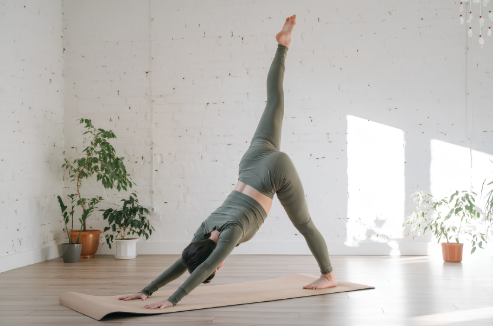
Tight calves are one of the main obstacles to developing good posterior chain flexibility. When this area is restricted, even simple movements such as bending forward become limited. A highly effective exercise is the downward-facing dog position, performed while keeping the heels as close to the floor as possible. A simple standing calf stretch against a wall, pressing the heel toward the ground, can also produce excellent results.
To achieve meaningful improvements, these exercises should be performed daily, holding each position for at least 30 seconds. Combining stretching with deep breathing enhances muscle relaxation and allows a greater range of motion without excessive effort.
Safe Stretching for the Lower Back
The lower back is a sensitive area and is often affected by pain in sedentary individuals or those who regularly carry uneven loads. Stretching this region requires special care, avoiding sudden movements and excessive force. The yoga child's pose is one of the safest and most effective exercises for deeply relaxing the lumbar area.
Another useful exercise is the "roll down," performed slowly from a standing position by moving one vertebra at a time. This improves awareness of spinal mobility and encourages a gradual release of tension. Remember: the goal is not necessarily to touch the floor but to feel a gentle, controlled stretch.
Safety and Effectiveness: How to Avoid Common Mistakes
Pain-Free Stretching: Listen to Your Body
One of the most dangerous myths about stretching is the belief that it must hurt to be effective. In reality, pain is a signal that something is wrong. Proper stretching creates tension, but never sharp pain. Learning to distinguish between productive muscular effort and protective muscle guarding is essential.
For beginners, the key is listening to the body. Never force positions, maintain smooth breathing, and stop immediately if discomfort becomes excessive. Using reliable instructional resources can help correct posture and technique. Safety should always come first, especially when dealing with chronic stiffness.
The Importance of Consistency for Visible Results
Consistency is what truly makes the difference. Even just 10 minutes of stretching per day can transform the way you move and feel within a few weeks. Improvements may not be immediate, but they are progressive and measurable. With practice, many people go from barely reaching their knees to touching their toes comfortably.
Establishing a routine—perhaps linking stretching to a specific time of day, such as after waking up or before bed—helps turn it into a lasting habit. The goal is not only to touch your toes but to restore mobility, improve well-being, and build confidence in your body. Because flexibility is not an innate gift: it is something that can be developed day after day.
Comments (0)