
Trolley
You have no items in your shopping cart

 Budgets
 Dumbers
 Discs
Discs
 Benches
 Racks and Rigs
 Weights Holders
 Isotonic machines
 Calisthenics
 Cardio
 Kettlebells
 Flooring
 Gym Set
 Accessories
 Combat
 ARTI MARZIALI
 CONTAINER GYM
 Tug-Of-War
 Used Gym Equipment
 PILATES MACCHINARI
 GINNASTICA ARTISTICA
 CAMPI DA PADEL
 Prodotti in Pronta Consegna
 Informazioni
 IRONMAN
 Gift Card
- Donatif
- Training and exercises
- 0 I like it
- 2520 Views
- 0 comments
- stress reduction, improved self-esteem, physical and mental well-being, gym training
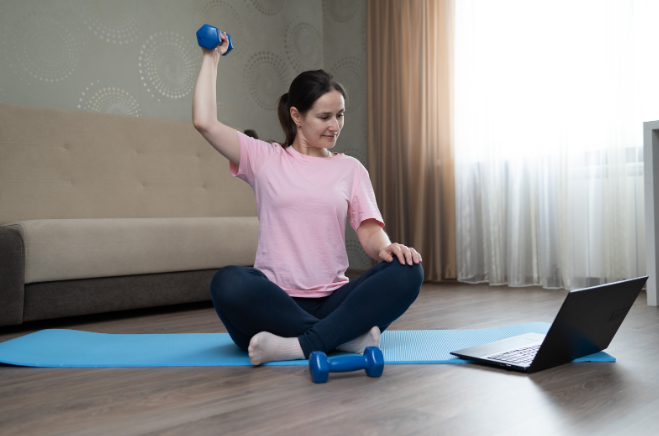
READING TIME: 5 MINUTES ➤➤
How to Choose Realistic Mini Habits If You Work All Day and Train at Home
When your day is already full, the biggest risk is not not knowing what to do, but choosing a habit that looks useful on paper and never actually finds space in real life. Those who work all day and try to train at home often move between good intentions, accumulated fatigue, and an annoying sense of inconsistency. In this scenario, the right question is not what the perfect routine is, but which small action truly has the characteristics to last. A sustainable mini habit doesn’t need to impress—it needs to fit into your life with as little friction as possible.
The key point, especially for an entry-level home gym profile, is to stop evaluating habits based on how complete they look and start evaluating them based on how practical they are. This shift in perspective reduces pressure, cuts through confusion, and restores a sense of control. If your day is already packed, the real win isn’t building a complex routine right away, but learning to select small behaviors that don’t clash with your available energy, space, time, and attention.
- Why many mini habits fail even if they seem simple
- The criteria that make a mini habit sustainable in a busy day
- How to use a simple matrix to choose the right habit
- Practical examples of realistic mini habits for entry-level home gym users
- How to tell if your mini habit is truly sustainable after the first few days
Why many mini habits fail even if they seem simple
Many people think a mini habit fails because they lack willpower. In reality, in most cases the issue is more concrete: the chosen habit simply doesn’t fit into real life. Even a five-minute action can be skipped for days if it comes at the wrong time, requires too much setup, or assumes a level of energy you don’t have in the evening. That’s why talking about realistic mini habits means shifting the focus from how appealing the idea is to how well it fits into your daily flow.
When you work long hours and train at home, every overly theoretical attempt is immediately tested by reality. You need to create space, switch mental context, start without postponing, and perceive the task as manageable. If even one of these steps feels too heavy, consistency breaks. Not because you lack discipline, but because the behavior wasn’t designed for a real environment filled with fatigue, unpredictability, and limited margins.
The problem isn’t motivation, but the mismatch with real life
One of the most common beliefs is that you need strong, stable motivation before building a routine. In reality, the opposite often happens: motivation grows when the chosen behavior is simple enough to repeat without excessive effort. If a mini habit clashes with your schedule, space, or mental state, every day turns into an internal negotiation—and that constant friction erodes consistency.
The mismatch with real life shows up through clear signals. You procrastinate even if the action takes only a few minutes, you feel like you need to “mentally prepare,” you wait for the perfect moment, and you stop as soon as your day shifts. In these cases, adding pressure doesn’t help—you need to choose better. A good mini habit doesn’t require an ideal version of you; it works even when you’re tired, busy, and imperfect.
When a habit is decorative vs when it is practical
A habit is decorative when it reflects a positive image of yourself but lacks real anchors in your daily context. It looks good, coherent, even motivating, but doesn’t hold up against what actually happens during your week. It’s the kind of behavior you choose because “it should be good for me,” even if it requires a combination of time, energy, and focus you rarely have when it matters.
A practical habit, on the other hand, is more humble and far more effective. It doesn’t aim to look complete—it aims to be repeatable. It has a clear starting point, low mental cost, minimal setup, and doesn’t depend on special conditions. In other words, a mini habit works when it’s small enough to fit into your day, but meaningful enough to create continuity. It’s this balance between lightness and practicality that makes it sustainable.
The criteria that make a mini habit sustainable in a busy day
Starting small isn’t enough if you start wrong. Even a small action can become heavy if poorly chosen. You need clear criteria to distinguish a mini habit that has real chances from one that will eventually feel like a burden. The key factors are time, friction, space, energy, and frequency. These elements—not intentions—determine sustainability.
Looking at these criteria helps you become more selective in a smart way. You’re not lowering the bar—you’re avoiding the mistake of choosing actions disconnected from your context. When your day is already full, selection matters more than initial enthusiasm. A well-chosen habit protects you from burnout because it reduces the risk of committing to something that only feels motivating in theory.
Real available time vs perceived duration
The first criterion is real time, not imagined time. Many people say “it only takes ten minutes,” ignoring the perceived time needed to start, switch rooms, prepare equipment, and mentally disconnect from work. A sustainable choice considers the full cost of the action, not just its technical duration. If a three-minute exercise feels like a long process to initiate, it becomes less likely to happen.
That’s why it’s better to choose actions that take little time and, above all, feel easy to start. Perceived duration matters as much as actual duration. Two minutes of mobility on an already-placed mat can be more sustainable than eight minutes that feel like a small project. In a busy life, what wins is what you can start without creating a special time window.
Operational friction and ease of starting
Friction is everything that stands between you and starting. Looking for a resistance band, moving objects, changing clothes, deciding what to do—each small obstacle lowers the chance of action. People training at home often underestimate this, assuming the home gym is always ready. In reality, setup matters even at home.
A sustainable mini habit has low or predictable friction. You already know what to do, where to do it, and with minimal setup. You don’t need to decide too much or prepare too much. The key question is simple: how easy is it to go from “I should” to “I’m starting”? If that transition is short, the habit can stick.
Home space and usage context
In apartments or shared spaces, environment matters. A mini habit must live in a real setting, not an ideal one. You should be able to perform it without constantly rearranging your space. The less it clashes with your home setup, the more naturally it becomes repeatable.
Simple tools help: a mat, resistance bands, or a light kettlebell allow you to act without complexity. The goal isn’t equipment—it’s reducing friction and making action immediate.
Mental energy and timing
A habit can be short and still too demanding. After a long day, the barrier is cognitive. If it requires focus or strong internal drive, it may fail. Choose actions aligned with your most common energy level, not your best one.
Frequency and minimum consistency
A habit must repeat across the week. Better a modest but realistic frequency than an ambitious plan that breaks. Sustainability comes from minimum viable consistency.
How to use a simple matrix to choose the right habit
Compare habits based on friction, feasibility, and repeatability. The best choice isn’t the most complete, but the most repeatable.
Evaluating habit, friction, and feasibility
Choose what costs less to start and maintain. This reduces mental overload and increases consistency.
Why the less ambitious choice is often the smartest
Less ambition means more consistency. And consistency builds identity.
From ideal routine to repeatable routine
A repeatable routine survives real life. That’s what matters.
Examples of realistic mini habits
Small, simple, repeatable actions win.
How to verify sustainability
If it works on bad days, it works.
Comments (0)