
Trolley
You have no items in your shopping cart

 Budgets
 Dumbers
 Discs
Discs
 Benches
 Racks and Rigs
 Weights Holders
 Isotonic machines
 Calisthenics
 Cardio
 Kettlebells
 Flooring
 Gym Set
 Accessories
 Combat
 ARTI MARZIALI
 CONTAINER GYM
 Tug-Of-War
 Used Gym Equipment
 PILATES MACCHINARI
 GINNASTICA ARTISTICA
 CAMPI DA PADEL
 Prodotti in Pronta Consegna
 Informazioni
 IRONMAN
 Gift Card
- Donatif
- Training and exercises
- 0 I like it
- 1906 Views
- 0 comments
- gym flooring, safety flooring, gym safety, shock-absorbing materials
READING TIME: 5 MINUTES ➤➤
Training in a Hypoxic Chamber or Using Other Systems: What Are the Key Differences?
The term hypoxic training is often used as if it referred to a single technology. In reality, this definition encompasses a variety of tools, environments, and protocols that differ significantly from one another. For professionals involved in athletic preparation, performance enhancement, or sports facility management, understanding these differences is the first step toward navigating an increasingly complex field.
The confusion arises because many solutions share the same general principle: the controlled reduction of oxygen availability compared to normal environmental conditions. However, the way this condition is created, the context in which it is used, and the type of experience provided to the athlete can vary considerably.
Why Not All Hypoxic Systems Are the Same
The Confusion Created by the Term Hypoxic Training
When people talk about training in hypoxic conditions, many automatically picture a hypoxic chamber. In reality, the term describes a physiological condition rather than a specific tool. Hypoxia can be achieved through dedicated environments, individual devices, or protocols that alternate different exposure phases. Treating all these solutions as equivalent often leads to unhelpful comparisons and only a superficial understanding of their actual operational differences.
From a conceptual perspective, it is more accurate to view hypoxia as a family of approaches. Each approach shares the same underlying principle but changes the way the athlete interacts with an environment characterized by reduced oxygen concentration. This distinction allows for a more precise understanding of the sector and helps avoid grouping together technologies that were developed for different purposes.
The Main Technology Categories Available Today
A simple classification can distinguish between full hypoxic environments and systems that act on the individual user. The first group includes hypoxic chambers or dedicated hypoxic areas in which the entire environment is modified. The second group includes solutions that directly affect breathing or involve specific individual exposure protocols.
This distinction does not determine which system is better. Rather, it helps create mental clarity. Once the main categories are understood, it becomes easier to analyze features, limitations, and potential applications without confusing technologies that belong to different families.
How a Hypoxic Training Chamber Works
A Hypoxic Environment as a Complete Training Space
A hypoxic training chamber is an environment in which air conditions are controlled to simulate altitudes higher than those normally found at sea level. Its defining characteristic is not the device used by the athlete, but the fact that the entire training space is transformed into a hypoxic environment.
Inside the chamber, everyone present shares the same environmental conditions. This approach allows training to take place in a dedicated space while maintaining an operational feel similar to that of a gym, performance room, or traditional athletic preparation area.
Activities That Can Be Performed Inside the Chamber
One of the elements that differentiates a hypoxic chamber from other solutions is the ability to perform a variety of activities within the same environment. Depending on the facility setup, users may carry out aerobic work, technical drills, strength training, or group sessions.
The key concept is that hypoxia becomes a characteristic of the training environment rather than a feature of a device applied to the individual athlete. For this reason, the chamber is often considered a platform capable of hosting different training methodologies while maintaining a consistent hypoxic context.
Other Hypoxic Systems: A General Overview
Individual Devices and Breathing-Based Systems
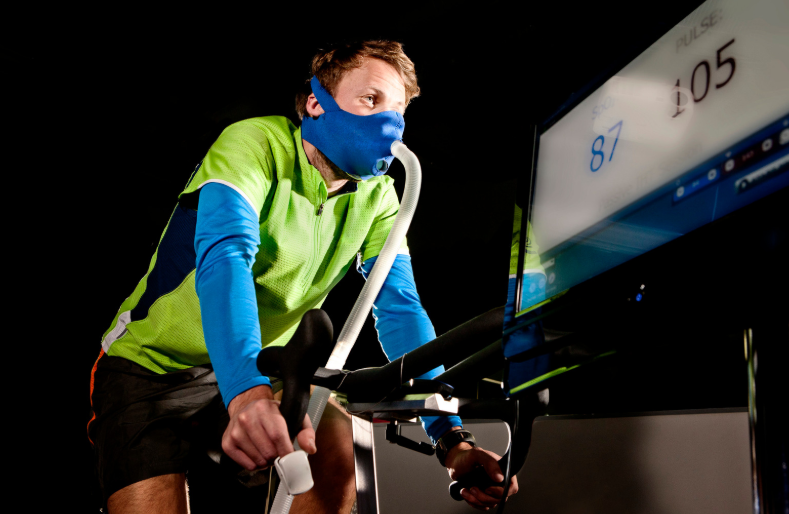
In addition to chambers, there are numerous individual hypoxic systems. In these cases, the surrounding environment remains unchanged, while exposure to reduced oxygen availability occurs through devices that directly involve the individual. The focus therefore shifts from the room to the user.
This category includes a wide range of solutions. Although they all share the goal of creating a hypoxic stimulus, the way that stimulus is delivered can vary significantly. For this reason, it is important not to treat all individual devices as a completely homogeneous group.
Intermittent Exposure and Specific Protocols
Another category includes protocols in which hypoxic exposure is organized through alternating phases and predefined procedures. In this context, the focus is not necessarily on performing traditional exercise within a modified environment, but rather on managing specific exposure sequences.
These approaches are often described using dedicated terminology and deserve to be evaluated independently. Automatically placing them in the same category as hypoxic chambers risks oversimplifying a landscape that involves different operational principles.
Comparing Hypoxic Chambers and Individual Systems
Differences in Exposure Method
The most immediate difference concerns the way the hypoxic experience is created. In a chamber, the entire environment is involved. In individual systems, the interaction occurs directly with the user. This distinction affects the perception of the activity, session organization, and the relationship between the athlete and the technology being used.
Conceptually, it can be said that the chamber works on the environment, whereas individual systems primarily work on the user. Understanding this distinction helps clarify many of the characteristics observed in practical applications.
Organizational and Operational Differences
The differences are not limited to physiology. Logistical and organizational aspects also vary. A hypoxic chamber is an environmental infrastructure, whereas other systems may be used individually or within specific protocols.
For coaches, trainers, and sports facility managers, this distinction is often one of the most important criteria. Before evaluating technical details, it is useful to understand whether one is examining a complete environment or a tool designed for a different mode of use.
How to Properly Understand the Different Solutions
The Choice Depends on the Objective Before the Technology
A common mistake is to start with the technology before defining the context. In reality, the most logical approach is the opposite. The objectives, target users, and desired working methods should be clarified first. Only then does it make sense to explore the most suitable technology.
This approach helps avoid comparisons based solely on device names. Two systems that use the concept of hypoxia may address completely different operational needs while still belonging to the same broader sector.
Creating a Clear Classification to Avoid Misleading Comparisons
To better understand the topic of hypoxic training, it can be useful to adopt a simple classification: complete hypoxic environments, individual systems, and specific exposure protocols. This framework does not replace in-depth technical analysis, but it provides a solid foundation for understanding the market and the terminology used within it.
Once this mental framework is established, the question is no longer “Are they all the same thing?” but rather “Which category does this solution belong to, and what logic does it follow?” This shift in perspective enables coaches, advanced athletes, and sports facility managers to evaluate information more accurately and reduce the risk of misleading interpretations.
Comments (0)