
Trolley
You have no items in your shopping cart

 Budgets
 Dumbers
 Discs
Discs
 Benches
 Racks and Rigs
 Weights Holders
 Isotonic machines
 Calisthenics
 Cardio
 Kettlebells
 Flooring
 Gym Set
 Accessories
 Combat
 ARTI MARZIALI
 CONTAINER GYM
 Tug-Of-War
 Used Gym Equipment
 PILATES MACCHINARI
 GINNASTICA ARTISTICA
 CAMPI DA PADEL
 Prodotti in Pronta Consegna
 Informazioni
 IRONMAN
 Gift Card
- Donatif
- General information
- 0 I like it
- 2919 Views
- 0 comments
- gym, sport, muscles, Back, correct posture
READING TIME: 9 MINUTES ➤➤
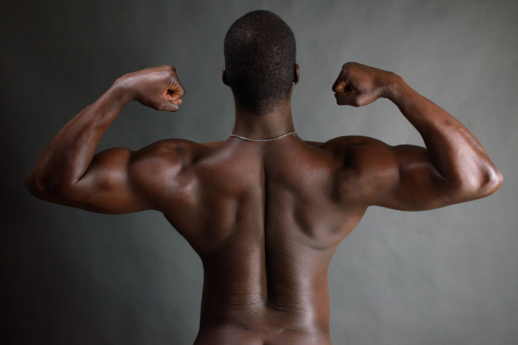
Understanding the anatomy of the back is essential not only for those who practice sports, but also for anyone looking to maintain proper posture in daily life and prevent pain or muscle imbalances. In this complete guide, we will explore the main back muscles, their functional role, and the deep connection between anatomy, well-being, and postural health.
- Anatomy of the main back muscles
- Back musculature and body functionality
- Postural health and daily well-being
Anatomy of the main back muscles
Latissimus dorsi: structure and function
The latissimus dorsi, commonly referred to as “lats,” are among the largest muscles in the human body. They play a key role in both aesthetics and function. These muscles extend from the lower back to the humerus and are involved in extension, adduction, and internal rotation of the arm.
Their function is crucial in many daily and athletic movements, such as lifting, pull-ups, and pushing or pulling motions. Well-developed lats contribute to the classic V-shape physique, but more importantly, they provide stability and trunk control.
Trapezius and rhomboids: what they are and where they are located
The trapezius is a diamond-shaped muscle covering the upper back, extending from the neck to the shoulders and down to the mid-spine. It is divided into three parts (upper, middle, lower) with different functions: shoulder elevation, scapular retraction, and neck rotation.
The rhomboids, located beneath the trapezius, connect the shoulder blades to the spine and are essential for maintaining proper scapular positioning. Their proper activation is vital for scapular stability and helps prevent rounding of the upper back, commonly caused by prolonged poor posture.
Posterior deltoids: their role in the back musculature
Although often associated with the shoulders, the posterior deltoids play a crucial role in the balance of the posterior chain. Located on the rear part of the deltoid, these muscles contribute to shoulder extension and horizontal abduction, assisting with scapular retraction movements.
They are frequently overlooked in training, yet developing them in proportion to the other deltoid heads is essential for a stable posture and to avoid shoulder misalignment. Weak posterior deltoids can compromise the functionality of the entire back chain.
Back musculature and body functionality
The connection between a strong back and proper posture
A strong back is not just about aesthetics—it is a pillar of overall health. Well-developed and balanced back muscles help keep the spine in a neutral position, supporting a natural and upright posture whether moving or standing still.
Proper posture reduces joint strain, improves movement efficiency, and helps prevent a wide range of issues, including lower back pain, neck tension, and joint stiffness. In many cases, chronic postural problems stem directly from muscle weakness in the dorsal region.
The role of back muscles in injury prevention
Another key aspect of back musculature is its role in injury prevention. Deep spinal muscles, such as the multifidus and erector spinae, constantly work to maintain vertebral stability. When these muscles are weak or dysfunctional, the risk of injury—especially in the lumbar area—increases.
Training the back for functional strength, with exercises focused on stabilization and muscular endurance, is essential not only for athletes but also for sedentary individuals. A trained back means a more protected, resilient body that is less prone to muscular or joint stress.
Postural health and daily well-being
Why understanding anatomy helps you feel better
Learning about the structure and function of the back muscles is the first step toward a mindful approach to health. Posture is often thought to be influenced only by habits or workstation ergonomics, but it actually reflects a neuromuscular balance involving the whole body.
Diving into anatomy helps recognize signs of imbalance or weakness and allows for targeted intervention to improve movement efficiency and reduce pain. Anatomical education thus becomes a tool for autonomy, prevention, and long-term well-being.
Muscles and posture: how they connect to overall wellness
Back health directly affects many aspects of life: from sleep quality to breathing, from joint mobility to mental focus. Poor posture can lead to chronic muscle tension, reduced oxygenation, and contribute to both mental and physical fatigue.
Promoting care of the posterior musculature is not just about exercise—it's about adopting a holistic view of the body where strength, balance, and awareness work together to enhance quality of life. The back, often neglected, is in fact the central pillar of global well-being.
Comments (0)