
Trolley
You have no items in your shopping cart

 Budgets
 Dumbers
 Discs
Discs
 Benches
 Racks and Rigs
 Weights Holders
 Isotonic machines
 Calisthenics
 Cardio
 Kettlebells
 Flooring
 Gym Set
 Accessories
 Combat
 ARTI MARZIALI
 CONTAINER GYM
 Tug-Of-War
 Used Gym Equipment
 PILATES MACCHINARI
 GINNASTICA ARTISTICA
 CAMPI DA PADEL
 Prodotti in Pronta Consegna
 Informazioni
 IRONMAN
 Gift Card
- Donatif
- General information
- 0 I like it
- 2480 Views
- 0 comments
READING TIME: 10 MINUTES ➤➤
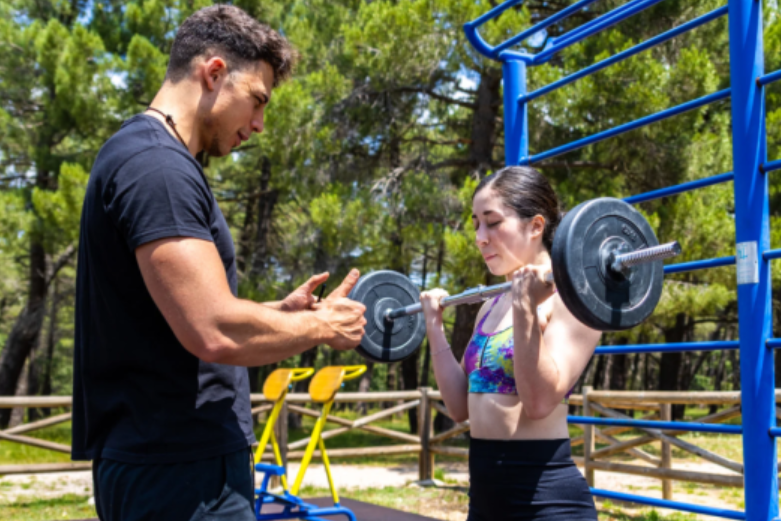
Starting to work out can seem like a daunting task, especially if you’re starting from zero. But the truth is that anyone can transform their life through a gradual, structured, and accessible process. In this guide you’ll find everything you need to begin your fitness journey: programs designed for beginners, the basic exercises, and practical and motivational tips to keep you going. If you’re a sedentary person between the ages of 25 and 45 who wants to start but doesn’t know where to begin, you’re in the right place.
- Why Start a Fitness Journey
- The 30‑Day Beginner Program
- Basic Safe Exercises for Beginners
- Practical Tips to Get Started Right
- Realistic Goals and Constant Motivation
- Start Today: Your Path to Change
Why Start a Fitness Journey
Physical and Mental Benefits of Exercise
Regular physical activity offers a wide range of benefits that go far beyond simple aesthetic improvements. Working out means feeling better, inside and out. Your body becomes stronger, posture improves, and energy increases. Most importantly, physical exercise has a positive impact on the mind: it reduces stress, improves sleep quality, and stimulates the production of endorphins—the so‑called “happiness hormones.”
For beginners, discovering how movement can positively influence mood and self‑esteem often marks a turning point. It’s the first step toward a new awareness where health and well‑being become concrete, achievable, and rewarding goals.
Overcoming Early Fears and Blocks
Many people avoid starting exercise out of fear of not being good enough, fear of judgment, or due to past negative experiences. These mental barriers are common and completely normal. However, the real obstacle isn’t your body—it’s the belief that you can’t do it. Overcoming this fear requires a shift in perspective: you don’t need to be perfect—you just need to start.
This guide is designed to walk you through each step, eliminating performance pressure and promoting an inclusive, progressive, and customizable idea of fitness. Every success, even a small one, helps build lasting confidence and motivation.
The 30‑Day Beginner Program
Program Structure and Logic
Our beginner program is based on a 30‑day progression designed to help your body get used to movement without overstressing it. Each week has a specific focus: starting with mobility and body awareness, moving into endurance work, and finally basic strength training. No special equipment is required—just a mat, a calm space, and the willingness to give it a try.
Each day’s routine is structured so that workouts do not exceed 30 minutes. This way you can easily fit them into your daily schedule, even if you have limited time. Consistency matters more than intensity: consistency builds results.
Weekly Progression and Adaptability
Each week in the program introduces slight variations to keep interest high and stimulate the body without causing frustration. It begins with three workouts per week, increasing gradually to four or five, depending on your availability. The program is designed to be adaptable: you can repeat a week if you feel you’re not ready to move on to the next one.
Flexibility is key to a sustainable journey. There isn’t one “right” way to train, but there is a right way for you—and this guide will help you discover it by honoring your pace and your body.
Basic Safe Exercises for Beginners
Fundamental Movements and Correct Techniques
For those starting from zero, it’s essential to learn the fundamental movements of fitness: squats, push‑ups, planks, lunges, and light pulls. These exercises engage broad muscle groups and help you build a solid foundation of strength and coordination. Correct execution is more important than the number of repetitions: quality over quantity.
Each exercise is explained with attention to alignment, breath, and posture. Avoiding common mistakes is the best way to prevent unnecessary aches and pains. In this guide you’ll find clear and simple descriptions designed especially for those with no prior experience.
How to Train Safely and Prevent Injuries
Training safely doesn’t mean being weak—it means being smart. It’s important to listen to your body, respect recovery times, and never force painful movements. Warm‑ups at the beginning and cool‑downs at the end are essential steps in injury prevention.
In the early stages, you’ll only use your own bodyweight. When you feel more confident, you can introduce light weights or more dynamic variations. Safety is the foundation of all real progress, and this guide will help you build it step by step.
Practical Tips to Get Started Right
Organizing Workouts into Daily Life
Time is one of the most common excuses, but it often hides a lack of priorities. In reality, just 30 minutes a day can make a difference. The key is planning: choose the best time for you, prepare your workout clothes in advance, and create a small dedicated exercise space.
Working out shouldn’t feel like a chore—it should be an appointment with your well‑being. Pairing it with an existing daily habit—like right after your morning coffee or before your evening shower—can help make it automatic. The simpler the process, the easier it is to maintain over time.
Tools and Resources to Stay Motivated
To stay motivated, it’s helpful to track your progress—even small wins count. A workout journal, a daily checklist, or a dedicated app can help you visualize progress and reinforce commitment. Even getting a friend involved or sharing your goals with someone can increase your sense of positive accountability.
In this guide you’ll find suggestions for free apps, support videos, and free online resources designed for beginners. The important thing to know is that you’re not alone: there are tools ready to help you along the way.
Realistic Goals and Constant Motivation
How to Set Concrete, Measurable Goals
One of the most common mistakes is starting with expectations that are too high or too vague. “I want to get fit” is not a goal—it’s an intention. A true goal is specific, measurable, realistic, and time‑bound. For example: “Work out 3 times per week for 30 days.”
Defining realistic milestones will help you stay motivated. Every goal you reach strengthens your belief in yourself and prepares you for the next step. Remember: every bit of progress, no matter how small, is a victory worth celebrating.
Real Testimonials and the Power of Social Proof
Reading stories from people who have already completed this journey can give you confidence and inspiration. Knowing that others who started with the same challenges succeeded is concrete proof that you can do it too. Social proof is a powerful ally in overcoming initial fears.
Within this guide you’ll find real testimonials from beginners who completed the program. Their words are the best possible encouragement: transformation is possible, and it’s closer than you think.
Start Today: Your Path to Change
There is no perfect time to start—there’s only the decision to do it. If you’ve read this far, you’ve already taken an important step. The path ahead is made of small daily actions, simple but effective workouts, and choices that lead to well‑being.
This guide is not just a collection of exercises: it’s an invitation to take care of yourself, rediscover the joy of movement, and build a new balance. Start today your journey from zero to hero: change starts with a simple “yes.”
Comments (0)