
Trolley
You have no items in your shopping cart

 Budgets
 Dumbers
 Discs
Discs
 Benches
 Racks and Rigs
 Weights Holders
 Isotonic machines
 Calisthenics
 Cardio
 Kettlebells
 Flooring
 Gym Set
 Accessories
 Combat
 ARTI MARZIALI
 CONTAINER GYM
 Tug-Of-War
 Used Gym Equipment
 PILATES MACCHINARI
 GINNASTICA ARTISTICA
 CAMPI DA PADEL
 Prodotti in Pronta Consegna
 Informazioni
 IRONMAN
 Gift Card
- Donatif
- General information
- 0 I like it
- 1640 Views
- 0 comments
- gym flooring, safety flooring, gym safety, shock-absorbing materials
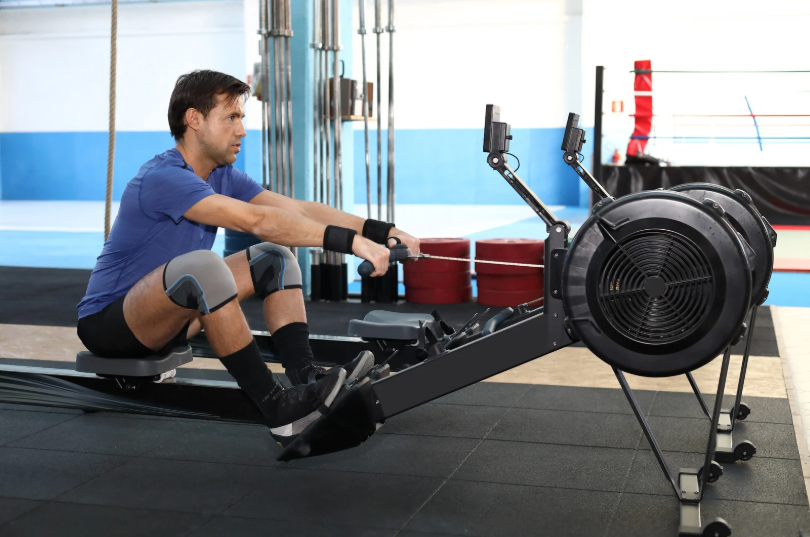
Correct rowing machine technique: a 5-step sequence and mistakes to avoid
The rowing machine is one of the most complete fitness machines for improving endurance, coordination, and full-body strength without placing excessive impact on the joints. Despite this, many people begin using it focusing only on speed or workout duration, completely overlooking technique. This is exactly where the most common problems begin: lower back discomfort, knee strain, stiff movement, and poor workout efficiency.
Proper technique allows you to distribute the effort evenly between legs, core, and upper body. The movement becomes smoother, less stressful, and significantly more effective. Even those using a rowing machine at home can achieve excellent results by improving posture, rhythm, and movement control. Understanding the correct rowing motion means training with greater confidence and reducing the fear of performing the movement incorrectly.
The correct rowing machine sequence in 5 steps
Grip position and shoulder alignment
Proper movement starts before the push phase even begins. Your hands should hold the handle firmly but without excessive tension in the forearms. The shoulders must stay low and relaxed, away from the ears, while the chest remains open. Gripping too tightly often causes unnecessary tension in the neck and trapezius muscles, making the rowing motion less fluid and more tiring.
The starting position should feel stable and balanced. The knees are bent, the shins are almost vertical, and the torso leans slightly forward without rounding the back. In this phase, it is important to engage the core muscles, as they help maintain control throughout the entire rowing sequence. A correct setup makes every following phase smoother and more coordinated.
The initial leg drive
The most powerful part of the rowing stroke comes from the legs. Many beginners make the mistake of pulling immediately with their arms, but the correct movement starts with the feet pushing against the footplates. The quadriceps and glutes generate the main force while the arms remain extended during the first part of the drive.
During this phase, the back should maintain its natural alignment. A controlled push helps reduce unnecessary strain on the lower back and improves force transmission. Focusing on leg drive also makes the movement more efficient and less dispersive.
The controlled torso swing
After the leg drive, the torso becomes involved. The transition must be smooth and controlled, without sudden movements. The upper body leans slightly backward while keeping the core engaged and the spine stable. This phase creates continuity between the lower and upper body.
One of the most common fears associated with the rowing machine is lower back pain. In most cases, the issue comes from excessive leaning or poor lumbar control. Staying compact and controlled helps distribute the workload more effectively and creates a much more natural movement pattern.
The final arm pull
Only during the final part of the stroke do the arms actively pull. The elbows travel close to the torso and the handle reaches the lower chest area. The shoulders should not collapse forward and the neck must remain relaxed. Pulling too high or too far away from the body creates unnecessary tension.
This phase completes the active portion of the rowing stroke. Although the movement may seem simple, controlling the handle path greatly affects workout quality. A clean arm pull improves coordination, comfort, and movement continuity.
The correct return to the starting position
The recovery phase is often underestimated, yet it is just as important as the drive. The sequence must happen in reverse order: first the arms extend, then the torso leans slightly forward, and finally the knees bend. Bending the knees too early creates broken movement patterns and reduces fluidity.
The recovery should remain controlled and never rushed. A balanced return helps maintain the correct rhythm and reduces early fatigue. It also allows beginners to better understand each technical phase without feeling overwhelmed.
How to maintain stable posture throughout the movement
Back alignment and lower back protection
The back is one of the most sensitive areas when using a rowing machine. Maintaining a neutral posture helps distribute the effort correctly between legs, core, and upper body. Rounding the lower back during the drive phase increases the risk of discomfort and stiffness.
To stay stable, it is useful to think about keeping the chest open and the core lightly engaged throughout the stroke. There is no need to become rigid: control should feel natural and continuous. This approach is especially useful for people worried about stressing their lower back during home workouts.
Knee position and load distribution
The knees should follow a stable path without collapsing inward. Proper foot placement on the footplates improves balance and power transfer. Poor load distribution causes the movement to lose fluidity and increases the risk of compensation patterns.
Rhythm also plays a major role in joint protection. Moving too quickly often leads to incomplete and uncontrolled strokes. A steady pace allows better technical control and reduces stress on the knees and hips.
Common rowing machine mistakes that affect technique and comfort
Pulling too early with the arms
This is probably the most common beginner mistake. Using the arms too soon reduces leg involvement and quickly fatigues the shoulders and forearms. The result is a weaker and less efficient rowing stroke.
Learning to respect the correct sequence helps distribute the effort more effectively. The legs should always initiate the movement, while the arms complete the final part of the pull.
Rounding the back during the drive
A rounded back compromises stability and makes the movement less safe. This mistake often appears when people try to increase speed or intensity before mastering the proper technique.
Keeping the torso stable and the core engaged allows for a safer and more controlled rowing stroke. Even short workouts become more effective when the movement stays clean and precise.
Using excessive speed without control
Many people associate rowing with fast and aggressive movements, but excessive speed often reduces technical quality. The rhythm should remain sustainable and allow you to clearly feel each phase of the sequence.
Training calmly helps build coordination and confidence. Only after mastering the movement should you gradually increase intensity and duration without sacrificing control.
Breathing and rhythm for smoother rowing
When to inhale and exhale
Breathing directly affects movement control. In general, it is helpful to inhale during the recovery phase and exhale during the drive and pull. This pattern improves continuity and reduces the feeling of breathlessness.
Regular breathing also helps relax the shoulders and neck. People who hold their breath often become tense and lose movement fluidity during the rowing stroke.
How to find a sustainable pace
A pace that is too fast quickly leads to poor technique. It is better to start with moderate rhythms, focusing on movement quality rather than the number of strokes per minute.
Over time, it becomes easier to develop a natural and consistent rowing rhythm. This approach is especially beneficial for people training at home who want to improve gradually without creating unnecessary tension.
Training on a rowing machine at home with greater safety and confidence
How to start if you are a beginner or over 50
Anyone starting to use a rowing machine after the age of 50 or after long periods of inactivity should focus first on movement control. Short, technically precise sessions are often more effective than long workouts performed with poor posture.
Taking the time to learn the sequence properly helps reduce anxiety and fear of making mistakes. The rowing machine can become a highly effective tool for improving mobility and endurance, provided it is used gradually and correctly.
Useful accessories to improve comfort and stability
Some accessories can make the rowing experience more stable and comfortable. A protective mat helps reduce vibrations and noise, while ergonomic supports may improve positioning during workouts.
Following reliable video tutorials or using visual learning materials can also help users better understand the movement sequence. Seeing the technique clearly makes training feel safer, more comfortable, and easier to maintain consistently over time.
Comments (0)