
Trolley
You have no items in your shopping cart

 Budgets
 Dumbers
 Discs
Discs
 Benches
 Racks and Rigs
 Weights Holders
 Isotonic machines
 Calisthenics
 Cardio
 Kettlebells
 Flooring
 Gym Set
 Accessories
 Combat
 ARTI MARZIALI
 CONTAINER GYM
 Tug-Of-War
 Used Gym Equipment
 PILATES MACCHINARI
 GINNASTICA ARTISTICA
 CAMPI DA PADEL
 Prodotti in Pronta Consegna
 Informazioni
 IRONMAN
 Gift Card
- Donatif
- General information
- 0 I like it
- 1685 Views
- 0 comments
- stress reduction, improved self-esteem, physical and mental well-being, gym training
READING TIME: 5 MINUTES ➤➤
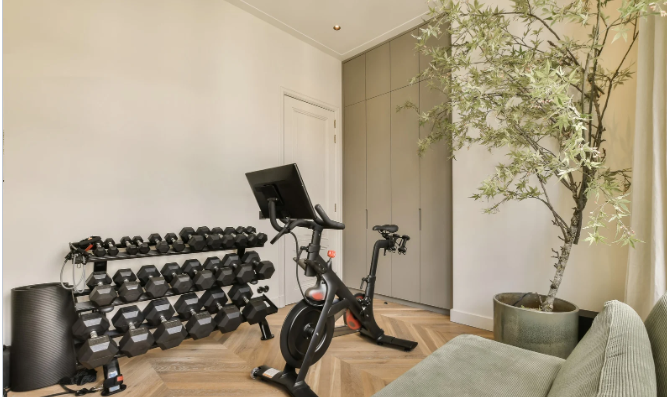
The mistakes that ruin a home gym in an apartment within the first few months
At the beginning, a home gym in an apartment always feels like an exciting choice. The equipment is new, the space is clean, and the idea of working out at home boosts motivation. However, it’s precisely in the first few months that the most critical mistakes hide—those that aren’t immediately visible but gradually compromise comfort, organization, durability, and real usability of the space.
Many entry-level users underestimate these aspects because the effects are not immediate. But that’s exactly the trap: when the problem becomes obvious, it often requires more time, more money, and more effort to fix. Knowing these mistakes in advance means avoiding frustration and building a truly functional home gym.
- Invisible mistakes at the beginning
- Installation mistakes
- Space management mistakes
- Flooring mistakes
- Maintenance mistakes
- Early warning signs
- Simple fixes
Invisible mistakes at the beginning but obvious after a few weeks
The most common mistake is believing that if something works today, it will work tomorrow. In reality, many initial setup mistakes only emerge after weeks of continuous use. Creaking sounds, instability, growing clutter, or difficulty in movement are all signs that something was not properly designed.
This happens because a home gym is not a static space. It’s a dynamic environment, subject to loads, vibrations, and repeated use. A small initial mistake, such as poor positioning or an inadequate surface, can quickly turn into a structural problem that’s hard to ignore.
Why initial mistakes compromise everything over time
Every decision made at the beginning creates a foundation. If that foundation is weak, everything built on top of it becomes unstable. Poor layout, for example, doesn’t just affect aesthetics—it reduces movement fluidity and increases the risk of improper equipment use.
Over time, this leads to reduced use of the home gym itself. When the space becomes uncomfortable or frustrating, motivation drops. And this is exactly where many people give up—not due to lack of discipline, but because of avoidable mistakes made early on.
Installation mistakes that create structural problems
Rushed assembly and unstable equipment
One of the most underestimated mistakes is rushing the assembly of equipment. Loose screws, poorly assembled components, or uneven surfaces create instability from the very first workouts.
This not only compromises safety but also accelerates material wear. Unstable equipment performs poorly, deforms faster, and generates unnecessary vibrations.
Fix: always check tightening after the first uses and place equipment on a stable base such as rubber flooring or EVA mats to absorb micro-movements.
Wrong positioning from the start
Placing equipment without considering the surrounding space is a typical mistake. People often think only about static footprint, ignoring real movement during exercise.
This leads to restricted motion, collisions with walls or furniture, and a constant feeling of discomfort.
Fix: always leave functional space around equipment and simulate movements before finalizing the layout.
Space management mistakes that reduce usability
Overloading with unnecessary equipment
At the beginning, there is a tendency to buy too much. The idea is to have everything, but the result is a chaotic and inefficient space. Too much equipment reduces freedom of movement and increases visual clutter.
This creates a psychological barrier to training, making the environment less welcoming and more stressful.
Fix: start with essential items and add only when necessary, always maintaining order and accessibility.
Insufficient movement space
Many people fail to consider the dynamic space the body needs during exercise. Squats, lunges, or barbell exercises require real room—not just occupied floor space.
Lack of space limits exercise effectiveness and increases the risk of compensatory movements.
Fix: test each exercise in the available space before finalizing the layout.
Flooring mistakes that cause damage and noise
Lack of proper protection
Training directly on your home floor is one of the most damaging mistakes. Without protection, you risk damaging surfaces, creating noise, and transmitting vibrations to neighbors.
Over time, this can lead to issues within the building, as well as compromise equipment stability.
Fix: use EVA mats or rubber flooring to create a protective and insulating base.
Materials not suitable for home use
Not all materials are suitable for an apartment. Some amplify noise or fail to absorb impact properly.
This makes the training experience less comfortable and more intrusive for others in the building.
Fix: choose materials specifically designed for home use, built to reduce vibration and noise.
Maintenance mistakes that shorten equipment lifespan
Neglecting checks and adjustments
Many people think that once equipment is assembled, it requires no further attention. In reality, continuous use loosens components and alters structural balance.
Ignoring this leads to premature wear and reduced safety.
Fix: periodically check screws, joints, and overall stability.
Incorrect use over time
Improper use, often caused by poor initial setup, accelerates wear and reduces equipment performance.
This creates a vicious cycle: less comfort, less usage, more deterioration.
Fix: maintain proper technique and adapt the environment to support natural movement.
How to recognize early warning signs of a mistake
Early indicators not to ignore
There are clear signs that indicate a problem: instability, unusual noises, difficulty in movement, or increasing clutter. Ignoring them allows the issue to worsen.
Recognizing them early allows for quick intervention, avoiding more complex fixes later on.
Simple fixes to save your home gym
The good news is that many mistakes are easy to fix if identified in time. Small adjustments, such as repositioning equipment or improving the base surface, can completely transform your experience.
Building an effective home gym in an apartment doesn’t mean getting everything perfect from the start—it means avoiding the most common mistakes and quickly correcting those that arise. This approach reduces stress, increases control, and makes the space truly functional over the long term.
Comments (0)