
Trolley
You have no items in your shopping cart

 Budgets
 Dumbers
 Discs
Discs
 Benches
 Racks and Rigs
 Weights Holders
 Isotonic machines
 Calisthenics
 Cardio
 Kettlebells
 Flooring
 Gym Set
 Accessories
 Combat
 ARTI MARZIALI
 CONTAINER GYM
 Tug-Of-War
 Used Gym Equipment
 PILATES MACCHINARI
 GINNASTICA ARTISTICA
 CAMPI DA PADEL
 Prodotti in Pronta Consegna
 Informazioni
 IRONMAN
 Gift Card
- Donatif
- General information
- 0 I like it
- 2020 Views
- 0 comments
- stress reduction, improved self-esteem, physical and mental well-being, gym training
READING TIME: 5 MINUTES ➤➤
Mistakes in Turning a Domestic Space into a Home Gym
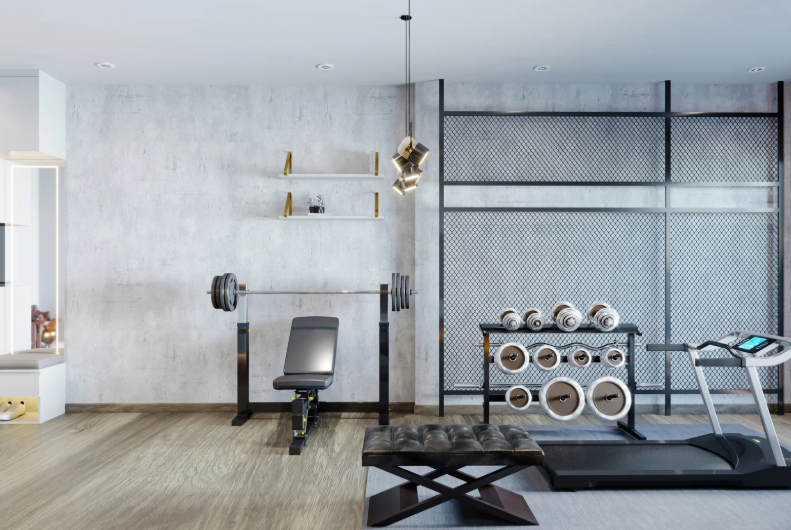
Transforming a room into a functional and credible home gym is a much more complex process than it often seems. The most common mistake is believing that simply filling a space with equipment is enough to create an effective training environment. In reality, without a clear design logic, the result risks being messy, limiting, and difficult to use.
This leads not only to a frustrating training experience but also to a wasteful investment that loses value over time. Understanding the most frequent mistakes means avoiding impulsive decisions and building a space that truly reflects your needs, both in terms of performance and future growth.
- Why many home gyms feel improvised
- Space design mistakes
- Wrong equipment choices
- Disorder and management
- Structural mistakes
- Lack of long-term vision
Why many home gyms feel improvised and poorly functional
One of the main causes of an improvised home gym is an instinctive approach: equipment is purchased without an overall vision, driven more by enthusiasm than by a real strategy. This leads to overcrowded, inconsistent spaces that are difficult to use smoothly.
An effective training environment, instead, is built on a balance between order, function, and operational logic. When this balance is missing, even high-quality equipment loses value because it is placed in a context that does not allow optimal use.
The mistake of starting from equipment instead of space
Many people begin by buying a rack or a bench without first analyzing the available space. This approach leads to constant compromises and inefficient layout decisions.
The correction is to always start with space planning, defining dimensions, heights, and functional zones before making any purchase.
Confusing quantity with setup quality
Accumulating equipment does not improve your home gym. On the contrary, it often increases chaos and reduces overall functionality.
It is better to focus on a few well-integrated elements, such as a rack, bench, and weight storage system, ensuring versatility and order.
Space design mistakes: when layout doesn’t work
A poorly designed layout is one of the most limiting errors. Even with quality equipment, a badly organized space compromises the training experience.
Design must consider not only dimensions but also the actual movement patterns during training, avoiding interference and constraints.
Lack of functional zones
An effective space is divided into areas: lifting, accessory work, mobility. When everything is mixed together, operational confusion arises.
The solution is to clearly define each zone, even in small spaces, maintaining a coherent functional logic.
Ignoring movement flow
Failing to consider how you move within the space leads to constant adjustments and interruptions during training.
A good layout allows smooth and natural movement, improving both safety and effectiveness.
Wrong equipment: the problem of random accumulation
Impulse buying is one of the most common mistakes. Equipment is chosen without evaluating compatibility, actual use, and integration with the rest of the setup.
This leads to a space that is full but not functional, where many items remain unused.
Purchases not aligned with goals
Every piece of equipment should serve a specific purpose. Without this logic, redundancy and inefficiency emerge.
The correction is to select equipment based on clear goals and progression.
Unused equipment and wasted space
Many tools end up taking space without being used, becoming an obstacle rather than a resource.
An effective setup removes the unnecessary and enhances every element present.
Disorder and management: when the gym loses credibility
Disorder is one of the most visible signs of a poorly designed home gym. It is not just an aesthetic issue, but a functional one.
A disorganized space reduces motivation and conveys a lack of professionalism, especially in contexts such as home PT studios.
Lack of storage systems
Without weight holders, racks, and dedicated solutions, equipment accumulates chaotically.
Integrating efficient storage systems helps maintain order and accessibility.
Visual impact and professional perception
The visual aspect directly affects how the space is perceived. An organized environment communicates control and competence.
This is essential for those who use their home gym in a professional context.
Structural mistakes: underestimated safety and surfaces
Neglecting technical aspects is a mistake that can compromise both safety and the longevity of the setup.
The structure of the space must support training, not limit it.
Inadequate flooring
Training on unsuitable surfaces increases the risk of damage and reduces stability.
Rubber flooring is a fundamental solution for protection and performance.
Equipment stability and safety
Unsecured or unstable equipment represents a real risk.
Ensuring solidity and safety is an absolute priority in any advanced home gym.
Lack of vision: a home gym that doesn’t evolve
One of the most underestimated mistakes is designing a static space without considering future developments.
An effective home gym should be conceived as a system that evolves over time.
Non-modular setup
Rigid structures limit the possibility of upgrades and adaptation.
Choosing modular solutions allows you to evolve over time without having to redesign everything.
Inability to evolve
A poorly designed space quickly becomes a limitation.
A long-term vision allows you to build a coherent, functional, and credible home gym, avoiding costly and difficult-to-correct mistakes.
Comments (0)