
Trolley
You have no items in your shopping cart

 Budgets
 Dumbers
 Discs
Discs
 Benches
 Racks and Rigs
 Weights Holders
 Isotonic machines
 Calisthenics
 Cardio
 Kettlebells
 Flooring
 Gym Set
 Accessories
 Combat
 ARTI MARZIALI
 CONTAINER GYM
 Tug-Of-War
 Used Gym Equipment
 PILATES MACCHINARI
 GINNASTICA ARTISTICA
 CAMPI DA PADEL
 Prodotti in Pronta Consegna
 Informazioni
 IRONMAN
 Gift Card
- Donatif
- General information
- 0 I like it
- 1287 Views
- 0 comments
- stress reduction, improved self-esteem, physical and mental well-being, gym training
READING TIME: 5 MINUTES ➤➤
Mistakes That Make a Tatami Area Unsafe or Unprofessional
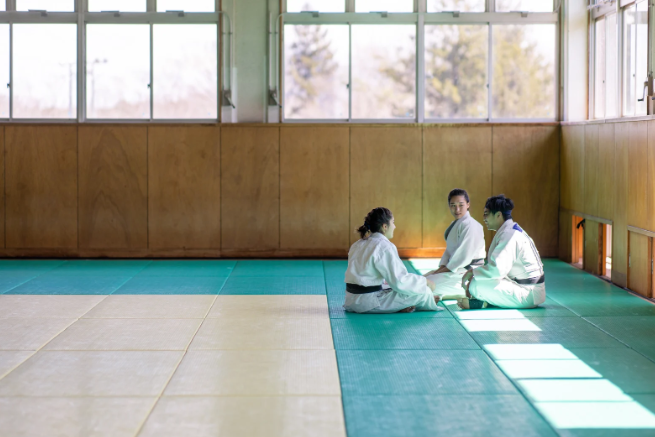
Designing a tatami area does not simply mean laying down a soft surface and starting to train. This is precisely one of the most common mistakes: underestimating the technical and perceptual complexity of a space dedicated to combat sports. A superficial choice can compromise both athlete safety and the professional credibility of the facility.
Those managing a micro gym or a personal training studio often face practical doubts: what truly makes an area reliable? What are the most common mistakes that lead to costly rework? In this article, we analyze the most frequent errors and, above all, how to avoid them with practical and applicable solutions.
- Structural mistakes
- Safety mistakes
- Perception mistakes
- Technical detail mistakes
- Functional mistakes
When a tatami area is built on structural mistakes
One of the most critical errors is starting from an inadequate base. A floor not designed for impact absorption immediately compromises the effectiveness of the tatami. It is common to install modules over existing surfaces without checking their rigidity, flatness, or compatibility, creating an unstable and potentially dangerous base.
Another frequent issue is underestimating the available space. An area that is too small or poorly proportioned limits movement and increases the risk of accidental impacts. Design must start from a comprehensive vision, not from simply adapting an existing space.
Practical fix: always check the subfloor and plan an appropriate layering system. If necessary, add a technical layer before installing the tatami.
Inadequate or poorly designed surface
An uneven surface creates micro-instabilities that are amplified during training. Even small level differences can negatively affect balance and safety, especially in disciplines involving throws or ground fighting.
Design must consider loads, usage, and intensity. Ignoring these factors means building an area that works only on the surface but shows clear limitations within weeks.
Errors in module installation
Installing modular tatami is often treated as a simple task, but it requires precision. Misalignment or poor interlocking creates gaps and unwanted movement between modules.
These defects not only compromise the training experience but also immediately signal a lack of professionalism to clients.
Practical fix: use certified modular systems and follow precise installation patterns, avoiding improvisation.
Mistakes that compromise athlete safety
Safety is the primary evaluation criterion of a tatami area. However, one of the most common mistakes is believing that any soft surface is sufficient. In reality, the level of shock absorption must be calibrated according to the discipline practiced.
A tatami that is too rigid or too soft can increase the risk of injury. The issue is not just the fall itself, but how the material responds to impact.
Insufficient impact absorption
Low-cost or non-certified materials tend to quickly lose their elastic properties. This creates a false sense of safety that fades over time.
More experienced athletes immediately perceive this difference, while beginners are exposed to greater risks without realizing it.
Surface discontinuity and instability
Discontinuities between modules create critical points where the foot can slip or get stuck. This type of issue is often invisible to the naked eye but extremely dangerous during training.
Stability must be total and uniform across the entire area, without exceptions.
Practical fix: regularly check surface integrity and replace worn or deformed modules.
Signals that make a space feel improvised
Beyond safety, there is another often overlooked aspect: customer perception. A visually inconsistent tatami area immediately conveys the idea of a poorly maintained and improvised space.
This directly affects trust and the decision to continue training.
Neglected and inconsistent aesthetics
Uneven colors, mismatched modules, or visible signs of wear create a negative visual impact. Even if functional, such a space appears unprofessional.
Aesthetics are not secondary—they are part of the overall experience.
Visible low-cost and unprofessional choices
DIY solutions or materials not designed for combat sports are immediately noticeable. This undermines the credibility of the entire environment.
Practical fix: choose materials that are consistent and specifically designed for the sporting context, avoiding improvised adaptations.
Technical detail mistakes that make the difference
Technical details are often what separate a professional space from an improvised one. Elements such as edges and joints, if neglected, become critical points for both safety and perception.
A well-designed tatami area is recognized precisely by the attention given to these aspects.
Underestimated edges, joints, and finishes
Unfinished or poorly secured edges represent a real hazard. They also interrupt the visual and functional continuity of the surface.
Joints must be precise and invisible, not visible elements that interfere with training.
Inadequate or low-quality materials
Non-specific materials tend to deteriorate quickly, losing grip and shock-absorbing capacity. This leads to additional costs in the medium term.
Practical fix: invest in certified materials designed for intensive use.
Functional problems that emerge in daily use
Some mistakes are not immediately visible but emerge with daily use. Poor maintenance or weak design quickly leads to deterioration and inefficiency.
These issues are among the most expensive to fix, as they often require structural intervention.
Premature wear and neglected maintenance
Ignoring maintenance leads to rapid surface deterioration. Stains, deformations, and loss of grip are clear signs of a deeper issue.
A neglected area immediately communicates a lack of control and professionalism.
Poorly manageable and unhygienic space
A design that does not consider cleaning and management results in daily operational difficulties. This impacts both user experience and overall perception of the space.
Practical fix: design the area by considering workflows, cleaning, and routine maintenance from the very beginning.
Comments (0)