
Trolley
You have no items in your shopping cart

 Budgets
 Dumbers
 Discs
Discs
 Benches
 Racks and Rigs
 Weights Holders
 Isotonic machines
 Calisthenics
 Cardio
 Kettlebells
 Flooring
 Gym Set
 Accessories
 Combat
 ARTI MARZIALI
 CONTAINER GYM
 Tug-Of-War
 Used Gym Equipment
 PILATES MACCHINARI
 GINNASTICA ARTISTICA
 CAMPI DA PADEL
 Prodotti in Pronta Consegna
 Informazioni
 IRONMAN
 Gift Card
- Donatif
- General information
- 0 I like it
- 1980 Views
- 0 comments
READING TIME: 5 MINUTES ➤➤
How to Create the Perfect Home Gym in Small Spaces
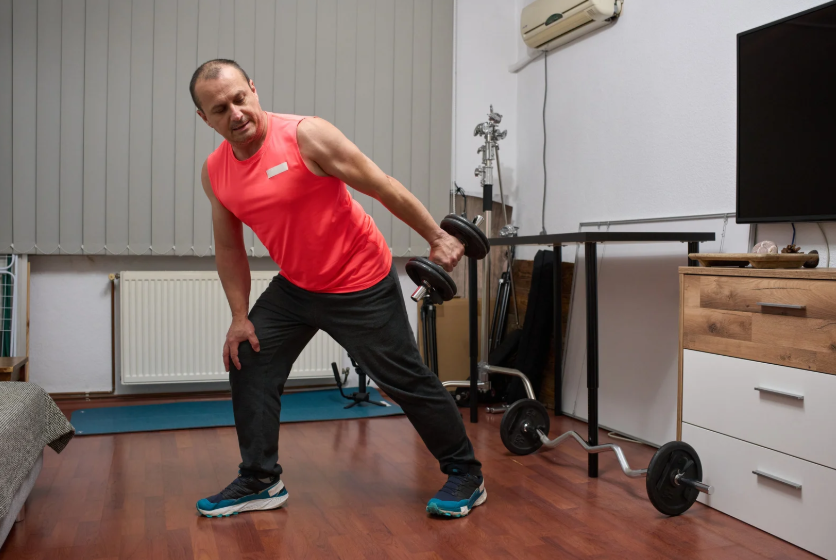
Have you ever thought about creating a home gym but worry you don’t have enough room? The good news is that you don’t need a huge room to build an effective, comfortable, and well-organized fitness corner. Even with small spaces, it’s possible to create a functional area where you can work out freely. This guide will help you transform every corner of your home into a space dedicated to home fitness, using smart, space‑saving solutions and customizable elements to fit your needs.
Whether you’re a beginner in at‑home fitness, a family looking for cost‑effective alternatives, or simply someone who wants to optimize their home environment, here you’ll find practical suggestions to set up a tailored home gym. You’ll learn how to turn limited space into a real advantage with versatile tools, compact models, and effective organization. Let’s start with why: why it’s truly worth working out at home.
- Why Choose a Home Gym: Benefits and Motivation
- Designing the Perfect Gym in Small Spaces
- Space‑Saving Solutions for Every Need
- Practical Tips for an Efficient and Personalized Setup
- The Home Gym as a Sustainable Lifestyle
Why Choose a Home Gym: Benefits and Motivation
Working Out at Home: Convenience and Daily Flexibility
Exercising within the comfort of your home offers a unique freedom: you decide when, how, and how intensely to perform your workouts. No waiting in line for equipment, no expensive membership, no time wasted in traffic. A home gym gives you control over your fitness routine, allowing you to adapt workouts to fit your day. This flexibility is especially advantageous for those with irregular schedules or family responsibilities.
Moreover, working out at home eliminates many of the psychological barriers that hinder consistency: the familiar environment boosts motivation and reduces initial resistance. Even in small spaces, you can create a motivating, well‑lit, and personalized corner where you feel comfortable every day.
Space Control and Cost Savings
One of the strongest benefits of a home gym is the ability to customize every aspect: from equipment placement to material choices and space management. This allows you to turn even a few square meters into a functional, tidy, and effective workout area. Controlling the environment also translates into greater hygiene, peace, and comfort compared to crowded gyms.
From an economic standpoint, the initial investment in basic equipment is often less than the annual cost of a gym membership. With an intelligent selection of compact models and multifunctional tools, you can achieve excellent wellness and savings benefits.
Designing the Perfect Gym in Small Spaces
Analyzing Available Space and Adaptable Areas
Before you begin, it’s essential to carefully observe your home’s spaces. Even an unused niche, a corner of the living room, or part of a hallway can be transformed into a functional fitness area. The key is to think vertically, use wall space, and choose dual‑purpose or foldable equipment. Space is never “too little”—just not yet optimized.
Identifying the right area—whether a room, a corner, or a shared space—allows you to harmonize your new fitness zone with the rest of your home. This way, your home gym naturally integrates into daily life, increasing the chances you’ll use it regularly.
Mistake to Avoid: Ignoring Functionality
One of the most common mistakes is being guided only by aesthetics or trends. Bulky equipment that’s rarely used or not suited to the space can become more of an obstacle than an asset. Functionality must be the priority: every item should have a precise purpose and a defined place, ideally easy to store.
For this reason, it’s important to define your training goals in advance: do you want to focus on cardio, muscle strengthening, or stretching? Each activity has specific needs, and proper planning helps you choose space‑saving but effective equipment.
Space‑Saving Solutions for Every Need
Multifunction Equipment and Compact Models
The market offers a wide range of solutions for a home gym designed for those with limited space. From foldable benches with integrated dumbbells to compact multifunction stations, adjustable kettlebells, and foldable exercise bikes—each piece can be chosen with minimal footprint without sacrificing workout quality.
Selecting compact models and versatile tools allows you to concentrate many functions within a few square meters. These types of tools are also ideal for those living in apartments or shared spaces, as they adapt quickly and can be stowed away after use.
Smart Storage: Foldable, Vertical, Modular
A crucial aspect of a successful home gym in small spaces is managing storage. Using storage cabinets, wall hooks, vertical shelving, or sport closets helps keep the area neat and ready for use at any time. A modular approach—where each element can be moved or folded—helps maintain space versatility.
The ease of storage is what transforms a fitness zone from “bulky” to “invisible.” This feature is particularly appreciated by those who want to balance physical activity with a minimalist aesthetic or overall home functionality.
Practical Tips for an Efficient and Personalized Setup
Lighting, Ventilation, and Environmental Comfort
Beyond equipment, environmental elements play a fundamental role in creating a welcoming home gym. Good lighting—preferably natural—boosts energy and motivation. Proper ventilation is essential to keep the air fresh during workouts. Adding mirrors can visually expand the space and improve movement awareness.
Investing in small details like non‑slip mats, baskets for accessories, Bluetooth audio systems, or a tablet holder improves the user experience and encourages continuity. Each element should contribute to comfort, making the space pleasant and functional.
Workout Routines for Small Spaces
Working out in tight spaces requires specific strategies. Bodyweight routines, HIIT circuits, functional training, and exercises with resistance bands are perfect for maximizing effectiveness with minimal movement. It’s helpful to choose adaptable programs based on repetitions rather than wide movements.
Creating a clear weekly routine—even just 15–20 minutes—is enough to see visible results over time. The key is consistency: better short, frequent sessions, especially in a customized space built just for you.
The Home Gym as a Sustainable Lifestyle
Motivation and Consistency at Home
A home gym isn’t just a set of equipment—it’s a declaration of intent. It means taking care of yourself day after day with consistency and realism. Working out at home teaches self‑discipline and autonomy, fundamental qualities for physical and mental well‑being.
Integrating movement into daily life is easier when the space is always there, ready to welcome you. Just a few minutes a day can build a lasting routine that adapts to your own rhythms and goals, even during busy periods.
Personalization: A Space That Represents You
Finally, one of the greatest advantages of creating a home gym is that you can shape it according to your identity. Colors, materials, accessories, music—each detail can be chosen based on your preferences. This makes the workout experience more intimate, enjoyable, and engaging.
In an age when everything is shared, having a private space for your own well‑being represents both a luxury and an act of self‑care. Even in just a few square meters, you can create an environment that reflects you, your values, and your goals.
Comments (0)