
Trolley
You have no items in your shopping cart

 Budgets
 Dumbers
 Discs
Discs
 Benches
 Racks and Rigs
 Weights Holders
 Isotonic machines
 Calisthenics
 Cardio
 Kettlebells
 Flooring
 Gym Set
 Accessories
 Combat
 ARTI MARZIALI
 CONTAINER GYM
 Tug-Of-War
 Used Gym Equipment
 PILATES MACCHINARI
 GINNASTICA ARTISTICA
 CAMPI DA PADEL
 Prodotti in Pronta Consegna
 Informazioni
 IRONMAN
 Gift Card
- Donatif
- General information
- 0 I like it
- 1577 Views
- 0 comments
- stress reduction, improved self-esteem, physical and mental well-being, gym training
READING TIME: 6 MINUTES ➤➤
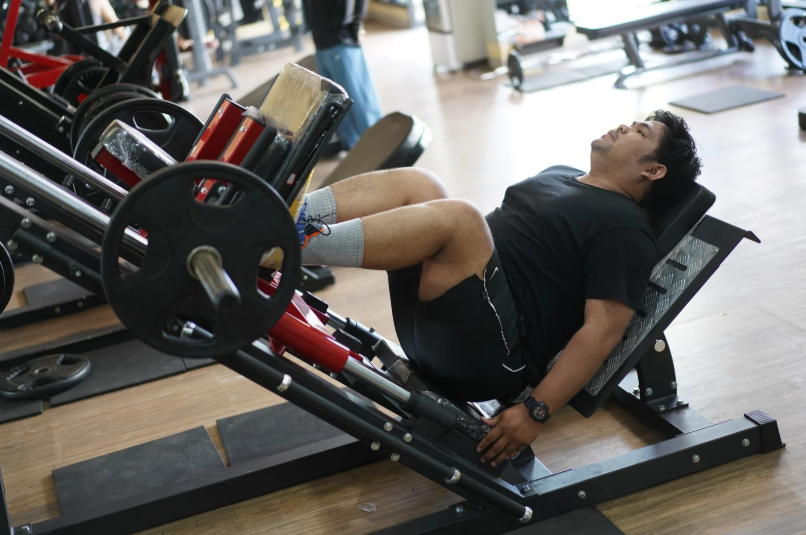
When dealing with post-traumatic knee recovery, choosing the right equipment cannot be reduced to a catalog preference or a simple matter of space. For physiotherapists and personal trainers working in clinical settings or bridging rehabilitation and reconditioning, the real question is different: which machine allows better management of progressive loading, movement trajectory, patient comfort, and perceived safety? It is within this decision-making space that the comparison between horizontal leg press and vertical leg press becomes truly meaningful.
When working on the knee—especially after traumatic events such as ligament injuries, surgical outcomes, or long periods of inactivity—biomechanics is not a theoretical detail. It is what enables a rational progression, minimizing unnecessary joint stress and building a coherent recovery path. Looking at machines from the CLP and RFA Donatif series from this perspective means evaluating not only their ability to generate force, but how that force is structured within the movement, perceived by the patient, and repeated consistently over time.
- How biomechanics change between horizontal and vertical leg press
- Post-traumatic knee recovery: which machine supports progressive loading
- CLP and RFA Donatif series: a clinical comparison
- How to choose for a clinic or rehab gym
- The best choice is not absolute, but progressive
How biomechanics change between horizontal and vertical leg press
The first element to consider is the direction of load. In a vertical leg press, the patient perceives a more direct effort, with a pushing component that makes the movement highly defined and easy to interpret. This can be advantageous when a clear trajectory, stable support, and easily understandable muscular demand are needed, especially in early rehabilitation phases. When properly managed, vertical movement enhances clarity and reduces technical dispersion, which is crucial when the patient still fears loading the joint.
The horizontal leg press, on the other hand, offers a mechanical setup that many professionals find more adaptable in daily practice. The positioning of the user, the relationship between back, pelvis, and supports, and the distribution of force can be adjusted more precisely. In a rehabilitation context, this is critical, as not all patients tolerate compressive load, movement depth, or execution speed in the same way. A machine that allows fine adjustments gives the therapist more control to tailor the work to the patient’s actual clinical condition.
The knee working angle is another key factor. Recovery is not just about how much weight is used, but where that load is applied across the joint’s range of motion. In early stages, the goal is not to force full ROM, but to control the ranges where the patient can move with stability and quality. A machine that helps maintain a consistent trajectory while preventing compensations in the pelvis or foot becomes a tool for motor re-education, not just strengthening.
For this reason, the comparison between horizontal and vertical should not be seen in absolute terms. Biomechanics serves the therapist when it helps stabilize movement, interpret knee response, and guide the patient from a protective phase to functional recovery. In other words, the best machine is not the one that allows the highest load, but the one that makes load more intelligible, progressive, and clinically sustainable.
Post-traumatic knee recovery: which machine supports progressive loading
In the early stages of recovery—especially after ACL injury or surgery—the priority is not performance, but joint tolerance. The patient needs a context where they can start pushing again without perceiving instability, anticipatory pain, or loss of control. In this sense, a machine with a guided trajectory and reassuring setup can provide immediate benefits, as it simplifies the movement pattern. When patients feel safe, muscle activation improves, which is essential to rebuild trust in the knee.
Progressive loading is not just about increasing weight. It involves building confidence, precision, and the ability to repeat movement without compensations. That is why the chosen machine should allow effective work even with low loads, controlled tempos, and a focus on motor feedback. A machine perceived as too “aggressive” may lead to stiffness, compensations, and poor force distribution, undermining its theoretical advantages.
As rehabilitation progresses, however, the demands change. The therapist begins to focus on transferability, higher workload tolerance, and more comprehensive lower-body strength development. In this phase, a machine that offers greater freedom, a more natural pushing sensation, and the ability to build structured progressions becomes increasingly valuable.
This is why, in clinical settings, the answer is rarely exclusive. An effective rehabilitation leg press is one that fits into a broader strategy. If vertical machines help simplify and structure movement in early stages, horizontal machines can become essential when the patient needs greater autonomy and a more advanced strength stimulus without losing technical control.
CLP and RFA Donatif series: a clinical comparison
From a technical perspective, the Vertical Leg Press RFA aligns well with a clinical approach focused on stability, guided trajectory, and ease of use. In environments where professionals work with patients of varying experience, residual pain, or movement fear, having a machine that simplifies execution is a tangible advantage. The stable support and guided motion allow therapists to focus on alignment, rhythm, and movement quality, reducing technical noise.
From a perceptual standpoint, the RFA vertical press can be seen as a machine that “contains” the movement. This is particularly relevant in knee rehabilitation, where reducing perceived complexity can improve patient adherence. A well-structured movement pattern helps rebuild a clean extension-push sequence without overwhelming the patient with too many variables.
The CLP plate-loaded leg press, on the other hand, stands out for its modularity. In a professional comparison, this is a strong argument, as modular equipment often represents a long-term strategic investment. It supports not only early-stage patients but also individuals progressing into strength work, personal training contexts, and functional reconditioning.
In practice, the CLP becomes particularly valuable when the goal is not only immediate joint protection, but continuity across different rehabilitation phases. For integrated facilities where clinical recovery transitions into performance-oriented conditioning, a well-designed horizontal press offers versatility and long-term utility. The difference, therefore, is not between a “right” and “wrong” machine, but between one that simplifies movement and one that supports long-term progression.
How to choose for a clinic or rehab gym
Choosing a vertical leg press makes sense when the context requires perceived safety, ease of learning, and a clearly defined trajectory. This is typical for patients who need to regain confidence in their knee, who are still sensitive to pain, or who require guided movement with limited variables. In these cases, the machine should not impress with complexity, but reassure through clarity.
Vertical machines are also useful when standardization is needed. In facilities with multiple professionals or a high patient volume, equipment that reduces variability can improve consistency and monitoring. The benefit is not only mechanical, but organizational.
A horizontal leg press, on the other hand, is preferable when the focus shifts toward fine-tuned load management, continuity between rehab and conditioning, and adaptability across different user profiles. In this context, the machine becomes a versatile tool, supporting both clinical and advanced training phases.
For professionals, the most relevant question is not “vertical or horizontal?”, but “which machine helps me do my job better with my patients?”. If the primary need is movement containment, vertical may be the best choice. If the goal is long-term progression and strength development, horizontal may offer broader value.
The best choice is not absolute, but progressive
In knee rehabilitation, the true value of equipment emerges when it is understood as a clinical tool. This means helping therapists minimize unnecessary joint stress, structure progression, and provide patients with a clear, tolerable, and motivating movement experience. From this perspective, the comparison between horizontal and vertical presses does not yield a universal winner, but a hierarchy based on recovery phase and operational model.
The most effective choice respects progression. One machine may be ideal for rebuilding confidence and control, while another becomes more useful for increasing workload and approaching functional demands. In a modern approach, biomechanics simplifies decisions by making them more precise: choosing the right equipment means creating the right conditions for the knee to function again.
Ultimately, when discussing rehabilitation leg press equipment, the key factor is always the professional’s reasoning. The best machine is the one that adapts to the patient, not the other way around. If the goal is gradual, controlled, and transferable recovery, then the comparison between CLP and RFA represents a methodological choice before a technical one.
In this perspective, the commercial value of technical comparison becomes a clinical value as well. Because well-chosen equipment does not just fill space—it supports the daily work of professionals managing load, protection, and progression. This is where biomechanics truly serves the therapist: not to complicate recovery, but to make it safer, clearer, and more effective.
Comments (0)