
Trolley
You have no items in your shopping cart

 Budgets
 Dumbers
 Discs
Discs
 Benches
 Racks and Rigs
 Weights Holders
 Isotonic machines
 Calisthenics
 Cardio
 Kettlebells
 Flooring
 Gym Set
 Accessories
 Combat
 ARTI MARZIALI
 CONTAINER GYM
 Tug-Of-War
 Used Gym Equipment
 PILATES MACCHINARI
 GINNASTICA ARTISTICA
 CAMPI DA PADEL
 Prodotti in Pronta Consegna
 Informazioni
 IRONMAN
 Gift Card
- Donatif
- General information
- 0 I like it
- 1718 Views
- 0 comments
- gym flooring, safety flooring, gym safety, shock-absorbing materials
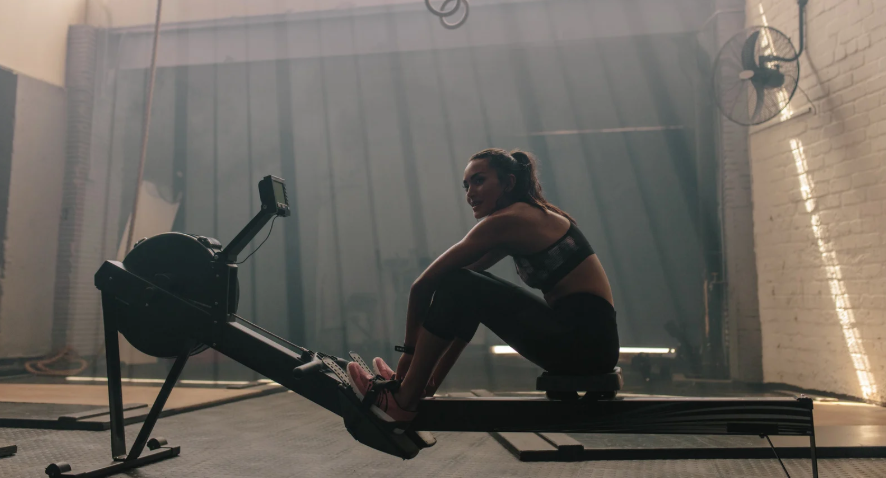
How Many Calories Does a Rowing Machine Burn in 30 Minutes? A Practical Guide by Intensity
The rowing machine is one of the most effective cardio machines for training at home or in the gym with a full-body workout, because it engages legs, back, arms, and the cardiovascular system in a single movement. However, the question about calories burned on a rowing machine in 30 minutes does not have one fixed answer: calorie expenditure changes depending on body weight, pace, watt output, technique, and workout consistency.
To give a realistic reference, in 30 minutes on a rowing machine a person may burn anywhere from around 110 to over 500 kcal, moving from light exercise to very intense effort. The most common range for a solid home workout is usually between 200 and 350 kcal, but this number should always be considered an estimate, not an absolute value. The useful point is not chasing the highest number, but understanding how to measure it and use it to make training more controlled and effective.
What affects real calorie burn on a rowing machine
Body weight, duration, and intensity as key variables
The calorie burn of a rowing machine workout mainly depends on three factors: body weight, workout duration, and average intensity. For the same amount of time, a person weighing 90 kg will generally burn more energy than someone weighing 60 kg because they move more mass and sustain a higher metabolic cost. Intensity, however, can affect the result even more: 30 relaxed minutes with frequent pauses and low pace are completely different from 30 continuous minutes with high average watt output and demanding breathing.
For this reason, it is more accurate to think in terms of realistic ranges rather than a single number. A light session may stay around 110–180 kcal for many users, a moderate session may reach 180–300 kcal, while an intense workout can exceed 300–450 kcal in 30 minutes, especially in heavier or well-trained individuals. The final number does not only describe “how much you sweated,” but how much actual work was maintained over time.
Why the rowing machine display should be interpreted carefully
The rowing machine display is useful, but it does not always measure calories in a personalized way. Some models estimate calorie burn based on watts, others use internal algorithms, while some simply show generic values that do not consider weight, age, gender, heart rate, or technical efficiency. This explains why two different rowing machines may display different calorie values for the same workout.
The screen data should therefore be used as a comparative reference: if the same person uses the same rowing machine with similar settings, they can compare one session to another quite effectively. It becomes less reliable when interpreted as an exact metabolic truth. For people training for fat loss, this distinction matters because it helps avoid the most common mistake: overestimating calories burned and then compensating with excessive calorie intake afterward.
Calories burned in 30 minutes: realistic scenarios
Light or moderate sessions for beginners
A light 30-minute session is typical for people learning proper technique, returning after inactivity, or using the rowing machine as low-impact cardio. In this case, the pace still allows conversation, breathing increases but remains manageable, and technical pauses may reduce actual calorie expenditure. For a person weighing 60–75 kg, calorie burn may range approximately between 110 and 230 kcal, while heavier users may exceed this range.
A moderate session is already more challenging: movement becomes continuous, rhythm stays stable, and heart rate remains in a sustainable but meaningful zone. In 30 minutes, a user weighing around 75 kg may burn approximately 220–280 kcal, depending on average intensity. This scenario is often ideal for home beginners or busy professionals because it allows consistent training without turning every session into a maximal effort challenge.
High-intensity sessions for trained users
An intense session requires greater technical control and a stronger cardiovascular base. Here the pace becomes demanding, breathing deepens, legs work more aggressively, and average power output stays higher throughout most of the workout. In this scenario, a 75 kg individual may realistically burn around 300–400 kcal, while heavier and fitter users may exceed this threshold.
One important factor is that real intensity does not always match perceived fatigue during the first few minutes. Many people start too fast, lose pace quickly, and end with a lower average output than expected. To better estimate rowing machine calories burned in 30 minutes, what matters is the average of the entire workout: average watts, average heart rate, and consistency of movement are more useful than short power peaks.
How to calculate rowing machine calories without overestimating
The MET method applied to rowing
A practical way to estimate calorie expenditure is by using METs, or metabolic equivalents, which describe the energy cost of an activity compared to resting. The most common formula is: calories per minute = MET × 3.5 × body weight in kg ÷ 200. Multiplying the result by 30 then provides an estimate for the session.
For rowing, MET values can vary significantly: light rowing may sit around 3.5 METs, moderate to vigorous rowing may range around 7–8.5 METs, while highly intense efforts may exceed these values. This confirms why talking about “rowing machine calories” without specifying intensity is not very accurate. The MET method is not perfect, but it offers a transparent and repeatable basis, especially when the goal is comparing similar workouts over time.
Practical examples for 60, 75, and 90 kg
Using an estimated moderate intensity of around 7 METs, 30 minutes on a rowing machine would burn approximately 220 kcal for a 60 kg person, around 276 kcal for a 75 kg person, and roughly 331 kcal for a 90 kg person. With lower intensity, the same users may burn significantly less, while vigorous training may increase the values considerably. This clearly shows the influence of body weight and sustained intensity.
An even more practical example: a 75 kg individual rowing at an easy pace may burn around 140 kcal in 30 minutes, while a sustained and challenging pace may push calorie expenditure close to or above 330 kcal. This does not mean light sessions are useless; they can support recovery, consistency, technique, and restarting fitness habits. It simply means that, for efficient fat loss, not every rowing session should be considered equal in calorie impact.
How to measure calorie burn more accurately at home
Heart rate monitors, chest straps, and calorie apps
To improve calorie tracking at home, one of the most useful tools is a heart rate monitor, especially when paired with a chest strap. Heart rate does not directly measure calories, but it helps determine whether workout intensity matches the intended goal. A calorie-tracking app can complete the picture, especially if it allows body weight, duration, average heart rate, and workout type to be entered.
The rowing machine display, chest strap, and app do not necessarily need to provide the same calorie value. Differences are normal because each system uses different formulas and calculations. The most practical approach is choosing one main tracking method and using it consistently. This makes the data useful for comparing workouts, tracking progress, and understanding whether 30 minutes at a given intensity are becoming easier over time.
How to use data for more controlled fat loss
People using a rowing machine for weight loss should consider calories burned as only one part of the overall picture, not the sole parameter. A calorie deficit also depends on nutrition, daily movement, sleep quality, and workout consistency. Conservative estimates are often more useful than optimistic ones because they reduce the risk of overcompensating after exercise.
A practical strategy is tracking workout duration, perceived intensity, average heart rate, and estimated calories burned. After several weeks, these numbers can reveal whether the work is becoming more stable and whether average calorie expenditure aligns with the desired goal. The real value of tracking is not knowing whether a session burned 287 or 305 kcal, but building control, consistency, and reassurance throughout a measurable fitness process.
The practical value of the rowing machine in a workout plan
When 30 minutes are enough
Thirty minutes on a rowing machine can absolutely be enough when the session matches the individual’s fitness level and is repeated consistently. For beginners, 30 moderate minutes may represent excellent cardiovascular work without excessive joint impact. For fitness enthusiasts, the same duration may become an intense session, perhaps alternating harder intervals with controlled recovery periods.
Duration alone does not define workout quality. A technically sound and continuous session, even at moderate intensity, can be more useful than a disorganized workout done only to chase high calorie numbers. Rowing machine calorie expenditure becomes truly valuable when inserted into a broader plan: lighter days, harder days, gradual progression, and proper technical focus.
How to turn numbers into consistency
The risk when focusing on calories is turning every workout into a competition against the display. In reality, numbers are mainly tools for making smarter decisions. If a 30-minute session feels too easy, intensity can be increased slightly; if it feels too difficult, duration can stay the same while intensity is reduced. This flexibility makes the rowing machine a highly practical tool for methodical training.
To build a sustainable fitness routine, it helps to combine the rowing machine with simple tracking tools: a chest strap, an app, a workout log, and, when possible, stable equipment designed for frequent use. People building a home gym or improving their cardio setup may also consider accessories such as heart rate monitors, app supports, and complementary equipment. Calorie data will always remain an estimate, but when used correctly it becomes a concrete guide for training more effectively.
Comments (0)