
Trolley
You have no items in your shopping cart

 Budgets
 Dumbers
 Discs
Discs
 Benches
 Racks and Rigs
 Weights Holders
 Isotonic machines
 Calisthenics
 Cardio
 Kettlebells
 Flooring
 Gym Set
 Accessories
 Combat
 ARTI MARZIALI
 CONTAINER GYM
 Tug-Of-War
 Used Gym Equipment
 PILATES MACCHINARI
 GINNASTICA ARTISTICA
 CAMPI DA PADEL
 Prodotti in Pronta Consegna
 Informazioni
 IRONMAN
 Gift Card
- Donatif
- General information
- 0 I like it
- 1280 Views
- 0 comments
- stress reduction, improved self-esteem, physical and mental well-being, gym training
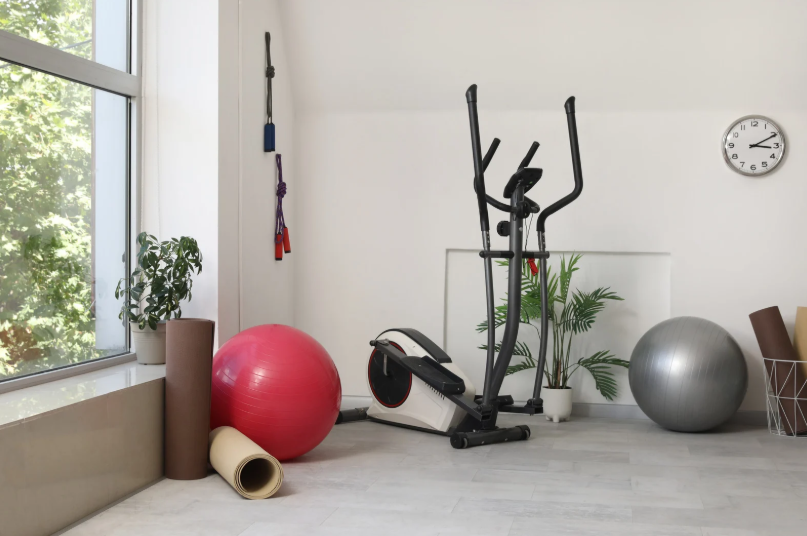
How to Choose Compatible Equipment for a Home Gym That Can Grow
Building an effective home gym does not simply mean buying quality equipment, but designing a coherent system capable of evolving over time without generating waste or incompatibilities. One of the most common mistakes, especially among advanced athletes and personal trainers, is proceeding with isolated purchases without an overall vision. This approach often leads to premature replacements and increased costs in the medium term.
The real difference between an improvised home gym and a solid setup lies in the compatibility and scalability of the system. Every element should be chosen not only for current needs, but also for how it will integrate with future additions. In this guide, we explore how to avoid strategic mistakes and build a home gym that grows alongside your goals.
- Why compatibility is the true foundation of an advanced home gym
- Technical standards to know before buying
- Building a modular and scalable system
- Mistakes that block the growth of your home gym
- How to plan a setup that evolves over time
- Storage and organization with compatibility in mind
Why compatibility is the true foundation of an advanced home gym
When it comes to home gyms, the concept of compatibility is often underestimated. People tend to prioritize price or immediate availability, overlooking a key factor: every piece of equipment is part of an ecosystem. Without a shared logic, the risk is creating a fragmented setup that is difficult to expand.
A truly effective home gym is built on a systemic vision, where each element is designed to integrate with the others. Equipment compatibility is not just a technical detail, but a strategic lever that helps avoid unnecessary replacements, maintain operational continuity, and protect your investment over time.
The risk of episodic purchases
Buying equipment sporadically often leads to incompatibilities that only become apparent during upgrades. For example, a barbell with a non-standard diameter can severely limit your future plate options. Similarly, a non-modular rack prevents the addition of advanced accessories.
These issues are not immediately visible, but they create structural constraints that block growth. The most common consequence is having to replace still-functional components, resulting in significant financial impact.
Compatibility as a long-term strategic lever
Adopting a compatibility-driven approach means building a solid foundation for future development. It’s not just about avoiding mistakes, but about creating a system that makes every future upgrade easier.
A correct approach allows you to shift from reactive purchasing to a structured growth strategy, where every decision aligns with a clearly defined evolution path.
Technical standards to know before buying
Barbell and plate diameters: what really changes
One of the most critical aspects concerns barbell and plate diameters. The main standards are 25 mm, 28 mm, and 50 mm, but only the latter represents the Olympic standard, which is the most widely used and compatible in the long term.
Choosing the wrong standard significantly limits future possibilities. The 50 mm diameter offers maximum compatibility with accessories, professional plates, and advanced systems, making it the safest choice for a scalable home gym.
Racks and accessories: holes, spacing, and modularity
The rack is the core of a home gym and one of the most critical elements in terms of compatibility. Not all racks are designed the same: hole diameter, upright spacing, and attachment systems can vary significantly.
A modular rack, compatible with standardized accessories, allows you to add elements like pulleys, safety arms, or integrated storage over time. In contrast, a closed or proprietary rack can quickly become a structural limitation.
Building a modular and scalable system
The system logic: every purchase must communicate
An advanced home gym is not just a collection of equipment, but an integrated system. Each component should be chosen in relation to the others, creating a network of compatibility that simplifies future expansion.
This means evaluating not only the equipment itself, but also its ecosystem: available accessories, adopted standards, and upgrade potential. Modularity thus becomes a central criterion in the decision-making process.
How to choose equipment already designed for upgrades
Equipment designed to grow over time has specific features: open standards, multi-brand compatibility, and readiness for additional accessories. These elements allow you to expand your setup without replacing what you already own.
Investing in modular products reduces the risk of obsolescence and maintains a high level of operational flexibility, which is essential for those aiming for medium- to long-term progress.
Mistakes that block the growth of your home gym
Invisible incompatibilities that emerge over time
Many mistakes are not immediately obvious. A system may seem functional at first but reveal structural limitations when you try to expand it. This often happens with non-standard equipment or proprietary systems.
The most insidious incompatibilities are those that appear months later, when you try to integrate new elements and realize there are no compatible solutions available.
When one purchase forces you to start over
The worst-case scenario is when a single purchase limits the entire system. An incompatible barbell or a non-expandable rack can render other components unusable, forcing a complete replacement.
This type of mistake is not only costly, but also disrupts training continuity, negatively affecting progress and motivation.
How to plan a setup that evolves over time
From first equipment to full structure
Building a home gym should follow a progressive logic. You start with the essential elements, such as a barbell and plates, and then gradually integrate racks, accessories, and storage systems.
Each phase must be consistent with the next, avoiding decisions that could limit future options. Planning therefore becomes an essential tool to ensure continuity and growth.
Logical investment sequence
Strategic investment means setting clear priorities and following a logical sequence. First, you build the foundation, then you add elements that expand your training possibilities.
This approach allows you to distribute your investment over time while maintaining a high level of efficiency and system compatibility.
Storage and organization with compatibility in mind
Integration between rack, plates, and accessories
Storage is not a secondary element, but an integral part of the system. Efficient organization improves order, safety, and accessibility, enhancing the overall training experience.
Storage systems compatible with your rack help optimize space and streamline daily use, avoiding improvised and inefficient solutions.
Space and accessibility as growth factors
A well-organized home gym is not only more efficient but also easier to expand. Space should be planned with future upgrades in mind, leaving room for additional equipment.
Accessibility directly impacts training quality. A smooth, well-designed setup reduces downtime and increases continuity, making each session more effective.
Comments (0)