
Trolley
You have no items in your shopping cart

 Budgets
 Dumbers
 Discs
Discs
 Benches
 Racks and Rigs
 Weights Holders
 Isotonic machines
 Calisthenics
 Cardio
 Kettlebells
 Flooring
 Gym Set
 Accessories
 Combat
 ARTI MARZIALI
 CONTAINER GYM
 Tug-Of-War
 Used Gym Equipment
 PILATES MACCHINARI
 GINNASTICA ARTISTICA
 CAMPI DA PADEL
 Prodotti in Pronta Consegna
 Informazioni
 Gift Card
- Donatif
- General information
- 0 I like it
- 4 Views
- 0 comments
- gym flooring, safety flooring, gym safety, shock-absorbing materials
READING TIME: 5 MINUTES ➤➤
Practical Guide: How to Choose the Right Resistance Band for You
Understanding which resistance band to buy may seem simple, but in reality many users are faced with dozens of models featuring different resistance levels, materials, and often unclear uses. People who train at home or want to include functional exercises in their routine usually look for a practical, compact, and versatile solution. The problem arises when the differences between mini bands, power bands, and traditional resistance bands are not explained clearly and concretely.
The right choice mainly depends on three factors: training goals, experience level, and daily usage habits. A beginner aiming to improve muscle tone and mobility has very different needs compared to someone looking for support with pull-ups or strength training. Understanding these aspects helps avoid unnecessary purchases, reduces the risk of choosing the wrong resistance level, and allows users to invest in a product that truly suits their routine.
Read also:
Main Types of Fitness Resistance Bands
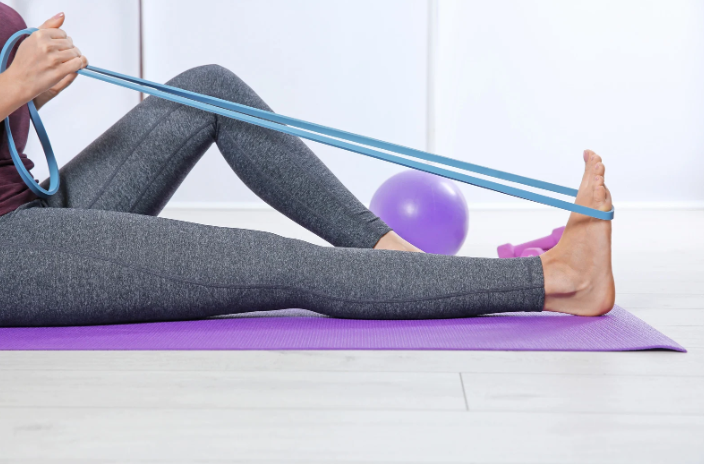
Mini Bands for Activation and Toning
Mini bands are short and compact resistance loops often used for muscle activation, toning, and lower-body exercises. They are extremely popular for home workouts because they take up little space and allow users to train glutes, legs, and joint stability even in small environments. For beginners, they are often the most intuitive and easiest option to use.
This type of resistance band is frequently chosen by users looking for light but consistent workouts. Mini bands are also practical for traveling and are ideal for quick mobility or warm-up sessions. A set with progressive resistance levels allows users to gradually increase intensity without replacing their equipment entirely.
Power Bands for Strength and Exercise Support
Power bands are longer and more durable bands designed to provide higher resistance levels. They are used both for strength exercises and as support during pull-ups, dips, and functional movements. Users who perform more intense workouts often prefer this solution because it offers exceptional versatility.
An important aspect involves load progression. Power bands can increase the difficulty of squats, deadlifts, and pressing exercises or reduce perceived body weight during complex movements. This makes them suitable for intermediate users as well as athletes looking for complementary equipment for their home gym.
Resistance Bands with Handles for Full Workouts
Resistance bands with handles are designed to simulate movements closer to traditional gym machines. They allow pushing, pulling, and multi-joint exercises with a more stable grip sensation. For many beginners, they represent a reassuring option because movements feel more natural compared to closed-loop bands.
This category is often chosen by users who want a complete full-body workout at home without taking up space with bulky equipment. Some kits include accessories such as door anchors and carabiners, which significantly expand daily workout possibilities.
How to Choose the Right Resistance Level
Beginner Level and Gradual Progression
One of the most common mistakes is choosing resistance levels that are too high in the hope of achieving faster results. In reality, beginners benefit more from moderate resistance that allows better control and proper movement execution. A resistance band that is too stiff can limit technique and increase early fatigue.
Light or medium resistance levels instead help users become familiar with movements and build sustainable progression. For mobility or toning exercises, a set with multiple resistance levels is often the most practical and flexible long-term solution.
Intermediate Workouts and Higher Resistance
Users who already have experience with functional training or bodyweight exercises can move toward bands with higher tension. In these situations, the resistance band becomes more than just an activation tool and turns into a real progressive resistance training accessory. High-resistance bands are particularly useful for strength and explosive exercises.
It is also important to consider the type of exercise. Some movements require smooth and controlled resistance, while others benefit from stiffer and more stable bands. For this reason, many users prefer purchasing complete kits with multiple resistance options available.
Which Resistance Band to Choose Based on Your Goal
Home Workouts and Muscle Toning
For home workouts focused on toning and general wellness, mini bands and resistance bands with handles are practical and compact solutions. They allow users to perform numerous exercises without needing heavy gym machines and are easy to manage even in smaller apartments.
People who train occasionally tend to appreciate ease of use and quick setup. In this context, a basic kit with different resistance levels allows users to adapt workouts for legs, arms, and mobility without purchasing separate products.
Pull-Up Assistance and Strength Training
Users practicing calisthenics, functional training, or more advanced workouts find power bands to be extremely versatile tools. Bands can reduce the difficulty of complex exercises or increase resistance during controlled movements. This approach allows gradual progression without the immediate need for heavy weights.
Stronger bands are also useful for advanced stretching and mobility work. Choosing the correct tension depends on body weight, athletic level, and the type of exercise planned during training sessions.
Materials, Comfort, and Durability Over Time
Natural Latex and Build Quality
The quality of materials directly affects both the durability of the resistance band and the feeling experienced during workouts. Natural latex generally offers greater elasticity and smoother movement, while some synthetic materials are chosen to improve wear resistance and skin comfort.
It is helpful to check thickness, surface consistency, and overall finishing quality. Cheap resistance bands made from low-quality materials tend to deform quickly or lose tension after only a few weeks of frequent use.
Useful Kits and Accessories That Simplify Your Choice
Complete Sets and Helpful Accessories
For many users, the most practical solution is purchasing a fitness resistance band set with multiple resistance levels. This allows different bands to be used depending on the exercise and enables gradual intensity increases over time without replacing the entire setup.
Even simple accessories such as door anchors can greatly expand home workout possibilities. A well-designed kit allows users to simulate a wider variety of movements while improving comfort and versatility without taking up excessive space at home.
Comments (0)