
Trolley
You have no items in your shopping cart

 Budgets
 Dumbers
 Discs
Discs
 Benches
 Racks and Rigs
 Weights Holders
 Isotonic machines
 Calisthenics
 Cardio
 Kettlebells
 Flooring
 Gym Set
 Accessories
 Combat
 ARTI MARZIALI
 CONTAINER GYM
 Tug-Of-War
 Used Gym Equipment
 PILATES MACCHINARI
 GINNASTICA ARTISTICA
 CAMPI DA PADEL
 Prodotti in Pronta Consegna
 Informazioni
 IRONMAN
 Gift Card
- Donatif
- General information
- 0 I like it
- 2341 Views
- 0 comments
- gym flooring, safety flooring, gym safety, shock-absorbing materials
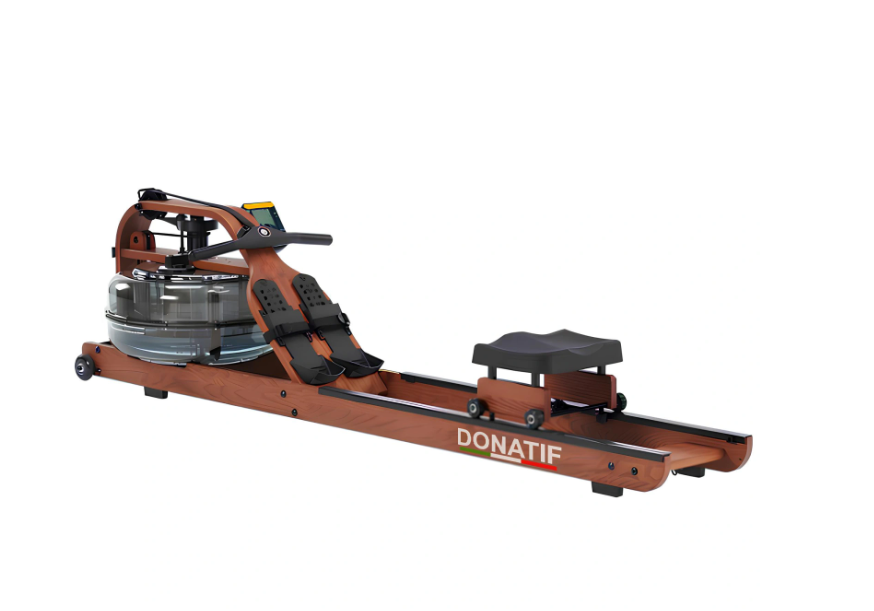
How to Measure Progress on a Rowing Machine: Simple Metrics for Beginners
When starting to train with a rowing machine, one of the most common concerns is results. Many users wonder whether they are actually improving or simply accumulating workout sessions without achieving real benefits. This feeling is completely normal, especially during the first few weeks, when physical changes are not yet obvious and the numbers displayed on the machine can seem difficult to interpret.
The good news is that you do not need advanced data or professional tools to understand your progress. A few simple indicators can help you monitor improvements clearly and stay motivated. Observing small changes over time makes it easier to remain consistent and approach training with greater confidence.
- How to tell if you are really improving on the rowing machine
- The simplest metrics to monitor
- Why consistency matters more than a single performance
- Useful tools for tracking your progress
- The most common mistakes when evaluating results
- Turning small improvements into real motivation
How to tell if you are really improving on the rowing machine
Progress on a rowing machine is not measured only by speed. Real improvement can appear in many different ways: increased endurance, faster recovery, more controlled breathing, or better effort management during workouts. Focusing only on calories burned or workout duration can create unrealistic expectations.
For beginners, the most important sign is the overall perception of the workout. If a session that once felt extremely exhausting now seems more manageable, it means your body is adapting. Better posture, smoother movement, and reduced muscle fatigue are also concrete signs of improvement.
The simplest metrics to monitor
One of the most common mistakes is thinking that complex technical data is necessary to track results. In reality, the most useful metrics for beginners are often the easiest to understand. The goal is not to become an expert in athletic performance but to create a system that is simple to follow week after week.
Monitoring a few indicators consistently helps avoid confusion and keeps motivation high. Focusing on understandable parameters also helps build a healthier relationship with training, without turning every workout into a competition against the rowing machine display.
The 500-meter split
The 500-meter split is one of the most commonly used data points in indoor rowing because it provides an immediate reference for average speed. In practice, it shows how long it would take to row 500 meters while maintaining the current pace. Even for non-athletes, this value can become an excellent personal benchmark.
For beginners, achieving extremely low numbers is not important. What matters most is observing progress over time. If after a month you can maintain the same split with less effort or improve by a few seconds while keeping proper technique, you are already moving in the right direction.
Heart rate during training
Heart rate is another simple yet extremely useful metric. By using a heart rate monitor or smartwatch, you can check how your body responds to the same type of workout over several weeks.
A clear sign of improvement occurs when you can sustain the same pace with a lower heart rate. This means your cardiovascular system is becoming more efficient. Faster recovery times after workouts are also positive indicators that are often underestimated.
Perceived effort
Not all progress needs to be measured with precise numbers. Perceived effort is a very useful metric, especially for beginners using a rowing machine for the first time. Asking yourself how challenging a workout felt on a scale from 1 to 10 helps develop greater body awareness.
Many beginners discover they are improving precisely through this observation. Sessions that initially felt overwhelming can gradually become more sustainable. This physical and mental adaptation is one of the clearest signs of training progress.
Why consistency matters more than a single performance
One of the biggest mistakes is evaluating progress based on a single exceptionally good or bad workout. The body does not improve in a perfectly linear way. Some days you will feel energetic, while on others your performance may seem worse for no obvious reason.
For this reason, it is much more useful to observe long-term consistency. Training regularly, even without extraordinary performances, produces far more solid improvements than intense but occasional sessions. Consistency helps develop endurance, technique, and confidence, which are essential for anyone using a rowing machine as a primary cardio activity.
Useful tools for tracking your progress
Recording workouts helps make improvements more visible. Progress often already exists, but it becomes difficult to notice without clear references. Writing down key data allows you to compare weeks and recognize small changes that would otherwise go unnoticed.
You do not need expensive or complicated tools. Even a simple notebook can become an excellent ally for monitoring progress. The important thing is choosing a method that is easy to maintain over time without turning it into a stressful task.
Apps, workout journals, and HR monitors
Fitness tracking apps can greatly simplify workout logging. Some apps automatically save data such as duration, distance, heart rate, and average split time. Modern smartwatches also provide useful features for monitoring cardio workouts.
Those who prefer a simpler approach can use a paper workout journal. Writing down the date, workout duration, physical sensations, and fatigue level is often enough to build a clear and motivating training history. Combining objective data with personal perception creates a more complete tracking system.
How to create a simple monthly tracking template
A good monthly tracking template should include only a few essential elements: workout duration, distance covered, average split, perceived effort level, and average heart rate. Including too many metrics can create confusion and reduce consistency in tracking.
At the end of the month, comparing the data can help identify improvements. Even minimal changes can represent significant progress. Seeing results clearly written down increases motivation and helps maintain the training habit over time.
The most common mistakes when evaluating results
One of the most common mistakes is comparing yourself with experienced users or professional standards found online. Every person starts from a different fitness level, and progress should always be evaluated relative to your own starting point. Expecting immediate results can create unnecessary frustration.
Another mistake is obsessing over highly technical metrics, such as watts, without having the context needed to interpret them correctly. For beginners, it is far more useful to focus on consistency, movement quality, and effort management. The foundation built during the early stages is what leads to long-term improvement.
Turning small improvements into real motivation
Many people stop using the rowing machine because they cannot immediately see results. In reality, progress almost always exists, but it is often gradual and subtle. Learning to recognize these small improvements completely changes the way training feels.
Noticing that you can work out a few minutes longer, recover faster, or maintain a steady pace with less effort is already a meaningful achievement. Turning these signals into concrete motivation helps build a routine that is more stable, sustainable, and rewarding over the long term.
Comments (0)