
Trolley
You have no items in your shopping cart

 Budgets
 Dumbers
 Discs
Discs
 Benches
 Racks and Rigs
 Weights Holders
 Isotonic machines
 Calisthenics
 Cardio
 Kettlebells
 Flooring
 Gym Set
 Accessories
 Combat
 ARTI MARZIALI
 CONTAINER GYM
 Tug-Of-War
 Used Gym Equipment
 PILATES MACCHINARI
 GINNASTICA ARTISTICA
 CAMPI DA PADEL
 Prodotti in Pronta Consegna
 Informazioni
 IRONMAN
 Gift Card
- Donatif
- General information
- 0 I like it
- 945 Views
- 0 comments
- gym flooring, safety flooring, gym safety, shock-absorbing materials
Hyperbaric Chamber vs Cryotherapy: Which Is the Better Recovery Investment?
In recent years, the world of biohacking and sports recovery has seen two technologies emerge as benchmarks for athletes, wellness professionals, and gym owners: the hyperbaric chamber and cryotherapy. Although they are often presented as alternative solutions, they actually work through completely different physiological mechanisms. Understanding these differences makes it easier to choose the technology that best fits your goals, avoiding investments driven solely by market trends. If your objective is to create a high-performance recovery environment, it is essential to evaluate the benefits, costs, applications, and potential of both solutions.
- Why They Are Often Compared
- How a Hyperbaric Chamber Works
- How Cryotherapy Works
- Technical Comparison
- Which Investment Is Right for You?
- When to Use Both Together
Why Hyperbaric Chambers and Cryotherapy Are Often Compared
Both technologies promise faster recovery after intense training sessions, competitions, or periods of significant physical stress. This apparent overlap in objectives often leads people to wonder which option is better. In reality, the comparison between hyperbaric chamber vs cryotherapy involves two fundamentally different approaches: one increases oxygen availability within the body's tissues, while the other relies on the systemic effects of extreme cold.
For athletes, fitness centers, or an advanced Home Gym, the decision should primarily be based on the type of service you want to provide and the specific needs of your users. There is no universally superior technology—only the solution that best aligns with your recovery goals.
How a Hyperbaric Chamber Works
A hyperbaric chamber exposes the body to an environment with pressure higher than atmospheric pressure, where the user breathes highly concentrated oxygen. This process significantly increases the amount of oxygen dissolved in the blood plasma, improving its delivery to muscles, tendons, joints, and tissues requiring recovery.
From a physiological perspective, greater oxygen availability supports cellular processes involved in tissue repair, collagen synthesis, and the regulation of inflammatory responses. This is why hyperbaric oxygen therapy has become increasingly valuable not only in clinical settings but also in high-performance sports.
The Benefits of Hyperbaric Oxygen Therapy
One of the primary advantages is its ability to support the body's natural recovery processes without relying on aggressive external stimuli. Enhanced oxygenation promotes key metabolic activities involved in rebuilding muscle tissue after demanding workouts or closely scheduled competitions.
Many professionals choose this technology because of its versatility. Beyond muscle recovery, it can provide valuable support during rehabilitation programs, periods of heavy athletic workloads, and chronic fatigue management, contributing to a more comprehensive recovery strategy.
Applications in Sports Performance
Hyperbaric chambers are increasingly being incorporated into professional sports facilities, physiotherapy clinics, and wellness centers. Sports characterized by high training volumes—such as cycling, triathlon, combat sports, and weightlifting—can particularly benefit from improved tissue oxygenation.
Even fitness enthusiasts investing in their own home gyms are beginning to view this technology as an essential component of long-term performance optimization and consistent recovery throughout the year.
How Cryotherapy Supports Muscle Recovery
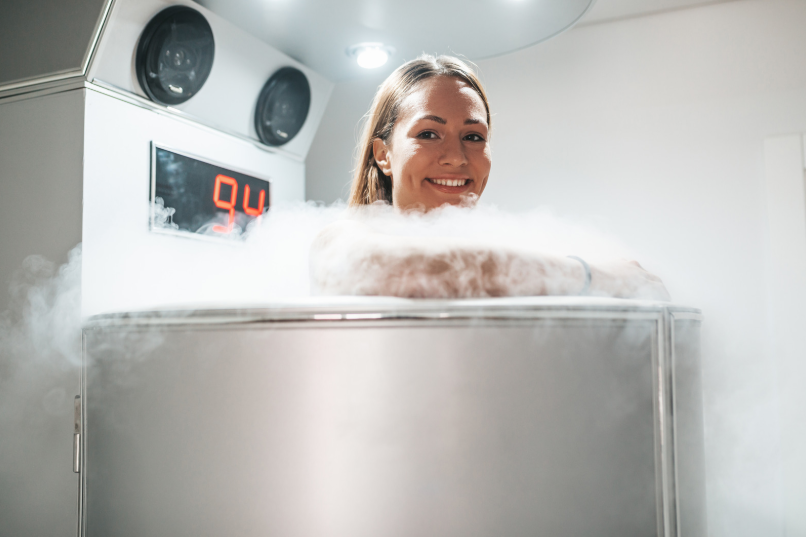
Cryotherapy exposes the body to extremely low temperatures, typically between -110°C and -160°C, for short periods of time. This intense cold triggers rapid vasoconstriction followed by vasodilation, activating a range of physiological responses that may contribute to improved recovery perception.
The principle differs significantly from hyperbaric therapy. Here, oxygen is not the main factor; instead, recovery is stimulated through the body's neurovascular response to extreme cold. This distinction is essential when comparing the two technologies.
The Effects of Extreme Cold
Cryotherapy is often appreciated for the immediate sensation of freshness and the temporary reduction of muscle discomfort following intense physical activity. Extreme cold may help temporarily regulate inflammatory responses while supporting a quicker return to training.
From the user's perspective, each session is brief yet highly stimulating. This unique experience has also made cryotherapy a powerful commercial attraction within premium fitness and wellness facilities.
The Main Advantages of Cryotherapy
The speed of each treatment is undoubtedly one of cryotherapy's greatest strengths. Sessions typically last only a few minutes, making them particularly attractive in facilities with a high turnover of clients.
For wellness businesses focused on premium experiences, cryotherapy also provides a strong marketing advantage thanks to its visual appeal and growing popularity among biohacking enthusiasts.
Hyperbaric Chamber vs Cryotherapy: A Technical Comparison
Recovery Time
Both technologies can support recovery, but they do so through different physiological pathways. Hyperbaric oxygen therapy creates optimal conditions for tissue regeneration, whereas cryotherapy primarily influences the body's immediate response to cold exposure.
The most suitable option therefore depends on the recovery strategy being implemented and how frequently the treatments will be used.
Physiological Effects
The key difference lies in their biological mechanisms. Hyperbaric therapy increases oxygen availability at the cellular level, while cryotherapy mainly acts through neurovascular and thermal stimulation.
This distinction explains why the two technologies should not necessarily be considered competitors but rather complementary tools within advanced recovery protocols.
User Experience
A hyperbaric chamber session is generally relaxing, quiet, and longer in duration. Cryotherapy, by contrast, offers a short, intense, and highly energizing experience.
Personal preference often plays an important role, especially for users planning to undergo treatments regularly throughout the year.
Purchase and Operating Costs
From an investment standpoint, both technologies belong to the premium segment. However, evaluating the initial purchase price alone is not enough. Maintenance requirements, operating costs, available space, staff training, and the facility's business model should all be taken into account.
For gym owners, return on investment depends largely on how effectively the technology is integrated into premium services, helping differentiate the business while increasing the perceived value of its offerings.
Which Technology Should You Choose?
Advanced Home Gyms
Individuals building a recovery-focused home gym often prioritize technologies that can be used consistently while delivering broad long-term benefits. In this context, a hyperbaric chamber frequently represents a particularly compelling investment.
The investment pays off by making recovery an integral part of athletic programming, ultimately improving overall training quality and consistency.
Fitness Centers and Commercial Gyms
For commercial gyms, marketing impact is also an important consideration. Cryotherapy has strong appeal for attracting new clients, whereas a hyperbaric chamber communicates scientific credibility, innovation, and professional expertise.
The right choice should therefore reflect the brand's positioning and the expectations of its target audience.
Sports Recovery Centers
Highly specialized recovery facilities can benefit from integrating both technologies into customized protocols based on the athlete's discipline, seasonal training phase, and individual needs.
This comprehensive approach enhances service quality while allowing providers to deliver increasingly personalized recovery programs, a growing demand in modern sports performance.
When the Two Technologies Become Complementary
An Integrated Recovery Strategy
The debate surrounding hyperbaric chamber vs cryotherapy should not be viewed as a competition between rival technologies. Instead, each addresses different physiological needs and both can play valuable roles within a comprehensive health, performance, and recovery program.
If you need to decide which technology should be your first investment, begin by evaluating your facility's objectives and the profile of your users. Cryotherapy offers an immediately recognizable, high-impact experience, while the hyperbaric chamber focuses on supporting physiological recovery through enhanced tissue oxygenation. They are not enemies but complementary tools that, when applied appropriately, can help build a truly advanced recovery ecosystem.
Comments (0)