
Trolley
You have no items in your shopping cart

 Budgets
 Dumbers
 Discs
Discs
 Benches
 Racks and Rigs
 Weights Holders
 Isotonic machines
 Calisthenics
 Cardio
 Kettlebells
 Flooring
 Gym Set
 Accessories
 Combat
 ARTI MARZIALI
 CONTAINER GYM
 Tug-Of-War
 Used Gym Equipment
 PILATES MACCHINARI
 GINNASTICA ARTISTICA
 CAMPI DA PADEL
 Prodotti in Pronta Consegna
 Informazioni
 IRONMAN
 Gift Card
- Donatif
- General information
- 0 I like it
- 1147 Views
- 0 comments
- gym flooring, safety flooring, gym safety, shock-absorbing materials
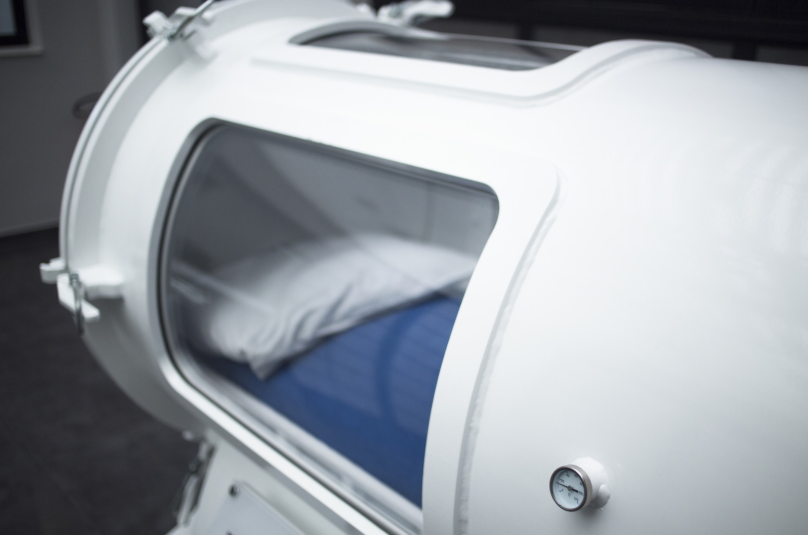
Hypoxic Chamber and Sports Recovery: Where Does It Really Fit?
In recent years, sports recovery has become a central topic in the preparation of both professional athletes and dedicated amateurs. At the same time, interest has grown in technologies and methodologies designed to support the body in managing training loads. Among these, the hypoxic chamber is increasingly gaining attention, a tool generally associated with altitude training and the physiological adaptations linked to reduced oxygen availability.
This growing popularity has also created a certain degree of confusion. Many athletes wonder whether a hypoxic chamber can be considered a recovery tool, whether it serves the same purpose as a hyperbaric chamber, or whether it belongs among the technologies primarily used to enhance performance. To truly understand its position, it is necessary to examine the context in which it is used and the role it can play within a broader strategy.
- Why the Hypoxic Chamber Is Associated with Recovery
- Sports Recovery Is a System, Not a Single Tool
- What Role Can the Hypoxic Chamber Play in the Recovery Stack?
- Differences Between Hypoxic Chambers, Hyperbaric Chambers, and IHHT
- When Athletes May Consider Using It
- Understanding the Context Before the Technology
Why the Hypoxic Chamber Is Associated with Recovery
A hypoxic chamber for athletes was originally developed as a tool for simulating high-altitude conditions. By reducing oxygen availability in the environment, it exposes the body to conditions similar to those experienced at altitude. This exposure can promote a range of physiological adaptations related to oxygen transport and utilization, factors that are particularly relevant in endurance sports.
The association with recovery stems from the fact that every adaptation process requires a phase of assimilation and biological response following the stimulus. Some training programs therefore include the hypoxic chamber within broader strategies aimed at managing training load. However, it is important to understand that its use does not automatically coincide with the concept of recovery and should not be considered a universal solution for accelerating a return to peak physical condition.
Sports Recovery Is a System, Not a Single Tool
When discussing athletic recovery, one of the most common mistakes is searching for a single technology capable of addressing every need. In reality, recovery results from the interaction of multiple factors. Sleep, nutrition, hydration, training programming, and stress management remain the foundations upon which any effective recovery strategy is built.
Within this ecosystem, there is room for various tools and methodologies. Some are designed to manage perceived fatigue, others support specific physiological processes, while others help prepare the body for future training demands. The hypoxic chamber should therefore be viewed as a possible component of the so-called recovery stack, the coordinated set of practices that help maintain an athlete’s ability to train, adapt, and perform over time.
What Role Can the Hypoxic Chamber Play in the Recovery Stack?
When viewed correctly, the hypoxic chamber occupies a unique position. It is not generally considered a tool intended exclusively for immediate recovery after intense exercise. Rather, it can be integrated into programs aimed at stimulating physiological adaptations and supporting the body's ability to cope with structured training periods.
This means its value is not measured solely in the hours following a competition or demanding training session. In many contexts, it is used as part of a strategy focused on adaptation and future preparation. For this reason, it is more accurate to place it among the tools that contribute to the overall management of both performance and recovery, rather than assigning it an exclusive or all-encompassing role.
Differences Between Hypoxic Chambers, Hyperbaric Chambers, and IHHT
One of the main sources of confusion concerns the comparison between the hypoxic chamber, the hyperbaric chamber, and IHHT protocols. Although these terms are often mentioned together, they describe different approaches. The hypoxic chamber works by reducing oxygen availability, simulating controlled altitude conditions and triggering specific adaptive responses within the body.
The hyperbaric chamber, on the other hand, operates in a completely different environment characterized by increased atmospheric pressure and specific protocols involving oxygen breathing under controlled conditions. IHHT, which stands for Intermittent Hypoxic-Hyperoxic Training, alternates between phases of reduced and increased oxygen availability according to a structured protocol. While all three belong to the broader category of oxygen-related technologies, they are not interchangeable and should not be considered equivalent in practical application.
When Athletes May Consider Using It
The decision to integrate a hypoxic chamber should always begin with the athlete's goals and the training plan developed by coaches, trainers, and qualified professionals. In some cases, it may be incorporated during specific periods of the season when the objective is to stimulate particular adaptations or simulate environmental conditions that would otherwise require altitude exposure.
Not all sports, athletes, or phases of preparation require the same approach. For this reason, it is important to avoid viewing the hypoxic chamber as a universally necessary tool. Its true value emerges only when it is integrated into a strategy that aligns with the athlete’s level, seasonal objectives, and overall training program.
Understanding the Context Before the Technology
Anyone exploring the world of sports recovery quickly encounters a landscape filled with different solutions, each accompanied by technical terminology and implied promises. Within this environment, the hypoxic chamber occupies a specific position that does not overlap with every recovery tool or every performance-enhancing technology. Understanding its role means recognizing that each method serves a distinct purpose and that its value depends on the context in which it is applied.
The real question is not whether a hypoxic chamber for sports recovery works as a universal solution, but rather where it fits within the broader framework of athletic preparation. Considering it as a potentially useful tool for managing physiological adaptations and planning training workloads helps place it in the proper context, avoiding misleading comparisons and unrealistic expectations. This clarity ultimately allows athletes and coaches to make more informed decisions when evaluating the various options available.
Comments (0)