
Trolley
You have no items in your shopping cart

 Budgets
 Dumbers
 Discs
Discs
 Benches
 Racks and Rigs
 Weights Holders
 Isotonic machines
 Calisthenics
 Cardio
 Kettlebells
 Flooring
 Gym Set
 Accessories
 Combat
 ARTI MARZIALI
 CONTAINER GYM
 Tug-Of-War
 Used Gym Equipment
 PILATES MACCHINARI
 GINNASTICA ARTISTICA
 CAMPI DA PADEL
 Prodotti in Pronta Consegna
 Informazioni
 IRONMAN
 Gift Card
- Donatif
- General information
- 0 I like it
- 1193 Views
- 0 comments
- gym flooring, safety flooring, gym safety, shock-absorbing materials
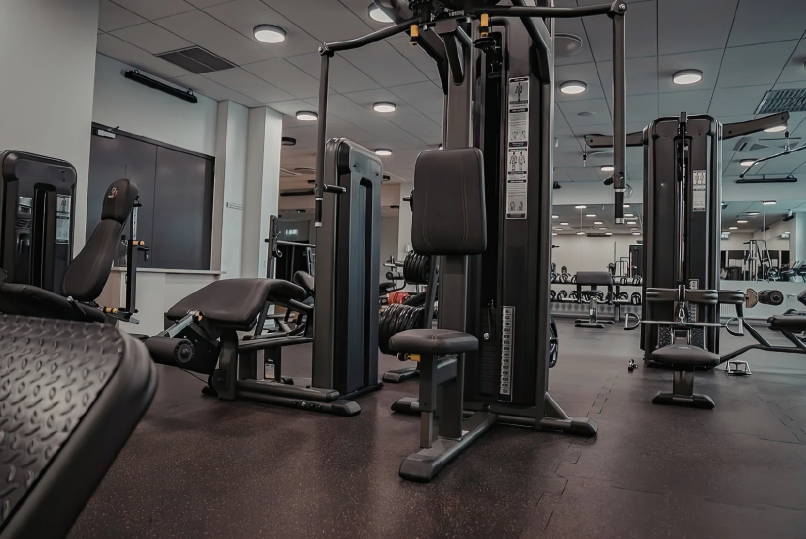
Standard Setup Today, Custom Tomorrow: How Not to Limit the Evolution of a PT Studio
For many personal trainers and micro-gym owners, starting with a standard setup is a sensible choice. It allows for a faster opening, keeps the initial investment under control, and enables immediate focus on the core activity: training clients in an organized, safe, and professional environment. The real question arises later, when the space begins to perform, the number of clients grows, and specific needs emerge. At that point, the issue is no longer just which equipment to buy, but how much the initial choice allows for the coherent integration of custom elements.
The key is to distinguish between standard and improvised. Standard equipment can be perfectly compatible with future developments if selected with modularity, correct dimensions, and technical consistency in mind. On the other hand, even seemingly professional equipment can become a limitation if it does not integrate well with the rest of the space, occupies strategic areas, or prevents future additions. For a PT studio, the best choice is not always to design everything custom from day one, but to understand which compatibilities should be planned from the start.
When a PT studio can start standard without losing future flexibility
The difference between a standard solution and a rigid choice
A standard solution is not necessarily a closed one. Racks, benches, plate storage, bar holders, and flooring can form a solid foundation even for a space that will later be customized. Compatibility mainly depends on dimensions, construction logic, integration possibilities, and component quality. If a rack is stable, proportionate to the space, and aligned with the studio’s main exercises, it can remain the operational core even when accessories, dedicated storage, or more specific solutions are added.
A choice becomes rigid when it is made simply to fill space, without considering future developments. In a personal trainer studio, evolution is often gradual: starting with essential equipment, then adding more specialized stations, supports for small tools, more organized storage systems, or custom elements. This is why a well-chosen standard setup must leave room for growth, avoid saturating every wall, and not force complete replacement when new needs arise.
The role of layout in future compatibility
Layout is the first factor that determines whether future customization will be simple or complicated. A micro-gym may have limited square footage, but if space is distributed thoughtfully, it remains possible to integrate new functions without creating disorder. The position of the rack, the direction of benches, the free area for bodyweight exercises, and client movement paths during sessions all have a greater impact than it may seem. A poorly placed standard element can become an obstacle, while the same element, positioned strategically, can support the studio’s development.
To evaluate future compatibility, it is useful to imagine the space not only as it is at opening, but how it might look after a year of activity. If the studio evolves toward strength training, functional work, small group sessions, or personalized programs, the initial setup should leave adaptable zones. This does not mean buying everything at once, but avoiding choices that block useful walls, make storage inconvenient, or prevent the addition of custom-made elements aligned with the studio’s identity.
Preparations to consider before purchasing
Rack, storage, and flooring as critical elements
Among the most important considerations are rack, storage, and flooring. The rack is often the most demanding structure in terms of space, usage, and centrality in training. Choosing it without considering future accessories, available height, and side clearance can limit the studio’s evolution. The same applies to storage: plate trees, dumbbell racks, and bar holders may seem secondary, but they define order, safety, and the professional perception of the environment.
The gym flooring deserves separate consideration. A suitable surface protects the base, improves shock absorption, and helps define clearer operational areas. If future plans include adding a free weight zone, a more structured rack station, or a functional training area, starting with consistent flooring avoids fragmented interventions. Even when choosing a standard configuration, some foundational decisions should be treated as infrastructure, not just finishing touches.
Technical spaces and training paths not to block
One of the most common mistakes is filling the space immediately with individually correct equipment that lacks overall coordination. In a PT studio, every meter should have a clear function: training, movement, storage, instruction, and safety. When these paths are not considered, future customization becomes a forced addition. Shelving, supports, or custom structures can solve many issues, but only if the initial space has not already been compromised.
This is why it is useful to leave some technical areas free or partially prepared. A wall can be reserved for future custom storage, a corner can later host specific accessories, and a strip of flooring can remain available for dynamic work or mobility. The goal is not an empty studio, but a compatible initial setup that supports evolution. In this way, the transition from standard to customized appears as natural growth rather than correction.
When future customization becomes complicated
Incompatibilities in dimensions, accessories, and space
Customization becomes complicated when initial dimensions leave no practical tolerance. A rack too close to a wall, a bench that is hard to move, poorly positioned storage, or interrupted flooring can limit future interventions. The issue is not only aesthetic but also operational. If every new addition requires adjustments, compromises, or rearrangements, the environment loses fluidity and the trainer’s work becomes less efficient.
Compatibility between standard and custom requires continuity across components. Materials, heights, depths, and accessories must coexist without creating functional inconsistency. This is especially important in PT studios, where clients strongly perceive order and attention to detail. A custom addition introduced later can enhance the studio only if it builds on a coherent base; otherwise, it risks appearing as a late, poorly integrated solution.
Budget choices that increase future costs
Starting with a controlled budget is normal, especially when opening a studio or micro-gym. The risk arises when savings are achieved by cutting on the elements that should last the longest. Unstable equipment, insufficient storage, or unsuitable flooring may seem practical in the short term but make every future upgrade more expensive. In these cases, future customization does not integrate—it replaces, corrects, and compensates.
A prudent choice does not always mean the cheapest one. For a personal trainer, the key criterion should be the balance between initial investment and evolution potential. It is important to distinguish between what can be purchased in a basic form and what must be set up properly from the beginning. Minor accessories and secondary equipment can grow over time, while racks, flooring, main layouts, and storage logic require more stable decisions.
How to set up a progressive initial strategy
A decision framework for PT studios and micro-gyms
An effective approach is to divide the project into three levels: initial setup, future compatibility, and margin for customization. The initial setup includes everything needed to operate safely from day one: racks, benches, barbells, plates, dumbbells, storage, and basic flooring. Future compatibility concerns the preparations that allow additions without disrupting the space. The margin for customization defines which elements can later be tailored, such as dedicated supports, storage solutions, finishes, or adaptations to the most requested training routines.
With this framework, the question is no longer “standard or custom?” but “which parts must already be compatible with future developments?”. For a PT studio, it may be perfectly appropriate to start with standard equipment if the main structure is solid and the layout does not block future evolution. It may instead be preferable to consider custom elements earlier when space is highly constrained, when the studio’s brand focuses on a distinctive experience, or when specific operational needs are already clear before opening.
The value of a gradual technical consultation
Technical consultation is not only for fully custom-designed studios. It can also help set up a more conscious standard starting point, avoiding mistakes that become costly over time. At this stage, the discussion focuses on dimensions, space, training type, number of clients, and potential future developments. For trainers who want to start without overcomplicating things, this approach reduces decision anxiety and helps build an organized foundation.
Future customization works best when it is not treated as an isolated addition, but as a possibility planned from the beginning. A studio built with standard equipment can evolve effectively if racks, storage, flooring, and technical spaces are chosen with continuity in mind. In this way, the transition toward customized solutions remains coherent, progressive, and sustainable. The initial choice should not close doors—it should create a foundation strong enough to allow the studio to grow without losing order, identity, and functionality.
Comments (0)