
Trolley
You have no items in your shopping cart

 Budgets
 Dumbers
 Discs
Discs
 Benches
 Racks and Rigs
 Weights Holders
 Isotonic machines
 Calisthenics
 Cardio
 Kettlebells
 Flooring
 Gym Set
 Accessories
 Combat
 ARTI MARZIALI
 CONTAINER GYM
 Tug-Of-War
 Used Gym Equipment
 PILATES MACCHINARI
 GINNASTICA ARTISTICA
 CAMPI DA PADEL
 Prodotti in Pronta Consegna
 Informazioni
 IRONMAN
 Gift Card
- Donatif
- General information
- 0 I like it
- 1934 Views
- 0 comments
READING TIME: 8 MINUTES ➤➤
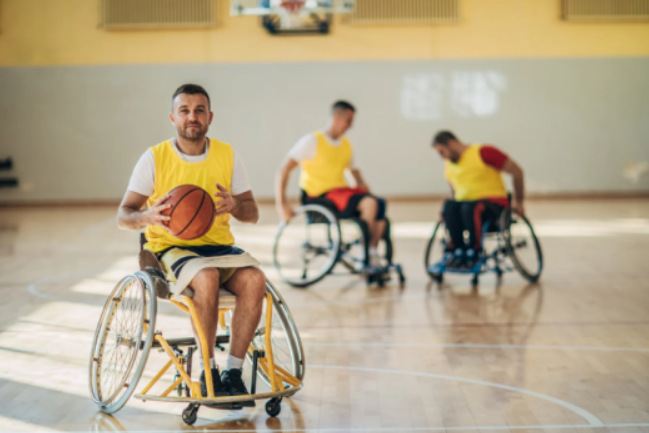
Fitness can and should be a space of welcome, respect, and opportunity for every body. In a world that often tends to exclude, inclusive sport offers a real response: a practice that embraces differences and values people for who they are, providing accessible spaces, adapted exercises, and a language that builds belonging. This article explores ways to make physical activity truly open to all, breaking down physical, cultural, and social barriers.
Through a thorough analysis of strategies, adaptations, and approaches, we will see how trainers, operators, and sports communities can become agents of change. Because sport is not just movement: it's about connection, empowerment, and growth.
- The meaning of inclusivity in the fitness world
- How to make training accessible to everyone
- Ensuring safety and well-being in physical activity
- Inclusion, community, and empowerment through sport
- The role of instructors and operators
The meaning of inclusivity in the world of fitness
Why accessibility is a universal right
In today’s context, talking about inclusivity in sports means going beyond simple hospitality. It means creating truly accessible environments where everyone, regardless of their physical or cognitive abilities, can train with dignity and safety. The right to movement is not a privilege, but a condition that every sports space should guarantee. It’s not just about ramps or adapted equipment, but a culture of inclusion that starts with listening and planning.
Accessibility is also communicative and emotional: feeling welcomed in a gym or fitness class means being able to express difficulties without shame, finding an empathetic environment structured for everyone’s well-being. Every small gesture in this direction is a fundamental step toward a truly universal fitness.
Beyond labels: every body has the right to move
Traditional sports culture has often promoted performance-based models, excluding many people in the process. Today, change begins with recognizing that every body has the right to move, express itself, and grow stronger, without comparison or judgment. Inclusivity also means freeing the concept of fitness from aesthetic and performance-based stereotypes, restoring its human and personalized dimension.
Letting go of labels allows us to discover new ways of training, where the goal is not to outperform others, but to feel good about oneself, respecting one's own pace and possibilities. This is the real strength of inclusive sport: offering everyone the opportunity to feel like they belong, without barriers.
How to make training accessible to everyone
Technical adaptations for safe exercises
Inclusive training starts with the intentional modification of exercises. There is no single “correct” way to move: technical adaptation maintains exercise effectiveness while making it suitable for those with reduced mobility, motor disabilities, or temporary limitations. This could mean using supports, changing the range of motion, or offering alternatives in a seated position.
The goal is to ensure safety and effectiveness without forcing the body into unsuitable patterns. Protocols must always consider individual characteristics, avoiding generalizations and promoting dialogue between trainer and individual.
Strategies to personalize training based on abilities
It’s not just about modifying exercises, but about structuring personalized pathways. Personalization is the key to truly inclusive fitness: listening to needs, adapting timing, setting realistic goals. This process also involves choosing equipment, adjusting intensity, and organizing the space.
In many cases, small details make a big difference: having non-slip mats, lightweight tools, inclined surfaces can radically transform the experience. Attention to detail communicates respect and fosters mutual trust between professional and athlete.
Ensuring safety and well-being in physical activity
Injury prevention and focus on posture
When it comes to inclusivity, safety becomes even more central. People with disabilities or limited mobility may be more exposed to risks if not properly supervised. It’s therefore crucial to promote a cautious approach that includes postural checks, warm-ups and cooldowns, and close supervision during every training phase.
Every exercise must respect individual biomechanics. The trainer needs to know common mistakes and warning signs to intervene quickly. Prevention is the first form of care and should be an integral part of every accessible program.
Gradual training: respecting limits and sustainable progression
A core principle of inclusive sport is respecting individual limits. Training should progress step by step, celebrating achievements without applying pressure. This doesn’t mean giving up on challenges, but setting goals that align with the person’s physical and motivational state.
Sustainable progression helps build confidence, strengthens the body harmoniously, and prevents frustration. In this way, activity becomes a tool for real empowerment, capable of transforming self-perception and boosting long-term motivation.
Comments (0)