
Trolley
You have no items in your shopping cart

 Budgets
 Dumbers
 Discs
Discs
 Benches
 Racks and Rigs
 Weights Holders
 Isotonic machines
 Calisthenics
 Cardio
 Kettlebells
 Flooring
 Gym Set
 Accessories
 Combat
 ARTI MARZIALI
 CONTAINER GYM
 Tug-Of-War
 Used Gym Equipment
 PILATES MACCHINARI
 GINNASTICA ARTISTICA
 CAMPI DA PADEL
 Prodotti in Pronta Consegna
 Informazioni
 IRONMAN
 Gift Card
- Donatif
- General information
- 0 I like it
- 2076 Views
- 0 comments
- gym flooring, safety flooring, gym safety, shock-absorbing materials
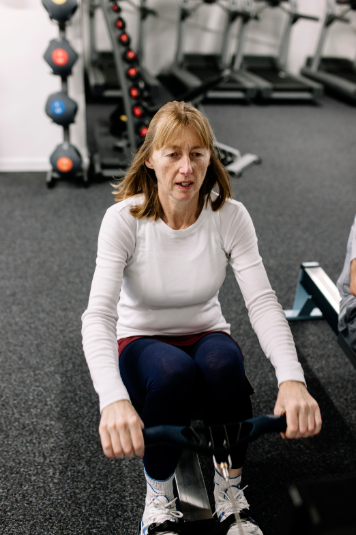
Measuring Intensity on the Rowing Machine: Watts, Split and Heart Rate
Many people use the rowing machine by looking only at the total workout time or the calories estimated by the monitor. In reality, the data displayed on the console allows you to understand much more precisely how hard you are working and whether the training is actually producing improvement. The issue is that terms such as watts, 500-meter split, or heart rate are often interpreted superficially, creating confusion even among experienced users.
A more technical approach does not mean making training more complicated. On the contrary, correctly reading rowing machine metrics helps avoid random sessions and build more rational progressions. Even those training in a home gym can use this data to program aerobic work, intervals, or endurance sessions with greater control, without relying only on momentary sensations.
Read also:
How to Read Rowing Monitor Data
The Metrics That Really Matter During a Session
The rowing machine monitor displays several numbers at the same time, which can easily become overwhelming. The most useful metrics to track are generally watts, 500-meter split, total time, distance covered, and heart rate. Each one measures a different aspect of performance: power output, maintained pace, or cardiovascular response to effort. Focusing on all metrics simultaneously is not necessary, especially for those in the early stages of technical rowing training.
Training focused on improvement usually uses one primary metric and one secondary control metric. For example, during aerobic work it may make sense to keep heart rate stable while monitoring average split. During interval sessions, however, watts become the main reference because they immediately show whether power output is decreasing between repetitions.
Why Understanding the Data Prevents Random Training
Many users feel they trained intensely simply because they finish a session feeling tired. In practice, without measurable parameters it becomes difficult to understand whether real progress exists over time. The rowing monitor instead transforms perceived effort into comparable values. This approach increases control over training and reduces the risk of repeating identical sessions without progressive stimulus.
A simple example concerns pace management. Two twenty-minute workouts may seem identical, but one could have been performed at 2:30/500m and the other at 2:10/500m. The intensity difference is significant even if the total duration is the same. For this reason, the monitor becomes a valuable tool not only for advanced athletes but also for users who want to make home gym training more objective.
What Watts Mean on a Rowing Machine
The Relationship Between Watts and Power Output
Watts on a rowing machine represent the amount of power produced during the stroke. The more force and speed applied to the movement, the higher the value displayed by the monitor. Unlike calories, which are only an estimate, watts provide an immediate and very useful parameter for comparing performances over time.
Maintaining 120 watts for ten minutes represents moderate intensity for an average user, while sustaining 220 or 250 watts requires significantly greater cardiovascular and muscular capacity. The interesting aspect is that watts allow clear comparisons: if a month ago you could maintain 150 watts for five minutes and today you can hold 170 watts at the same perceived effort, the improvement becomes easy to verify.
How to Use Watts in Practical Training
Training with watts is especially useful during intervals. A workout could include, for example, five repetitions of two minutes at 180 watts with active recovery. In this way, intensity is defined by an objective value and not only by perceived exertion. This method makes it easier to create gradual and measurable progressions.
For those using tracking apps or indoor rowing platforms, watts also become a historical analysis tool. Recorded data allows users to verify whether average power is increasing over time or if performance plateaus are appearing. It is a logic very similar to indoor cycling but adapted to the full-body work of rowing.
How the 500-Meter Split Works
Correctly Understanding Rowing Pace
The 500-meter split indicates the time needed to virtually cover 500 meters while maintaining the current pace. If the monitor shows 2:20/500m, it means that continuing at that speed would require two minutes and twenty seconds to complete the distance. The lower the number, the faster the rowing pace.
Many beginners interpret the split as a secondary metric, when in reality it is one of the most useful parameters for pace management. Starting too aggressively often causes a performance drop after only a few minutes. Monitoring split helps distribute energy more effectively during long sessions or interval workouts.
Practical Examples of Using Split Pace
During a light aerobic session, a steady split between 2:20 and 2:40 may represent sustainable intensity for many intermediate users. In more demanding work, split pace may drop below 2:00/500m. The goal is not chasing absolute numbers but maintaining consistency between planned intensity and session duration.
One of the most common mistakes is focusing only on the instant split value. Monitoring the final session average is usually more useful. A workout completed with a stable average split generally demonstrates better effort management compared to an aggressive start followed by a significant decline in the second half.
Heart Rate and Intensity Management
Why Heart Rate Helps Program Training Better
Heart rate helps understand how the body is responding to effort. Two people may maintain the same split while showing very different cardiovascular responses. For this reason, heart rate becomes an important reference especially during aerobic work and longer sessions.
Training at high intensity all the time often creates fatigue without truly improving aerobic capacity. Using heart rate zones instead allows differentiation between recovery sessions, moderate training, and harder intervals. Even a simple heart rate monitor connected to the rowing machine can make training far more controllable.
How to Combine Heart Rate, Watts and Split
Metrics work best when used together. A practical example: if heart rate rises too much during aerobic work while maintaining the same split, accumulated fatigue may be present. If watts increase while heart rate remains similar, work capacity is probably improving.
This combined reading of the data helps avoid superficial interpretations. Improvement does not always correspond to a single higher number. Often, real progress means maintaining the same speed with lower cardiovascular stress or recovering more quickly between repetitions.
How to Track Progress Over Time
Which Data to Record After Each Workout
Monitoring improvements does not require complex tools. Recording average watts, average split, session duration, and heart rate is already enough to build a useful training history. Some monitors integrate dedicated apps that automatically save workouts, while others simply require manual tracking.
The advantage of recorded data becomes especially clear after several weeks. Daily sensations can be influenced by sleep, stress, or muscular recovery, while numbers reveal more reliable trends. Gradual improvements in average split or sustainable power output represent concrete indicators of physical adaptation.
The Logic Behind Sustainable Progressions
One of the most common mistakes is increasing both intensity and volume simultaneously. A more sustainable progression involves changing one parameter at a time: slightly increasing average watts, lowering split pace, or extending session duration while maintaining the same intensity. This approach makes improvements more stable and easier to verify.
Over time, the ability to correctly read rowing machine metrics leads to a more rational training strategy. Even users who primarily use the rowing machine for general fitness can benefit from planning based on objective data, gaining a clearer perception of progress and greater consistency in workouts.
Frequently Asked Questions
What is considered good watt output on a rowing machine?
It depends on training level, body weight, and session duration. For many intermediate users, maintaining between 120 and 180 watts during continuous work already represents significant intensity.
Is it better to monitor watts or split?
The two metrics are connected but serve different purposes. Watts are useful for monitoring power output, while split helps manage pace and rowing speed.
Is heart rate always necessary?
It is not mandatory, but it helps better understand cardiovascular response to training and distinguish light sessions from more intense work.
A More Precise Approach to Rowing Training
Using rowing machine metrics does not mean turning every session into competitive training. The goal is to better understand what happens during rowing and build measurable progressions over time. Even small improvements in average watts, split pace, or heart rate management become concrete indicators of adaptation.
A well-interpreted monitor allows users to train more consistently and with a clearer perception of achieved results. In both home gym and professional environments, the ability to correctly read this data helps transform the rowing machine into a far more complete tool than a generic cardio exercise.
Comments (0)